

5 Critical Responsibilities Your Personal Representative Should Know
POSTED ON
Understanding the Role of a Personal Representative of an Estate
When a person passes away, their decedent’s estate—the sum of their assets, property, and financial interests—requires careful management to ensure a smooth transition to the estate's beneficiaries. This “administer the estate” responsibility on the shoulders of a personal representative, also known as an executor. Appointed by the will or by the court if there is no will, the personal representative plays a crucial role in overseeing the decedent's estate affairs and ensuring everything is handled according to legal requirements and the wishes of the deceased. Understanding the scope of these responsibilities is essential for anyone stepping into this role.
Managing an estate property can be a complex and challenging process, especially when there are many assets to consider or multiple beneficiaries. Each step must be performed with great care and precision, from identifying and securing assets to handling legal and tax matters. Missteps in this process can lead to legal disputes, financial losses, or strained family relationships. That’s why it’s important for a personal representative to be well-prepared and informed before taking on these duties.
In this article, we’ll outline five critical responsibilities that every personal representative should be aware of. By understanding these core tasks, you can ensure a smoother and more efficient estate administration process, avoid common pitfalls, and uphold your fiduciary duty to act in the best interests of the estate and its beneficiaries.
1. Securing and Inventorying Estate Assets
Locating and Securing Assets
The first essential responsibility of personal representatives is to locate and secure all of the deceased’s assets. This involves identifying everything the individual owned, such as real estate, brokerage accounts, bank accounts, investments, personal property, and digital assets. To achieve this, you may need to review personal documents, mail, and online accounts. The process requires thoroughness, as missed assets can complicate the settlement of the decedent's estate.
Once assets are located, they must be secured to protect them from theft, damage, or loss. This might involve changing locks on properties, placing valuables in safe storage, or notifying banks and financial institutions to freeze accounts temporarily. For digital assets, it’s important to secure online accounts by changing passwords or disabling automatic payments. These steps ensure the estate property retains its value until it can be properly distributed to the beneficiaries.
Creating an Inventory
After securing the assets, the next step is to create a comprehensive inventory. This inventory should list all the assets, including descriptions and estimated values. Accuracy is crucial, as this document will serve as a key reference for the probate court, creditors, and an interested person. If necessary, hire professional appraisers to evaluate valuable or complex items like real estate, jewelry, or rare collectibles. Keeping detailed and accurate records can prevent legal complications and disputes among beneficiaries.
2. Managing the Estate’s Finances
Opening an Estate Bank Account
One of the first tasks is to open a new bank account specifically for the estate. This account is used to manage the estate’s finances, ensuring that all income, expenses, and payments are kept separate from the personal finances of the personal representative. You will need to transfer funds from the deceased’s accounts into this new estate account, which simplifies the process of paying bills, debts, and taxes. It also helps keep transparent records, as all financial transactions related to the estate will be documented in one place.
Paying Bills and Debts
It is the responsibility of personal representatives to settle any outstanding bills and debts. This includes ongoing utility payments, mortgage payments, or other regular bills. It is important to review and verify all claims from known creditors before making payments, ensuring that only legitimate debts are paid. In some cases, the estate might not have enough liquid assets to cover debts, which may require selling estate property or other assets. Careful management of these payments is essential to maintain the estate’s solvency and ensure beneficiaries receive their rightful inheritance.
Collecting Debts Owed to the Estate
In addition to paying off debts, a personal representative is responsible for collecting any money owed to the estate. This could include unpaid loans, rent, or other receivables. It might be necessary to negotiate payment terms or even take legal action if debtors are unwilling to pay. Properly collecting these debts can increase the value of the estate, ensuring more resources are available for distribution to beneficiaries.
3. Handling Legal and Tax Obligations
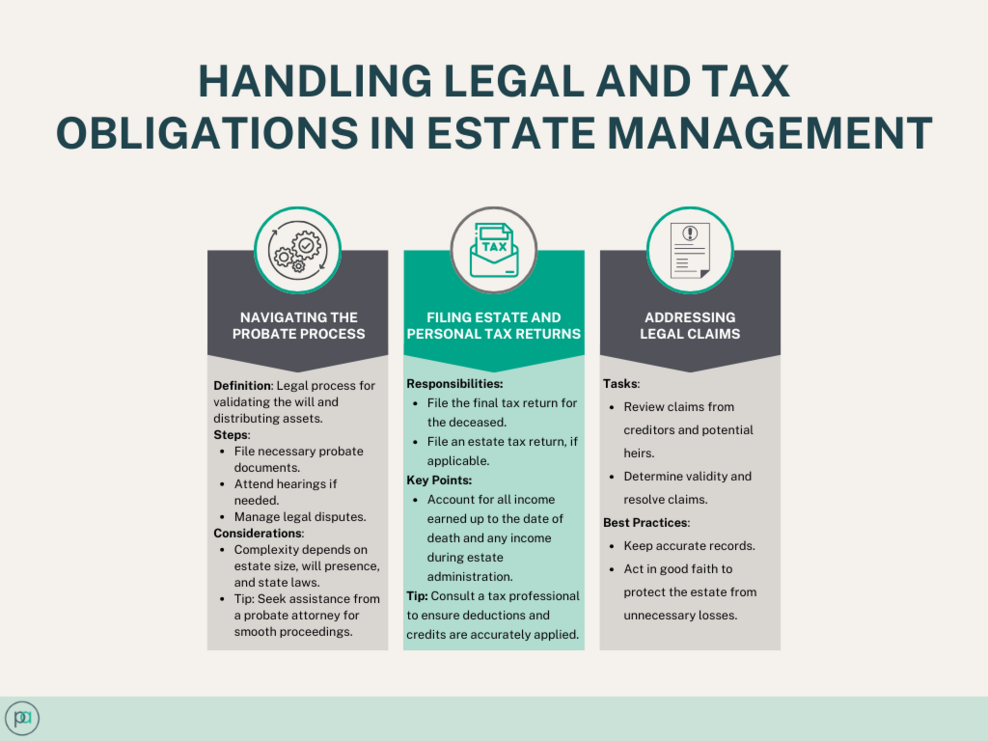
Navigating the Probate Process
One of the most complex aspects of managing an estate is navigating the probate process, which is the legal procedure of validating the will and overseeing the distribution of assets. Personal representatives must file the necessary documents with the probate court, attend hearings if needed, and handle any legal disputes that arise. The complexity of the process can vary depending on factors like the size of the estate, the presence of a will, and state laws. For this reason, it is often advisable to seek assistance from a probate attorney to ensure compliance and smooth proceedings.
Filing Estate and Personal Tax Returns
Another critical responsibility involves filing the final tax return for the deceased and, if necessary, an estate tax return. Properly managing these tax obligations is essential to avoid penalties and ensure compliance with state and federal laws. The tax return must account for all income the decedent earned up until their passing, as well as any income the estate earns during the administration period. Tax rules around estates can be intricate, so consulting a tax professional is often a good idea to ensure that all deductions, exemptions, and credits are correctly applied.
Addressing Legal Claims
During the process, creditors and potential heirs may file claims against the estate. The personal representative is responsible for reviewing these claims, determining their validity, and resolving them. This could involve negotiating settlements or contesting unfounded claims in court. Keeping accurate records and acting in good faith are essential practices for managing these claims effectively, protecting the estate from unnecessary losses.
4. Distributing Assets to Beneficiaries
Following Distribution Instructions
After debts and taxes are settled, the personal representative must distribute the remaining assets to the beneficiaries. This process should strictly follow the instructions set out in the will. If no will exists, the distribution must adhere to state intestacy laws, which outline how assets are divided among family members. Familiarity with these legal frameworks is essential to avoid disputes and ensure assets are passed on as intended.
Executing Asset Transfers
Distributing assets can involve more than just writing checks. It may require transferring titles for properties, closing bank accounts, and managing the transfer of other valuable items. It is crucial to handle these transfers in accordance with legal requirements to ensure that beneficiaries receive their inheritance without complications. Engaging professionals like real estate agents, financial advisors, or appraisers can help in managing complex transfers, ensuring that all transactions are completed accurately and transparently.
Mediating Disputes Among Beneficiaries
Conflicts can arise during the distribution process, particularly if beneficiaries have differing expectations. The personal representative may need to mediate these disputes, fostering open communication and offering fair solutions. In more contentious situations, professional mediators or legal counsel may be necessary to resolve conflicts and ensure that the process remains fair and legally sound.
5. Communicating With Beneficiaries
Maintaining Clear Communication
Good communication is key to a smooth estate administration process. Personal representatives should establish clear and regular lines of communication with beneficiaries, keeping them informed about the progress of the estate. Regular updates can help manage expectations and build trust, especially if the administration process is lengthy. Beneficiaries should be aware of important milestones, such as the completion of the asset inventory or the filing of tax returns, so they understand where things stand.
Handling Difficult Conversations
In a timely manner, personal representatives must handle difficult conversations, particularly when disputes arise or when beneficiaries are unhappy with certain decisions. It’s essential to approach these conversations with empathy, listen carefully to concerns, and explain the reasoning behind decisions. Being transparent and respectful can go a long way in preventing conflicts from escalating and ensuring that beneficiaries feel heard and respected.
Appointing Professional Support
In a larger estate, or if the personal representative feels overwhelmed, it may be beneficial to appoint professional support to help manage communications. This could include hiring a spokesperson, working with a law firm, or seeking advice from a financial advisor. Engaging professionals can ensure that communications are handled efficiently and that all parties remain informed and satisfied.
Key Takeaways for Personal Representatives: Navigating Responsibilities with Confidence
Serving as a personal representative is a role that comes with many responsibilities, ranging from legal and financial tasks to delicate interpersonal duties. Being prepared to manage these duties effectively is essential for anyone who is named an executor. The tasks are often complex, but with careful planning and attention to detail, a personal representative can fulfill their role successfully, honoring the wishes of the deceased and ensuring a smooth transition of assets.
Taking on the role of a personal representative requires more than just organizational skills; it demands a thorough understanding of legal requirements and financial management. Familiarizing yourself with the core responsibilities can help you avoid mistakes and ensure that the estate is managed properly. It’s important to remember that personal representatives have a fiduciary duty to act in the best interests of the estate and its beneficiaries, maintaining transparency, fairness, and integrity throughout the process.
If you have been appointed as a personal representative and are unsure of where to begin or how to administer the estate, consider seeking professional advice. A legal authority and financial experts can provide guidance to help you navigate the complexities of estate administration. Connect with Partners in Aging if you need support, from legal consultations to estate planning services, ensuring that you are equipped to handle every step with confidence and ease. Remember, by engaging with professionals, you can approach this responsibility with clarity, efficiency, and peace of mind.