

5 Factors to Consider When Deciding When to Take Social Security
POSTED ON
Deciding when to take Social Security is a crucial step in retirement planning. Social Security benefits can significantly impact your financial stability during retirement, so understanding the best time to claim benefits is essential. The Social Security Administration offers flexibility on when you can begin receiving benefits, allowing individuals to start as early as age 62 or delay until age 70. Each option has its own advantages and trade-offs that can affect your monthly benefit amount and overall retirement income.
Many factors come into play when determining the right time to claim Social Security benefits. These include your financial situation, life expectancy, marital status, employment status, and health condition. Understanding how these elements influence your decision can help you make a more informed choice that aligns with your retirement goals. It's not just about when you can collect benefits but when it makes the most sense to do so for your long-term financial well-being.
This guide will explore five key factors that should be considered before deciding when to claim Social Security retirement benefits. By weighing these factors carefully, you can develop a strategy that maximizes your benefit amount and supports your retirement lifestyle. Consulting with financial professionals can also help tailor a plan specific to your needs.
1. Cash Needs
Evaluating Your Immediate and Long-Term Financial Needs
Your immediate and long-term financial needs are one of the most important factors when deciding when to begin receiving Social Security benefits. If you have other sources of income, such as pensions, investments, or savings, you might have the flexibility to delay claiming benefits and increase your monthly benefit amount. Conversely, if Social Security retirement benefits will be your primary source of income, you may need to start collecting benefits as early as age 62, despite the reduced monthly benefit.
It's essential to assess your overall retirement plan, including how inflation and other costs might affect your purchasing power over time. If you have an emergency fund and reliable income from other sources, delaying Social Security benefits can enhance your long-term financial stability. Delaying benefits can lead to a larger monthly payment, which could help cover rising expenses in later years, providing more financial security throughout your retirement.
Impact of Delaying Benefits
Choosing to delay Social Security can significantly increase the benefits you receive. For example, if you reach your full retirement age (FRA) and decide to wait until age 70 to claim benefits, your monthly payment will grow due to delayed retirement credits. This increase can be as much as 8% per year beyond your FRA, leading to a more substantial monthly benefit for the rest of your life. However, this strategy works best if you can afford to live off other income sources while delaying your Social Security benefits.
Ultimately, your decision should be based on a careful review of your financial needs and your ability to maintain your lifestyle without the immediate income from Social Security. A well-planned approach that considers both immediate needs and future benefits can make a significant difference in your retirement finances.
2. Life Expectancy
Considering Longevity and Health
Your expected life span is another crucial factor in determining when to claim Social Security benefits. If you anticipate living longer than the average life expectancy, delaying benefits may be a wise choice. This strategy allows you to maximize your benefits over a longer period, resulting in higher overall payouts. On the other hand, if you have health concerns or a family history of shorter life spans, it might make sense to collect benefits earlier to ensure you receive the support you need.
It's important to remember that delaying benefits only pays off if you live long enough to benefit from the higher monthly payments. Generally, the break-even point—the age at which the total benefits of delaying surpass those of taking benefits early—occurs around your late 70s to early 80s. Understanding your health and family history can help you make a decision that best aligns with your retirement goals.
Personalizing Your Claiming Strategy
Every individual's situation is unique, and life expectancy plays a significant role in crafting a personalized claiming strategy. For those in good health with a history of longevity, waiting until age 70 to claim benefits can provide substantial financial benefits over a long retirement. However, it's essential to weigh the risk of waiting against your current financial situation and health outlook. Consulting with a financial professional can help you assess the potential benefits and drawbacks based on your life expectancy and overall retirement plan.
3. Marital Status
Coordinating Spousal Benefits
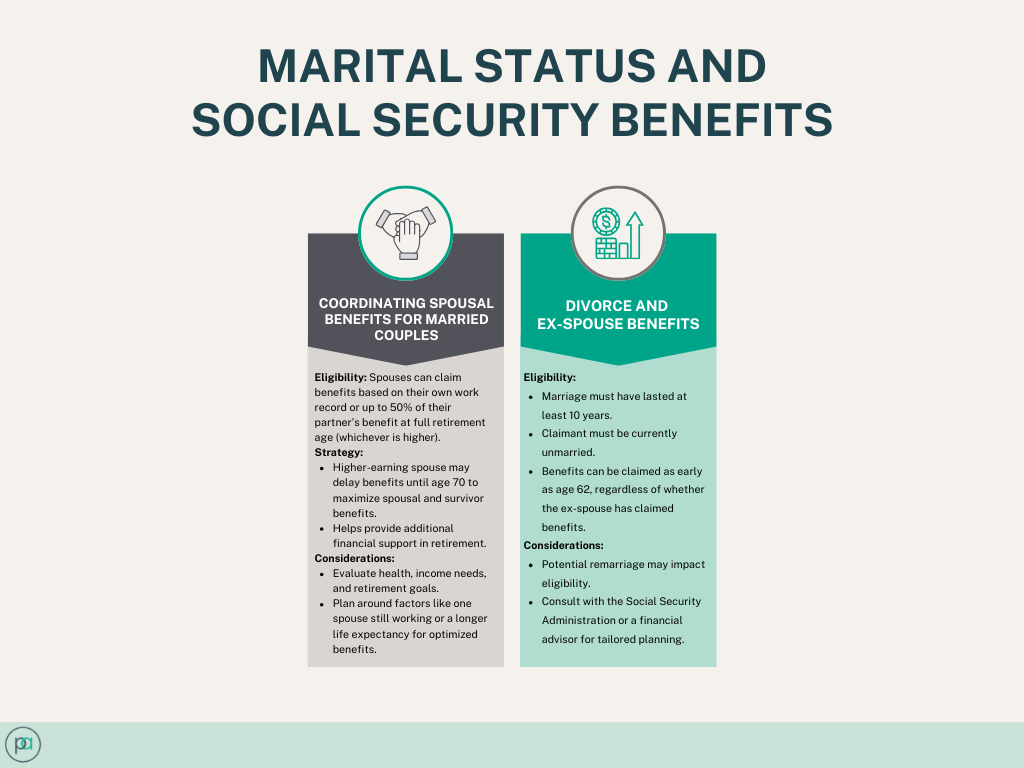
Marital status can significantly affect when to claim Social Security benefits. For married couples, coordinating spousal benefits can help maximize the overall income. Spouses are entitled to benefits based on their own work record or up to 50% of their partner's full retirement age benefit, whichever is higher. If the higher-earning spouse delays their benefits until age 70, this can boost the spousal and survivor benefits, providing additional financial support for the couple.
Deciding how and when each partner claims benefits requires careful planning to balance the needs of both spouses. If one spouse is still working or has a longer life expectancy, delaying their Social Security benefits can ensure a larger payout later. Couples should discuss their financial needs, health conditions, and retirement goals to determine the best strategy for maximizing Social Security benefits.
Divorce and Ex-Spouse Benefits
Divorced individuals may still be eligible for spousal benefits based on their ex-spouse's earnings record, provided certain conditions are met. If the marriage lasted at least 10 years and the individual is currently unmarried, they can claim benefits as early as age 62 based on their ex-spouse's work record, even if the ex-spouse has not yet claimed Social Security benefits. Understanding how marital status affects eligibility and benefit amounts can help divorced individuals make informed decisions about when to claim benefits.
Careful consideration is needed when planning around ex-spouse benefits, especially if there are remarriage plans, as this may affect eligibility. Each situation is unique, and seeking advice from the Social Security Administration or a financial advisor can clarify how these benefits can be integrated into your overall retirement plan.
4. Employment Status
Working Before and After Full Retirement Age
Employment status is a critical consideration when deciding when to claim Social Security benefits. If you plan to work before reaching your full retirement age, it's important to understand the potential earnings limits that could affect your benefits. For example, in 2024, if you earn over $22,320 before your FRA, $1 will be deducted from your benefits for every $2 earned. However, once you reach your full retirement age, these earnings limits no longer apply, and you can work without affecting your Social Security benefits.
For those who continue to work, delaying Social Security until after FRA may be a strategic choice. By earning delayed retirement credits, your monthly benefit amount increases, providing more substantial income when you finally decide to retire. This strategy is particularly beneficial for those who are still in good health and want to maximize their long-term benefits.
Balancing Work and Social Security Benefits
If you're considering a part-time job or gradual retirement, balancing your employment income with Social Security benefits can help you manage your finances better. While working can provide additional income, it may also increase your tax liability if your Social Security benefits become subject to taxation. Planning how your earnings will interact with Social Security can help you make the most of both sources of income.
Discussing your options with a financial advisor can provide insights into how continued employment affects your overall retirement strategy. They can help assess whether it makes sense to delay benefits and how best to structure your income sources to minimize taxes and maximize benefits.
5. Health Condition
Evaluating Your Health and Longevity Risks
Your current health and anticipated longevity are significant factors in determining when to begin collecting Social Security benefits. Those with chronic health conditions or concerns about longevity may decide to take benefits earlier to ensure they receive the financial support they need. On the other hand, if you are in good health and expect to live well into your 80s or beyond, delaying benefits until age 70 can result in higher monthly payments and greater financial security.
It's essential to take a realistic view of your health when making this decision. For some, starting benefits early is a practical choice that helps cover immediate medical or living expenses. However, if you're confident in your health and have other income sources, delaying can help maximize your lifetime benefits.
How Health Impacts Retirement Planning
Understanding how your health influences your retirement planning can help you create a more sustainable financial strategy. For those with high medical expenses, claiming Social Security benefits earlier might provide the extra income needed to manage those costs. Conversely, those with fewer health concerns might be able to invest in long-term growth by delaying benefits, thus securing higher monthly payments for the future.
Developing a balanced approach that considers health, financial resources, and lifestyle goals is crucial for a well-rounded retirement plan. Consulting with a financial advisor can offer valuable insights and help tailor a strategy that aligns with your unique situation.
Personalized Planning for Your Retirement Needs
Choosing when to claim Social Security benefits is a personal decision that depends on a range of factors. Cash needs, life expectancy, marital status, employment status, and health all play critical roles in determining the optimal timing. Each individual's circumstances are unique, and there is no one-size-fits-all answer. The key is to understand how these factors impact your decision and to plan accordingly.
For many, delaying benefits often results in higher payouts over a longer retirement. However, this strategy only works if it aligns with your financial situation and health outlook. Weighing the pros and cons of early versus delayed benefits, and considering how these decisions affect your spouse, is essential for making a well-informed choice.
Partners in Aging encourages you to take a proactive approach to your retirement planning. Connect with us today so you can develop a Social Security claiming strategy that best suits your needs, ensuring a secure and fulfilling retirement. Reach out today to explore your options and plan for a brighter future.