

Avoid Falling Prey to These Scams : The Growing Threat of Elderly Scams
POSTED ON
Scams have become alarmingly sophisticated, targeting vulnerable groups like older adults with increasing frequency. The sheer variety of scams—from fake tech support to romance fraud—highlights the growing challenge of protecting senior citizens from financial exploitation. This surge in elder fraud has had devastating effects, both financially and emotionally, on countless families.
According to the FBI, older adults lost over $3.4 billion to scams in 2023, a figure that likely underestimates the true scale of the issue since many cases go unreported. Criminals exploit vulnerabilities such as a lack of digital literacy, social isolation, and a tendency to trust authoritative figures. These factors make seniors prime targets for scams that range from government impersonations to investment schemes.
The stakes couldn’t be higher—protecting our older population from these evolving threats requires education, vigilance, and robust support systems. Strengthening digital literacy, fostering open communication within families, and promoting community support systems are key strategies to prevent financial exploitation.
Why Are Older Adults Targeted by Scammers?
Older adults are particularly vulnerable to scams due to a combination of factors, including trust, accumulated savings, and limited familiarity with modern technology. Many scammers perceive seniors as "easy targets" who may not recognize fraudulent tactics or verify unsolicited requests. This makes retirees especially susceptible to schemes like the grandparent scam, which preys on their instinct to help loved ones.
Social isolation, which is common among some seniors, also plays a significant role. Scammers exploit loneliness through romance scams or charity fraud, building fake relationships to extract money or sensitive personal information. Combined with the lack of regular exposure to digital threats, these factors create a perfect storm for financial exploitation.
Another contributing factor is the generational gap in understanding evolving technology. Many older adults may lack the skills to distinguish between genuine communication and fraudulent schemes like fake antivirus programs or phishing attempts. Education and awareness are vital in closing this gap and empowering seniors to protect themselves.
Most Common Scams Targeting Older Adults
As the digital age progresses, scammers have become increasingly sophisticated in their tactics to target older adults. These fraudulent schemes exploit vulnerabilities and often result in significant financial losses for seniors. Understanding these scams is crucial for protection and prevention.
1. AI Scams
The rise of artificial intelligence has given scammers new tools to deceive unsuspecting victims. AI scams often involve using voice-cloning technology to impersonate family members or friends, creating a sense of urgency and convincing victims to send money or share sensitive information. These schemes prey on the emotional connections of older adults, making them particularly effective and damaging.
Another form of AI scam involves chatbots mimicking customer service representatives to extract personal or financial details. These bots are programmed to sound authentic and knowledgeable, making it difficult to distinguish them from legitimate sources. To protect themselves, seniors should verify the authenticity of any request before acting and refrain from sharing personal details with unknown contacts.
2. Government Impersonation Scams
Government impersonation scams are among the most widespread schemes targeting older adults. Scammers often pose as representatives from agencies like the Internal Revenue Service (IRS) or Social Security Administration (SSA), claiming the victim owes unpaid taxes or is at risk of losing benefits. They use threats of arrest or legal action to pressure seniors into sending money or providing sensitive information.
Medicare-related fraud is another common tactic, with scammers requesting Medicare numbers under the guise of offering additional benefits or services. These scams typically rely on creating a sense of urgency to prevent the victim from verifying the caller's legitimacy. Seniors should remember that government agencies rarely initiate contact by phone and never demand immediate payment or personal details.
3. Sweepstakes and Lottery Scams
Sweepstakes and lottery scams entice victims with promises of large cash prizes or expensive rewards. Scammers contact seniors claiming they’ve won, but require upfront payments for taxes, fees, or delivery costs to release the prize. Many victims fall for these schemes, believing their financial problems are over, only to lose money instead.
Often, these scams include fake documents or websites that appear legitimate to gain the victim’s trust. The perpetrators may also persistently contact victims, pressuring them to send more money. To avoid falling for such schemes, seniors should remember that legitimate sweepstakes or lotteries never require payment to claim winnings.
4. Robocalls and Phone Scams
Robocalls and phone scams use automated systems or live agents to target older adults. These calls often claim to be from reputable organizations, such as banks or government agencies, to establish credibility. Common tactics include threats of account closures, unpaid bills, or "urgent" issues requiring immediate attention.
Another variation involves tech support scams, where callers claim there’s a problem with the victim’s computer or software. They trick seniors into granting remote access, which is then used to steal personal information or install malware. To protect themselves, older adults should avoid answering unknown numbers and refrain from providing any information over the phone without verifying the caller's identity.
5. Grandparent Scams
Grandparent scams exploit familial bonds and urgency to deceive older adults. In these schemes, scammers pose as grandchildren in distress, claiming they need money immediately due to an emergency, such as a car accident or legal trouble. They often plead with the victim to keep the situation a secret from other family members.
These scams are effective because they prey on seniors' instincts to protect and support their loved ones. Fraudsters use emotional manipulation and urgent pleas to push victims into sending money without verifying the story. Seniors should always confirm such requests with other family members before taking action.
6. Romance Scams
Romance scams target the emotional vulnerabilities of seniors, especially those who may feel isolated or lonely. Scammers create fake profiles on dating sites or social media platforms to build relationships with their victims. Once trust is established, they fabricate emergencies or financial troubles, asking the victim to send money to "help."
These scams are particularly devastating because they often involve months of emotional manipulation. Victims may lose significant sums of money and suffer emotional distress upon discovering the deception. To avoid these scams, older adults should be cautious of online relationships that move too quickly or involve financial requests.
Recognizing and Avoiding Senior Scams
1. Red Flags and Warning Signs
In the digital age, scammers have become increasingly sophisticated in their tactics to deceive older adults. Recognizing the warning signs is crucial for protecting oneself from financial exploitation. One of the most common red flags is unsolicited contact via phone, email, or mail from unfamiliar sources.
Be wary of any communication that pressures you for immediate action or decision-making. Legitimate organizations typically allow time for consideration and don't use urgency as a tactic. Another telltale sign is requests for personal information or financial details, especially from unverified sources.
If an offer seems too good to be true, it probably is. Scammers often use enticing promises of large sums of money or incredible deals to lure their victims. Additionally, be on guard against the use of scare tactics or threats, which are common methods employed to manipulate seniors into compliance.
2. Protective Measures and Best Practices
To safeguard yourself against potential scams, it's essential to implement protective measures. First and foremost, never share personal information with unknown individuals, regardless of how convincing they may seem. Always take the time to verify the identities and legitimacy of organizations independently before engaging with them.
Utilize caller ID and screen calls from unknown numbers to avoid falling victim to phone scams. Be cautious of high-pressure sales tactics and "limited time" offers, as these are often used to rush decisions and prevent proper consideration. When faced with important financial decisions, consult with trusted family members or financial advisors before taking any action.
3. Leveraging Technology for Protection
Technology can be a powerful ally in the fight against scams. Start by installing and regularly updating antivirus software on all your devices to protect against malware and phishing attempts. Implement spam filters and ad blockers to reduce exposure to potentially fraudulent content online.
Enable two-factor authentication on all your important accounts to add an extra layer of security. This makes it significantly harder for scammers to gain unauthorized access, even if they obtain your password. Consider utilizing apps designed to block fraudulent calls and messages, which can help filter out potential scam attempts before they reach you.
Lastly, make it a habit to regularly monitor your financial statements and credit reports. This practice allows you to quickly identify any suspicious activity and take prompt action if needed. By staying vigilant and leveraging these technological tools, you can significantly reduce your risk of falling victim to financial exploitation.
Steps to Take If You Suspect or Fall Victim to a Scam
1. Immediate Actions
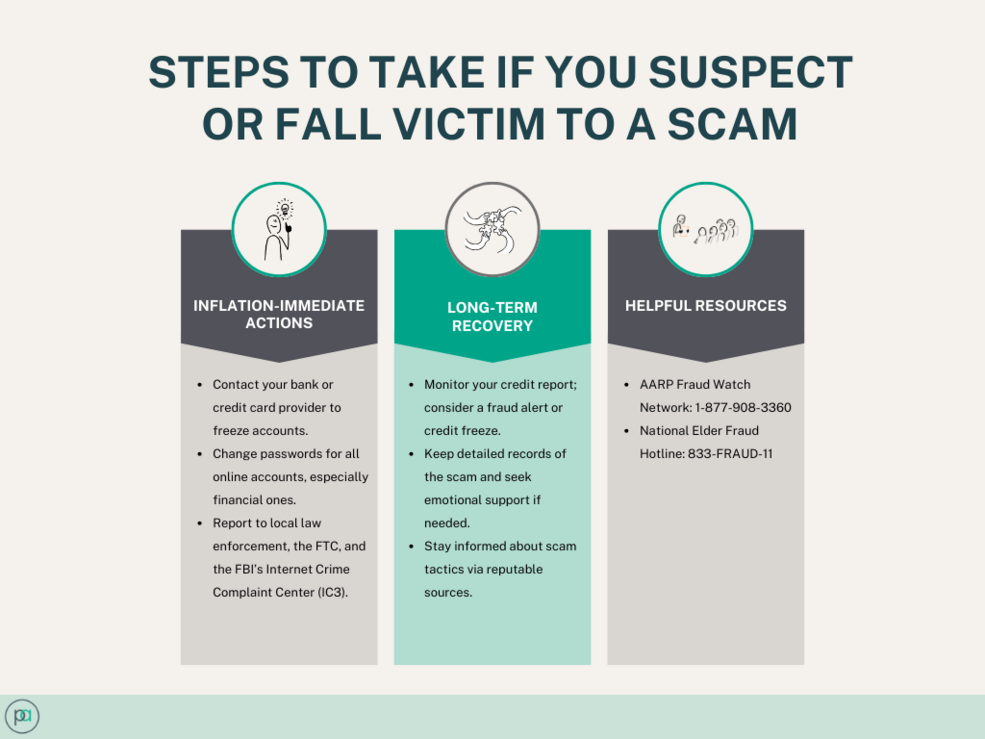
If you believe you've fallen prey to a scam, swift action is crucial. First, contact your bank or credit card company immediately to freeze your accounts and prevent further unauthorized transactions. Next, change passwords for all your online accounts, especially those related to financial services or email.
Report the incident to your local law enforcement agency. They may not be able to recover your losses, but your report can help in ongoing investigations and prevent future crimes. Additionally, file a complaint with the Federal Trade Commission (FTC) through their website or hotline.
For online scams, notify the Internet Crime Complaint Center (IC3). This FBI-run center collects and analyzes data on internet-related crimes, helping law enforcement agencies track and combat cybercrime effectively.
2. Long-Term Recovery and Prevention
After taking immediate action, focus on long-term recovery and prevention strategies. Regularly monitor your credit report for any suspicious activity or unauthorized accounts opened in your name. Consider placing a fraud alert or credit freeze on your accounts for added security.
Keep detailed records of the scam, including all communications, transactions, and your response actions. This documentation can be valuable for ongoing investigations and potential legal proceedings. Don't hesitate to seek support from family, friends, or professional counseling services to cope with the emotional impact of being scammed.
Stay informed about new scam tactics through reputable sources like consumer protection websites and government agencies. Knowledge is power when it comes to protecting yourself from future fraud attempts.
3. Resources for Assistance and Reporting
Several organizations provide support and reporting channels for scam victims. The AARP Fraud Watch Network Helpline (1-877-908-3360) offers guidance and support. For seniors specifically, the National Elder Fraud Hotline (833-FRAUD-11) provides specialized assistance.
The Role of Community in Protecting Seniors
1. Education and Awareness Programs
Community centers play a crucial role in safeguarding seniors by offering scam awareness workshops. These informative sessions equip older adults with the knowledge to recognize and avoid fraudulent schemes. Local law enforcement agencies also contribute by providing fraud prevention seminars, sharing valuable insights on current scam tactics and protection strategies.
Financial institutions have stepped up their efforts by hosting educational events specifically designed for seniors. These events cover topics such as safe banking practices and how to spot financial fraud. Libraries serve as another valuable resource, offering a wealth of informational materials on scam prevention that seniors can access freely.
Many senior living communities have taken proactive measures by implementing regular safety presentations. These sessions keep residents informed about the latest scams and reinforce best practices for personal security.
2. Building a Support Network
Creating a strong support network is essential for protecting seniors from financial exploitation. Encouraging open communication about financial matters with family members can help identify potential threats early on. It's also beneficial to establish a trusted circle of advisors, including financial planners and attorneys, who can offer professional guidance and oversight.
Participating in neighborhood watch programs that focus on elder fraud prevention can create a community-wide safety net. Engaging with local senior advocacy groups provides additional support and opportunities for information sharing. These organizations often have resources and expertise specifically tailored to the needs of older adults.
Empowering Seniors Against Scams
In today’s world, where scammers constantly evolve their tactics, seniors must stay vigilant and proactive. Staying informed about the latest fraud schemes is the first line of defense. Regularly updating your knowledge, sharing experiences with loved ones, and attending local community seminars or webinars on scam prevention can foster a collective shield of awareness and preparedness.
Taking action is equally important. Strengthen the security of your digital life by using reliable antivirus software, enabling two-factor authentication, and monitoring your financial accounts for suspicious activity. Develop a personal response plan that includes reviewing your financial and legal arrangements, and always consult trusted advisors before making significant decisions. By staying educated and prepared, seniors can outsmart fraudsters and protect their assets and peace of mind.
Protecting your hard-earned money and well-being doesn’t have to be a solo journey. Partner with PiA and access expert resources, personalized guidance, and exclusive tools designed to help you combat scams effectively. Together, we can empower you to navigate this complex world with confidence and security—because safeguarding your future starts with the right support today. Connect with us today to learn more!