

How to Start Estate Planning: A Senior's Step-by-Step Checklist
POSTED ON
An estate planning checklist is an essential process where individuals strategically arrange for the effective management and disposal of their estate during their lifetime and after death. For seniors, the stakes are even higher. Rigorously planning your estate ensures a seamless transition of assets to your beneficiaries while giving you peace of mind. Central to estate planning are legal, financial, and healthcare considerations that aim to safeguard your interests.
Without an estate plan, several pitfalls arise, notably probate—a time-consuming and often costly process. It’s also important to note that estate plans can range from simple to intricate, depending on factors like the size of your estate and specific family situations. This flexibility allows for fully customized estate planning, underscoring its overall significance.
Having an estate plan is particularly crucial for our senior population. As mental capacities can potentially decline with age, it’s crucial to make these decisions while still in a sound state of mind. The looming risk of healthcare emergencies or an abrupt loss of capacity further emphasizes the urgency of planning ahead. If you’re struggling with how to start your estate planning, here’s the perfect estate planning checklist for you.
What Are the Action Steps for Getting Started?
To ensure a smooth and comprehensive estate planning process, there are critical action steps to follow:
1. Begin With a Consultation
Seek professional guidance from an estate planning attorney. During your first consultation, make sure to ask key questions about their fees, experience, and the estate planning documents they recommend. It’s crucial to choose professionals certified in elder law to guarantee specialized expertise dealing with seniors’ needs.
Ask whether they provide specialized services such as long-term care planning, Medicaid planning, and strategies to protect assets from healthcare-related costs. As each family situation comes with unique dynamics, understand their approach to handling sensitive situations such as potential disputes among beneficiaries or special considerations for heirs with unique needs.
2. Gather Necessary Documents
Prepare a checklist of estate planning documents to bring to your initial consultations. This includes your current wills, property deeds, and financial statements. Keep all records organized and up-to-date. If documents are missing, there are steps to obtain replacements. An accurate reflection of your current assets is vital; make sure to gather and organize copies of titles and deeds for real estate and vehicles.
Insurance policies such as life, health, and long-term care, along with pension documents, should also be collected. These records are essential for understanding what benefits and coverage are available, ensuring beneficiaries can easily access and claim these assets.
3. Communicate With Family Members
Finally, transparency with members of the family is key to avoiding future conflicts. Consider setting up family meetings as part of the planning process. These conversations can aid in documenting agreements and detailing your wishes clearly in writing. These documents should cover assets, guardianship, medical preferences, and specific bequests.
It’s advised to involve relatives in the planning discussions to gather input and address potential concerns. Balancing personal wishes with family dynamics and input and finding a compromise where necessary can help preempt potential disputes and ensure that the plan is well-received and respected by all parties involved.
How Do You Create Essential Legal Documents?
The creation of essential documents is an integral aspect of estate planning.
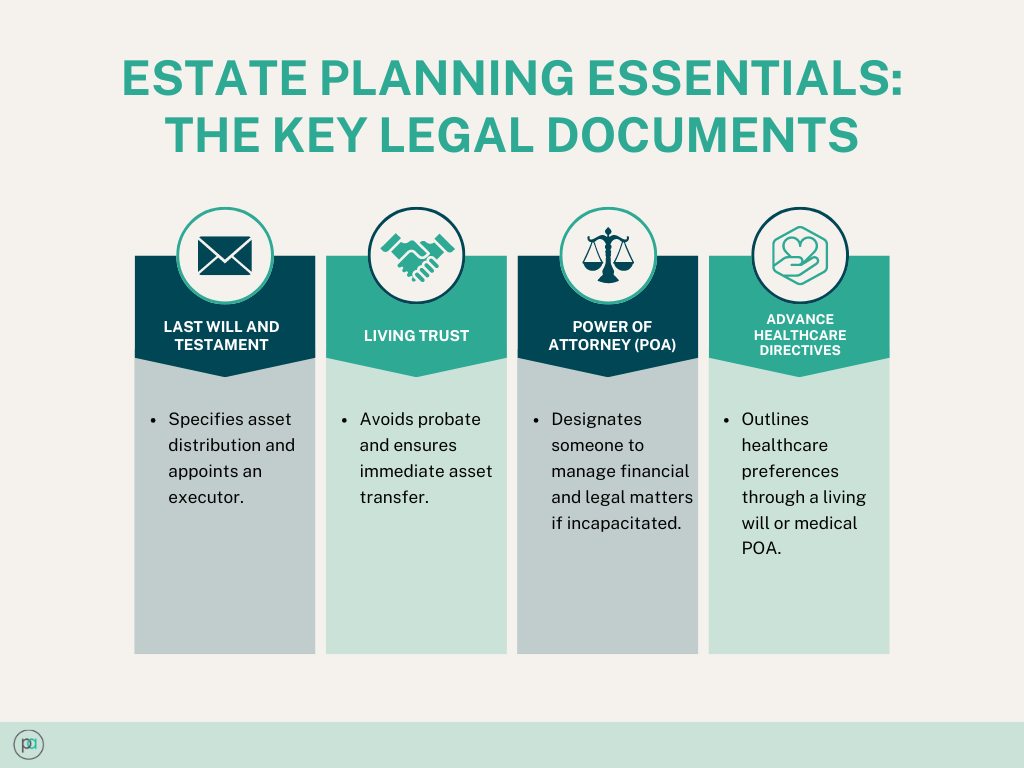
1. Drafting a Last Will and Testament: A last will and testament, commonly referred to as a will, is a foundational document in estate planning. Its primary role is to dictate how your estate should be distributed after your death. A well-constructed will includes the naming of beneficiaries, the appointment of an executor, and a detailed description of asset distribution. The legal validation of a will typically requires witnesses and proper signatures. Keep in mind that a will does not allow assets to avoid probate. Instead, a will is used in probate court to determine how assets are distributed. If somebody wants to avoid probate altogether, they should consider a trust.
2. Considering a Living Trust: A living trust allows for the avoidance of probate and ensures the immediate transfer of assets. Funding a trust involves transferring the ownership of assets into it. Assets that can be placed in a living trust include real estate, bank accounts and other online financial accounts, investment accounts, and personal property.
3. Assigning Power of Attorney: A power of attorney (POA) is vital for managing your financial and legal matters if you become incapacitated. There are several types of POA, including durable, general, and limited POA, each with its own unique implementation scenarios. Selecting a trustworthy and capable agent is a critical step in setting up a POA. Proving the legal veracity of a POA involves the attendance of witnesses to sign the document and proper notarization.
4. Setting Up Advance Healthcare Directives: Having clear advance healthcare directives protects your preferences in medical decision-making should you become incapacitated. These usually take the form of a living will or a medical POA. It’s essential to have open discussions with your appointed healthcare proxies to ensure they fully understand and will uphold your wishes.
How Do You Take an Inventory of Assets and Debts?
One of the first crucial steps in estate planning is conducting a thorough inventory of your assets and debts.
1. Listing All Assets: Begin by listing all your assets. This can include easily identifiable items such as:
- Bank accounts (online financial accounts)
- Retirement accounts
- Real estate
- Personal property
Along with less tangible assets such as:
- Stocks
- Digital assets
2. Identifying Debts and Liabilities: Once you’ve compiled a comprehensive list of physical assets, the next step is to identify all debts and liabilities. Common types include credit card debts, mortgages, loans, and any other financial obligations you may bear. An equally important but often overlooked factor is co-signed debt. Entering into co-signed agreements, such as for a child’s student loan, means your estate may have to cover those debts if not properly addressed during estate planning.
Moreover, medical and long-term care expenses can significantly impact your estate. Pending medical bills and potential long-term care costs, if not properly accounted for, could potentially consume a substantial portion of your estate. Hence, identifying these liabilities is key.
3. Documenting Ownership Information: Once you’ve listed your assets and debts, document each item’s ownership information. Particularly important is establishing whether assets are owned individually, jointly, or as community property. Understanding these distinctions is crucial, as different forms of ownership can significantly affect the distribution of your estate upon your passing.
For instance, assets held in joint tenancy typically pass directly to the surviving joint tenant, while those held through tenancy in common are divided according to each tenant’s share.
How Do You Choose the Right Executor and Agents?
Choosing the right executor and agents is a significant step in the estate planning process, as these individuals will hold considerable responsibility over one’s financial affairs. Their roles often include making critical healthcare and financial decisions, so their selection must be made mindfully.
Responsibilities of an Executor
An executor’s primary role entails managing and distributing the estate according to instructions in the deceased’s will. This involves several tasks, such as properly filing the will, settling any outstanding debts, and ensuring that all assets are distributed as per the deceased’s wishes. It is important to select an individual who is trustworthy and capable of fulfilling these tasks competently.
To maintain transparency and keep all parties informed, the executor should communicate consistently with beneficiaries and heirs about the progress of estate administration. They must be prepared to promptly address any queries and concerns related to the distribution process.
Choosing a Healthcare Proxy
A healthcare proxy plays a crucial role in making medical decisions on behalf of the principal, especially when they become incapacitated. Trustworthiness, proximity, and the ability to communicate effectively with medical professionals are key qualities one should look for when choosing a healthcare proxy.
Discuss your healthcare wishes with your chosen proxy to ensure they understand and will honor them. Since appointing a healthcare proxy varies by state, consulting a legal professional is advisable. Periodically review your proxy’s designation, as their circumstances may change, requiring a reassignment.
Selecting a POA
Choosing the right person to serve as your POA is a critical decision, as this individual will have the authority to manage your financial and legal affairs should you become unable to do so. The designated POA will be responsible for tasks such as managing bank accounts, paying bills, handling investments, and even making decisions about your property. Therefore, it is essential to select someone who is not only trustworthy but also financially savvy and capable of handling complex responsibilities.
It's important to discuss your expectations and financial goals with the person you choose as your POA to ensure they fully understand your wishes and are prepared to act in your best interests. Depending on your needs, you may choose to appoint a general POA, who has broad powers, or a limited POA, who is only authorized to handle specific tasks or for a limited time. Regularly reviewing and updating your POA designation is advisable, as circumstances and relationships may change over time, impacting the suitability of your chosen agent.
What Is the Importance of Regular Review and Updates of Legal Documents?
Estate planning is not a one-time activity but rather a dynamic process that needs regular review and updates. It’s recommended to revisit your estate plan annually or after major life events such as marriage, divorce, birth of a child, or significant financial changes.
1. Frequency of Review
Pay attention to legislative changes in estate tax laws or inheritance taxes and laws, as these can impact your estate planning. Stay informed about any relevant legal updates and ensure your estate plan complies with current regulations. It’s also crucial to review your estate plans after significant health changes, such as a new diagnosis or moving into long-term care. Such changes can affect directives, POA designations, and beneficiary needs.
2. Updating Legal Documents
When it comes to updating important documents like wills and trusts, ensure they undergo proper legal formalities to maintain their validity. It’s vital to clearly communicate any updates to key parties, including attorneys, executors, and beneficiaries. Notify all relevant financial institutions, such as banks, investment firms, and insurance companies, of any changes. Contact these institutions directly to verify receipt and implementation of the updated documents.
3. Ensuring Consistency Across Documents
Maintaining consistency across documents like wills, trusts, and POA assignments is crucial to preventing conflicts. Even minor inconsistencies, such as conflicting beneficiary designations, can have significant consequences. Regular reviews with an estate planning attorney ensure alignment across all legal and financial documents. Ensure beneficiary details are accurate and that POA and healthcare directives are consistent with financial documents to protect your wishes.
What Are the Common Challenges in Estate Planning?
Estate planning can present numerous challenges, particularly when it involves family dynamics and legal ramifications. Understanding these challenges and how to navigate them is paramount.
1. Dealing With Family Dynamics
Differing family values and disputes can significantly complicate estate plans. Utilizing clear communication strategies and fairness principles can help prevent conflicts. Involving key family members early in the estate planning process is vital to ensuring transparency and understanding of your wishes. Constructive conversations can preemptively address any concerns they might have.
In cases where conflicts arise during estate planning, professional mediation services may prove beneficial. Mediators can offer a neutral ground and craft solutions that respect all parties’ perspectives. This approach has the potential to preserve family relationships.
2. Legal and Tax Implications
Legal challenges can also surface during estate planning. Document veracity issues, such as contesting a will or dealing with complex estates, pose their own set of trials. Estate taxes can significantly impact the estate’s value, necessitating effective strategies to minimize the tax burdens. Professional guidance from an estate attorney and tax professional often proves invaluable in such situations. Understanding the probate process and its potential implications, including the possible delays and costs, is crucial.
3. Preparing for Unexpected Events
Unexpected events, such as incapacity and sudden health declines, underscore the importance of comprehensive estate planning. Life insurance policies play a critical role in providing financial security. Meanwhile, long-term care expenses should be factored into the estate plan. Keeping a regularly updated list of emergency contacts, including medical professionals, family members, and legal advisors, is essential. The same goes for digital assets. Utilize a digital estate planning tool to securely store passwords.
Taking Action Toward Peace of Mind
Making an estate plan is not just a financial or legal task; it’s a personal reflection of your values and care for loved ones. In your later years, a well-structured estate plan ensures your legacy is protected and your wishes are honored.
The peace of mind that comes with knowing your affairs are in order is invaluable. Estate planning allows you to live your golden years with confidence, knowing that your decisions are in place and your loved ones won’t be burdened with difficult choices or disputes. It’s a gift to yourself and to those you leave behind, offering clarity, security, and a clear roadmap for the future.
At Partners in Aging, we understand the unique needs of seniors in estate planning. Our experienced team is here to guide you through every step, connecting you with recommended attorneys with expert advice and compassionate support tailored to your specific situation. Don’t leave your legacy to chance—contact Partners in Aging today to schedule a consultation and take the first step towards securing your peace of mind and protecting what matters most.