

Inflation-Proofing Retirement Savings: Strategies to Protect Purchasing Power Over the Long Term
POSTED ON
As retirees approach their golden years, a primary concern is how to protect retirement savings from inflation. The purchasing power of savings can steadily diminish due to the rising cost of living, posing a significant risk to maintaining a comfortable lifestyle. Without proper financial planning, retirees may find themselves struggling to cover everyday expenses, healthcare, and utilities, as inflation continues to rise.
For those depending on fixed incomes, such as Social Security benefits or pensions, inflation presents an even greater challenge. These income sources may not adjust at the same pace as the inflation rate, meaning retirees could face a gap between their income and expenses. To maintain financial health, it's crucial to implement strategies that help inflation-proof retirement savings.
Inflation-proofing retirement savings is not just about managing budgets—it's about adopting a comprehensive, multi-faceted approach. By diversifying investments across stocks, real estate, and inflation-protected securities, and focusing on income-generating assets, retirees can better prepare for rising costs. Additionally, adopting flexible spending habits and regularly reviewing retirement planning ensures that savings remain protected in the face of inflation.
Why Is Diversifying Investments Across Stocks Essential?
Diversifying investments across a variety of stocks is one of the most effective ways to protect against inflation. Stocks, especially those in dividend-paying companies, historically outperform inflation over the long term. By holding a diversified stock portfolio, retirees can help ensure that their retirement savings grow, preserving purchasing power even as inflation affects other areas of their budget.
Additionally, focusing on companies with strong earnings and consistent dividend growth provides further protection against inflation. These companies tend to fare better during market fluctuations and inflationary periods, ensuring that retirees receive both capital appreciation and regular income. A well-balanced portfolio, including dividend aristocrats, can help retirees maintain their purchasing power and safeguard their retirement portfolio against the impact of inflation.
How Can Real Estate Act as an Inflation Hedge?
Real estate serves as another powerful tool for combating inflation. Property values and rents often rise in line with inflation, making real estate a reliable asset for preserving wealth. By investing in Real Estate Investment Trusts (REITs) or directly in property, retirees can generate steady income and capitalize on the long-term appreciation of real estate, thus enhancing their retirement income.
Furthermore, the demand for housing often increases during inflationary periods, driving up property values. Retirees can benefit from these rising prices, whether through rental income or capital gains from property sales. Real estate offers a hedge against inflation while providing diversification in the retirement portfolio, helping to offset the rising costs of living and increasing the purchasing power of retirement savings.
What Role Do Inflation-Protected Securities Play?
Inflation-Protected Securities (TIPS) are government-backed bonds designed to preserve purchasing power by adjusting for inflation. TIPS are an excellent addition to any retirement portfolio, as they guarantee returns that rise in line with the inflation rate. By including TIPS in their investment strategy, retirees can protect their savings from inflation’s erosive effects, ensuring that their retirement income remains stable.
In addition to their inflation-adjustment feature, TIPS are backed by the U.S. government, making them one of the safest investments available. This security provides peace of mind for retirees, knowing their savings are safeguarded against inflation without exposing them to unnecessary risk. Incorporating TIPS into a retirement strategy can help ensure long-term financial stability and maintain the purchasing power of retirement savings.
How Can Adjusting Income Streams Protect Against Inflation?
Adjusting income streams is essential to manage inflation effectively. By exploring options like inflation-adjusted annuities, retirees can secure a guaranteed income stream that rises over time to match the cost of living. These annuities help maintain purchasing power by adjusting the payment amount based on the inflation rate, providing protection against rising prices.
Social Security benefits are another income source that can help offset inflation’s effects. Social Security includes Cost of Living Adjustments (COLA) that increase payouts in response to inflation. By delaying Social Security benefits until full retirement age, retirees can further increase their monthly payouts, ensuring a more substantial income stream that can better keep pace with inflation.
How Can Inflation-Adjusted Annuities Enhance Financial Security?
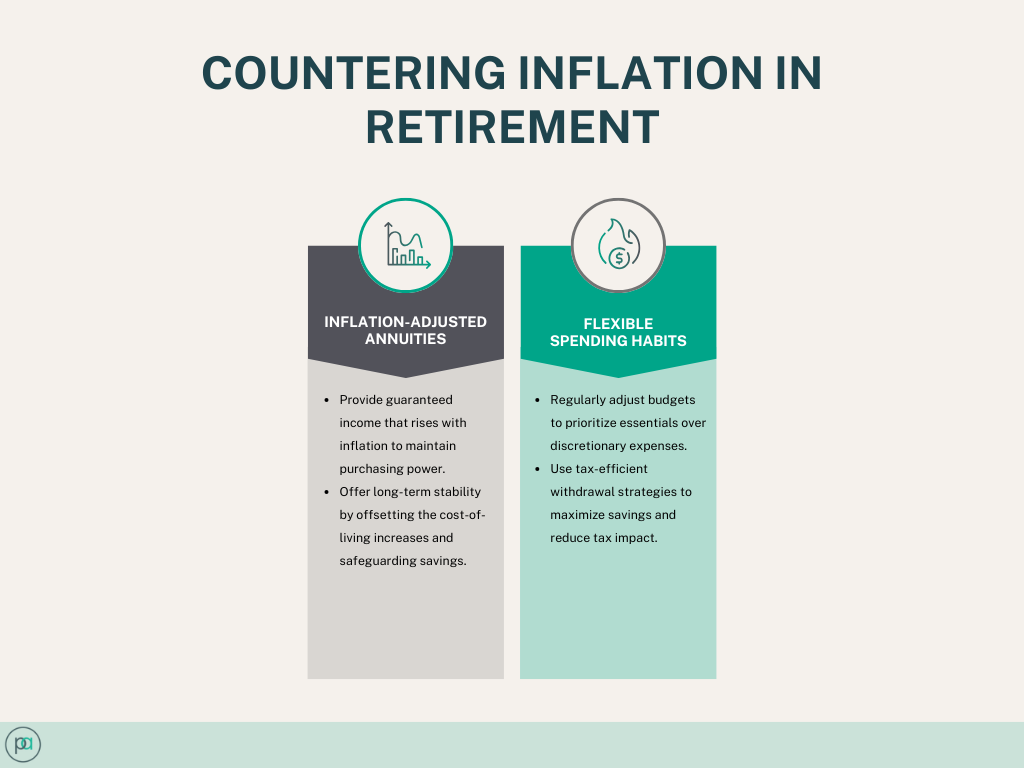
Inflation-adjusted annuities offer retirees a guaranteed income stream that increases over time, helping to offset the rising cost of living. Unlike fixed annuities, which provide a set amount of income, inflation-adjusted annuities adjust the payment amount according to inflation rates, ensuring that income keeps pace with increased expenses. This strategy is particularly useful for retirees looking to supplement their fixed income sources and safeguard their purchasing power.
Investing in inflation-adjusted annuities also adds a layer of stability to retirement planning, as they provide predictable, growing income for the long term. These annuities help retirees avoid the risk of running out of funds as inflation reduces the value of their savings. Incorporating them into a broader retirement strategy can enhance financial security and reduce anxiety over future cost-of-living increases.
How Can Flexible Spending Habits Help Counteract Inflation?
Adapting spending habits is one of the simplest yet most effective ways to manage the impact of inflation. Retirees should regularly review their budgets to identify areas where they can cut back on discretionary spending, such as dining out or travel. Prioritizing essential needs and reducing non-essentials ensures that retirement savings stretch further, even as inflation increases.
Additionally, using tax-efficient withdrawal strategies can minimize the impact of inflation on savings. By withdrawing funds from tax-deferred accounts strategically, retirees can reduce their overall tax burden and leave more money available for essential expenses. Flexibility in spending and tax planning allows retirees to adapt quickly to changing economic conditions, preserving financial health throughout retirement.
How Can You Inflation-Proof Your Retirement Savings for Long-Term Security?
Exploring growth opportunities, such as part-time work or skill development, offers a valuable approach to managing the impact of inflation on retirement savings. By engaging in part-time work, retirees can generate additional income that helps offset rising living costs. Moreover, this extra income provides a financial cushion, ensuring that savings don’t erode as quickly.
Skill development plays a key role in maintaining financial security during inflationary periods. By learning new skills or expanding existing ones, retirees can stay competitive in the workforce and increase their earning potential. This not only helps with immediate financial needs but also boosts long-term career satisfaction and adaptability.
Balancing part-time work with skill enhancement offers retirees a pathway to financial stability and personal growth. Here are a few resources and strategies to help seniors navigate these opportunities:
1. Job Boards for Seniors:
Several platforms cater specifically to older adults looking for part-time or flexible work. For instance, RetirementJobs.com connects retirees with employers who value their experience and maturity. Similarly, AARP’s Job Board lists opportunities from companies committed to hiring older workers. Another option is Workforce50, which focuses on job listings and career resources tailored to the 50+ demographic.
2. Learning New Skills:
Staying current with technology or learning new skills can open up more job opportunities. Websites like GetSetUp provide classes specifically tailored for older adults, covering topics from mastering Zoom to starting an online business. Additionally, SeniorNet offers computer and technology training for seniors, helping them build confidence in using modern tools. Public libraries and senior centers often host free workshops designed for older adults, making them an accessible way to enhance skills.
3. Volunteering as a Stepping Stone:
For those unsure about diving directly into paid work, volunteering can be an excellent way to re-enter a structured environment and make meaningful connections. Platforms like VolunteerMatch allow retirees to find local or virtual opportunities that align with their interests. Another option is AARP Experience Corps, where seniors can mentor and tutor children, leveraging their life experience to make a difference.
4. Freelancing and Consulting:
Seniors with specialized knowledge or industry experience might consider freelancing. While platforms like Upwork are open to all, retirees can explore WISE & Healthy Aging, which offers resources for older adults interested in consultancy or starting their own business. Additionally, organizations such as Encore.org focus on helping seniors transition into roles that combine purpose and income.
These resources not only help seniors remain financially independent but also foster a sense of purpose and engagement. By leveraging these tools, retirees can navigate the challenges of an inflation-affected economy while maintaining their well-being and vitality.
Safeguarding Your Retirement from Inflation's Impact
Protecting retirement savings from inflation is critical for long-term financial stability. By diversifying investments across stocks, real estate, and inflation-protected securities, retirees can insulate their portfolios from inflation’s effects. This approach ensures that retirement savings continue to grow, preserving purchasing power over time.
Leveraging inflation-adjusted income sources like Social Security benefits and annuities further strengthens financial security in retirement. These income streams provide a steady flow of funds that increase with inflation, reducing the risk of running out of money due to rising costs. Additionally, adopting flexible spending habits and regularly evaluating one’s financial health helps ensure that retirees can maintain their desired lifestyle.
Staying proactive and reviewing retirement planning regularly will position retirees to withstand the challenges of inflation. By consulting with a certified financial planner, like Partners in Aging (PiA) retirees can receive tailored advice to optimize their retirement portfolio and ensure long-term financial security. Contact us today. and begin planning today to protect your retirement savings and enjoy peace of mind throughout your golden years.