

Maximizing Your Cash Value Life Insurance: Strategies for Keeping or Cashing In
POSTED ON
Cash value life insurance is a type of permanent life insurance policy that offers more than just a death benefit. Alongside providing life insurance coverage that ensures your loved ones receive financial support after your passing, these policies also have a cash value component that accumulates over time. This cash value can be accessed during the policyholder's lifetime, offering a unique advantage over term life insurance, which does not build cash value.
For many policyholders, cash value life insurance represents a versatile financial tool. It allows them to save, invest, or borrow against the policy’s cash value, depending on their needs. By paying premiums regularly, you contribute to both the policy’s death benefit and the accumulation of cash value. Understanding how to maximize these benefits is key to leveraging your policy effectively.
This article explores strategies for managing your cash value life insurance, whether you decide to maintain it or consider cashing it in. We will guide you through key options, such as leveraging policy loans, utilizing paid-up additions, and navigating the complexities of 1035 exchanges. By understanding these strategies, you can make informed decisions that align with your financial goals and ensure your policy works for you.
Understanding Your Policy
To make the most of your life insurance policy, it's essential to have a clear understanding of its terms and conditions. This includes knowing how your premiums contribute to both the death benefit and the policy's cash value. Each type of permanent life insurance—whether it is whole life insurance, universal life insurance, or variable universal life insurance—has different mechanisms for cash value growth, so it's important to review your policy details carefully.
In addition to the cash value component, check for any additional features or riders that could enhance your policy. Some policies offer the ability to reinvest dividends or add riders for extra coverage. By understanding how these elements work, you can better evaluate how your policy aligns with your long-term financial plans. Consulting with your insurance company or a financial professional can also provide clarity on any aspects you find complex or unclear.
Strategies for Keeping the Policy
Leverage Policy Loans
One of the benefits of cash value life insurance policies is the ability to take out policy loans. These loans allow you to borrow against the cash value component of your policy, often at competitive interest rates and without the need for credit checks. This can be an effective way to access funds for various financial needs, from managing debt to covering unexpected expenses, all while keeping your policy active.
It’s important to carefully manage these loans to avoid any potential negative effects on your life insurance coverage. If the loan is not repaid, it can reduce the death benefit paid out to your beneficiaries. Be sure to understand the repayment terms and plan accordingly to ensure you maintain both the policy’s cash value and the death benefit intact.
Utilize Paid-Up Additions
Paid-up additions (PUAs) are a great way to enhance the value of your policy. This strategy involves using dividends or making additional premium payments to purchase extra coverage, which increases both the death benefit and the policy’s cash value. For those looking to maximize their life insurance policies without altering the existing terms, PUAs can be a cost-effective option.
PUAs can be particularly beneficial for those with whole life insurance, as they allow for gradual growth of the policy’s value without requiring major adjustments. However, it’s advisable to consult with a financial advisor to understand the pros and cons of this approach and ensure it aligns with your broader financial strategy.
Consider a 1035 Exchange
A 1035 exchange is a tax-free way to transfer the cash value from one permanent life insurance policy to another. This option can be advantageous if you find that a new policy offers better terms, lower premiums, or additional benefits that your current policy lacks. However, executing a 1035 exchange requires careful comparison to ensure the new policy truly provides more value.
Before proceeding with a 1035 exchange, engage with your current insurance company and a knowledgeable financial professional. They can help navigate the process and ensure that the transfer complies with IRS regulations, making the transition smooth and beneficial for your financial future.
Strategies for Cashing In
Partial Surrender
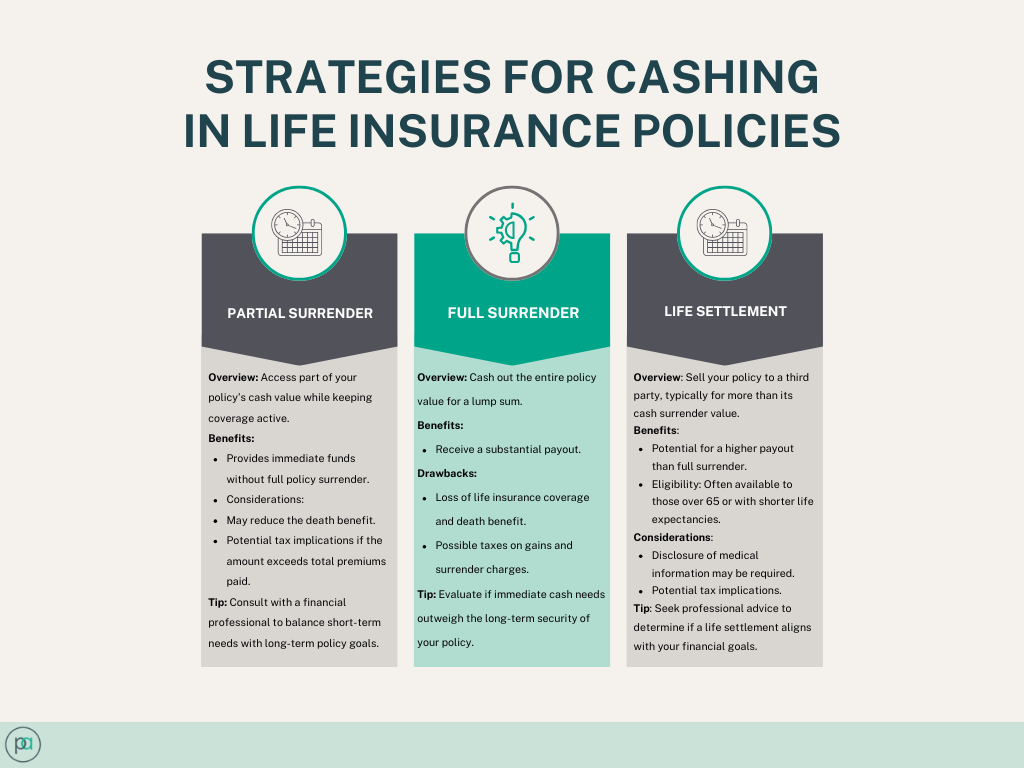
Partial surrender offers a way to access a portion of your policy’s cash value while keeping the life insurance coverage active. This strategy can be helpful for those needing immediate funds without fully surrendering their policy. However, it is important to note that withdrawing cash may reduce the death benefit, and there could be tax implications if the amount withdrawn exceeds the total premiums paid.
By carefully balancing the amount of cash withdrawn, policyholders can address short-term financial needs without significantly affecting the policy’s long-term benefits. It’s advisable to discuss this option with your insurance company or a financial professional to ensure it aligns with your financial goals.
Full Surrender
Opting for a full surrender means cashing out the entire value of your policy, which can provide a substantial lump sum. However, this also means losing the life insurance policy and the death benefit associated with it. Additionally, any gains from the cash value might be subject to taxes, and there may be surrender charges imposed by the insurance company.
Before choosing this route, consider whether the immediate cash benefits outweigh the long-term security provided by your policy. Full surrender should be a carefully considered decision, especially if there are other ways to address your financial needs without giving up your life insurance coverage entirely.
Life Settlement
A life settlement involves selling your life insurance policy to a third party for more than its cash surrender value but less than its death benefit. This option is usually available to individuals over 65 or those with a shorter life expectancy. Life settlements can provide a higher return than a typical full surrender, making them a viable option for those looking to maximize their policy’s value.
However, life settlements are complex and involve considerations such as disclosing medical information to potential buyers. There are also tax implications to consider, so it’s important to seek advice from professionals before proceeding. A life settlement might be suitable for those who no longer need their policy but want to extract the most value possible from it.
Factors to Consider
When deciding whether to keep or cash in your cash value life insurance, several important factors should be taken into account. Evaluate your current financial needs, long-term goals, and health status. Consider how your decision might impact other financial plans, such as retirement savings and estate planning. Assess the growth potential of your policy’s cash value component compared to other investment opportunities.
It’s also worth examining the stability and performance of your permanent life insurance policy. While policies like whole life or universal life insurance offer consistent growth, variable universal life can be riskier due to its investment-based structure. Weighing the potential gains against your risk tolerance will help you make a sound decision.
Lastly, consulting with financial professionals can provide insights into how best to balance your life insurance policy with other assets. They can guide you on leveraging benefits, managing loans, or exploring alternative investment opportunities. An informed approach ensures you maximize your policy’s value while securing your financial future.
Making the Right Choice for Your Financial Future
Maximizing the benefits of cash value life insurance requires a clear understanding of the policy’s terms and thoughtful consideration of your financial needs. Whether you choose to keep the policy by leveraging loans and paid-up additions or consider cashing in through a partial surrender, full surrender, or life settlement, the decision should be based on a thorough evaluation of your situation. Regularly reviewing your policy helps you adapt to changes and maximize the benefits over time.
Working with financial professionals is crucial for navigating the intricacies of cash value life insurance policies. They can provide personalized advice on strategies like 1035 exchanges and life settlements, ensuring your decisions align with your broader financial goals. Their expertise can make all the difference in securing a stable and prosperous financial future.
Partners in Aging encourages you to explore your options and take proactive steps in managing your cash value life insurance. By making informed decisions, you can maximize your policy’s benefits and provide lasting security for yourself and your loved ones. Connect with us today to understand how your life insurance policy can work for you.