

Medicaid Eligibility Explained: Who Qualifies and How to Apply
POSTED ON
Navigating healthcare can be confusing, especially when trying to understand Medicaid eligibility. Medicaid is a program funded by both state and federal governments to help millions of Americans get the healthcare they need. It provides essential coverage for low-income individuals, families, seniors, and people with disabilities. However, figuring out if you qualify and how to apply can be challenging.
This guide aims to simplify Medicaid by explaining who is eligible and how to apply. We will break down the rules and steps so that you can easily understand and take action. Whether you need coverage for yourself or a loved one, or you're just curious about the program, this guide will provide the information you need to navigate Medicaid confidently.
Understanding Medicaid
What Is Medicaid?
Medicaid is both a federal and state program designed to provide healthcare to low-income families and individuals. The program was created in 1965 under the Social Security Amendments. Being jointly funded by the federal and state governments, it’s managed at the state level, allowing each state to have its own Medicaid program with individualized eligibility criteria. The healthcare services provided by Medicaid include hospital care, doctor visits, long-term medical care, and custodial care.
How Is Medicaid Funded?
Funding for Medicaid is a shared responsibility between federal and state governments. Each state's federal contribution is determined through the Federal Medical Assistance Percentage (FMAP), which varies based on the state's per capita income. While states are the beneficiaries of federal funds, they must strictly adhere to federal guidelines to remain eligible.
Notably, since the inception of the Affordable Care Act (ACA), some states have expanded their Medicaid program, leading to an increase in the share of federal funds they receive. This expansion led to major changes, enabling a broader demographic to be covered, such as low-income adults without dependent children. It's worth noting that Medicaid's operation fluctuates between states.
Different states may be providing contrasting services, considering dissimilar eligibility criteria, and demonstrating diverse efficiency in managing their programs. The intricacies and variations across state lines further underscore the importance of understanding your state's specific Medicaid guidelines for smooth navigation and optimal benefits.
Eligibility Requirements
What Are the General Eligibility Criteria for Medicaid?
Medicaid is designed for low-income individuals, families, and disabled individuals. Many people are eligible based on their Modified Adjusted Gross Income (MAGI). Key factors affecting eligibility include income, household size, age, disability status, and pregnancy. Besides financial criteria, non-financial criteria such as state residency, U.S. citizenship, or qualifying immigration status also play a crucial role in determining eligibility.
What Are the Income and Asset Limits for Medicaid?
It's important to note that income limits vary by state and population group. Groups include children, parents, the elderly, and disabled individuals. In addition to income limits, asset limits also apply in some cases, primarily for the elderly and disabled.
Certain assets like the primary residence and personal belongings may be exempted. The way income and assets are assessed differs across various Medicaid programs such as long-term care. For more precise information, detailed lists of income and asset limits can be found on individual state Medicaid websites.
Specific Eligibility Groups
Children and teenagers are often covered under the Children’s Health Insurance Program (CHIP), ensuring they receive essential healthcare services. Pregnant women typically qualify for complete prenatal and postpartum care, providing them with the necessary support during and after pregnancy. Parents’ and caretaker relatives’ eligibility is often linked to their dependent children, ensuring families can access needed medical assistance.
Medicaid recognizes the diverse needs of its beneficiaries and has established distinct eligibility groups. Elderly and disabled individuals usually qualify through Supplemental Security Income (SSI), while certain medically needy individuals, despite exceeding Medicaid income limits, can still receive support due to high medical expenses. It’s crucial to remember that each state has its own guidelines, so checking specific state policies is essential to understand the exact eligibility parameters.
The Application Process
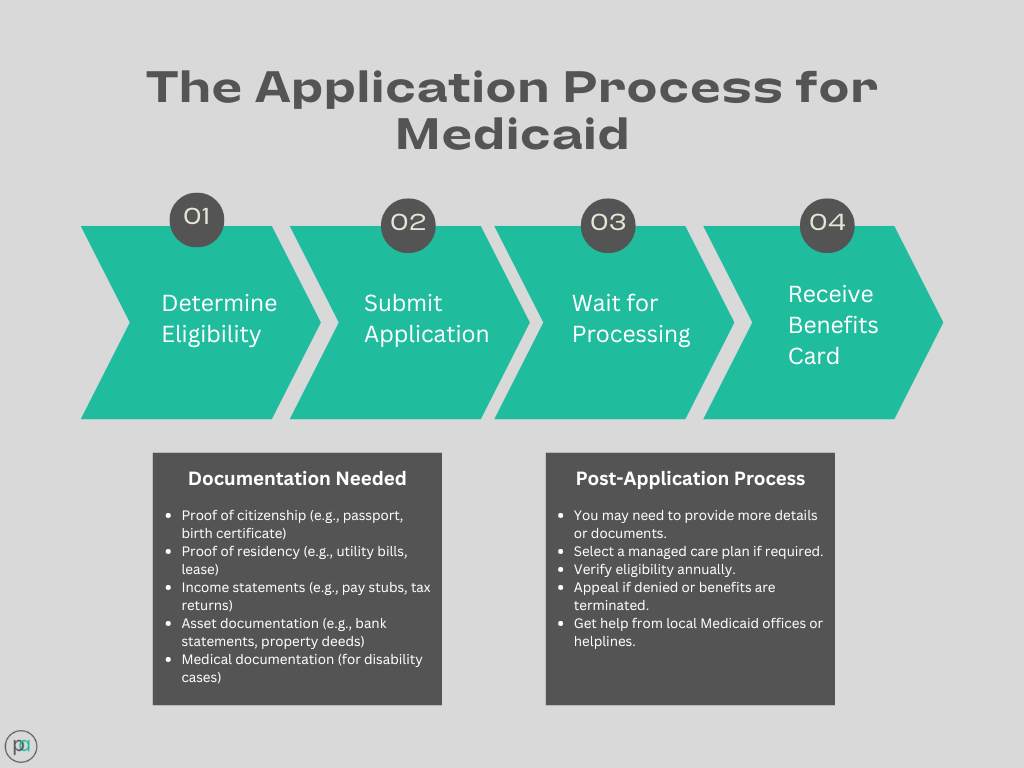
Applying for Medicaid isn't a one-step procedure. It takes a certain level of commitment to get through the process, but understanding the various steps can make it less overwhelming. The general application process is to first determine if you qualify for Medicaid.
Steps to Apply for Medicaid
- Start by evaluating your eligibility. There are online screening tools available at state and federal levels, or you can visit your local Medicaid office for personalized assistance.
- Upon confirming your eligibility, proceed with the application. You can submit it online, by mail, in person, or even over the phone.
- During the application process, you will need to present specific documentation, such as proof of income, residency, and/or citizenship.
- Keep in mind that processing times can vary. Simple applications can be processed quickly, while disability applications may take up to 45 days or more.
- Once your application is approved, you will receive a benefits card, which you will use to access services.
Documentation Needed
Proper documents validate your eligibility for Medicaid. Some of the required documents include:
- Proof of U.S. citizenship or a valid immigration status. This might be a passport or a birth certificate.
- Proof of state residency can be utility bills or a lease agreement.
- Income statements such as pay stubs or tax returns.
- Asset documentation such as bank statements and property deeds for elderly or disabled applicants.
- Medical documentation in cases of disability or pressing medical needs.
Post-Application Process
The activities post-application are as important as the application itself. After submission of your application:
- You may be contacted for further details or additional documents.
- After approval, you need to select a managed care plan if applicable to your case.
- Verify eligibility during annual renewals.
- If you are denied or your benefits are terminated, you can appeal the decision.
- States offer assistance through local Medicaid offices or helplines towards application support for your convenience.
State Differences in Medicaid
Variation in Eligibility and Services
The Medicaid program varies significantly by state. Each state offers unique programs under different names and services. They maintain substantial flexibility in setting eligibility rules and determining additions to the benefits like dental, vision care, and more.
Variability exists in the set income limits as well, with some states providing more generous thresholds than others. Furthermore, the opportunity for states to cover additional populations, like non-disabled childless adults, was made possible under Medicaid expansion.
Medicaid waivers serve as another key facet in this variation. They allow states to test new or existing approaches to healthcare delivery and payment systems, offering a further degree of customization based on unique state needs.
Medicaid Expansion Under ACA
The Affordable Care Act (ACA) granted states permission to extend Medicaid to cover low-income adults who do not have children. Those states that chose expansion now have higher income eligibility limits and provide broader coverage.
On the other hand, non-expansion states continue to follow more traditional eligibility criteria. This expansion policy has successfully led to significant reductions in the uninsured rate. Yet, it is not without controversy, with ongoing debates about the cost and benefits of such expansion.
Impact of Political Landscape
The political landscape profoundly influences state decisions on Medicaid, including expansion and prioritizing funding. Changes in the federal administration can bring about significant shifts in Medicaid's guidance and funding.
Political leadership in some states has leveraged Medicaid waivers, specifically Section 1115 waivers, to implement innovative programs and coverage models. These innovations may take the form of work requirements, premiums, or health savings accounts.
Finally, during economic downturns such as the COVID-19 pandemic or the Great Recession, political responses can lead to policy changes that directly impact Medicaid enrollment.
Navigating Medicaid With Confidence
Medicaid is a significant healthcare resource, benefiting millions of low-income and vulnerable individuals. Understanding the eligibility criteria and application process is essential to accessing its many benefits. From children and pregnant women to elderly and disabled individuals, Medicaid offers vital healthcare services tailored to diverse needs. However, navigating the intricate application process and state-specific variations can be challenging without the right information and support.
State-specific differences in Medicaid programs underscore the importance of being well-informed about local guidelines. Each state has unique eligibility rules, services, and coverage options, making it crucial to seek detailed information relevant to your region. The variations in funding, benefits, and application procedures highlight the need for a thorough understanding to maximize the benefits available. Successfully navigating Medicaid involves careful planning and preparation, including assessing your financial and medical conditions, gathering necessary documentation, and utilizing state and federal resources.
For those seeking personalized support and expert guidance, Partners in Aging provides valuable resources to help navigate Medicaid and other aging-related services. Our expertise can simplify the complexities of the Medicaid process, ensuring you receive the assistance you need. By leveraging their knowledge and support, you can confidently manage your healthcare needs and secure the benefits you deserve. Contact Partners in Aging today to get started on your path to better healthcare.