

Protecting Your Interests: Choosing Between Guardianship and Power of Attorney
POSTED ON
Guardianship and power of attorney are two legal mechanisms designed to protect an individual's interests, but they serve different purposes and come with distinct implications. Guardianship is a court-appointed arrangement intended for individuals who have been deemed incapacitated or unable to make decisions for themselves. This process involves ongoing oversight by a probate court, ensuring that the appointed guardian acts in the best interest of the individual, whether it pertains to their personal care or financial matters. Guardianship is typically considered when no other legal options are available to protect someone’s welfare.
On the other hand, a power of attorney (POA) is a legal document that allows a person (the principal) to designate someone else (the agent) to make decisions on their behalf. Unlike guardianship, setting up a POA does not require court approval, making it a more flexible option for those who are still capable of making their own decisions but may want assistance with financial or medical matters. With various types of POAs available, individuals can tailor this arrangement to meet specific needs, such as managing bank accounts, handling legal matters, or overseeing healthcare decisions.
Understanding the difference between a guardian and a power of attorney is crucial for making informed decisions about how to best protect your interests or those of your loved ones. This guide will explore how each legal tool works, their benefits, and the factors to consider when deciding which option suits your circumstances. Consulting with an estate planning attorney can help you navigate these choices and create a plan that reflects your unique situation and future needs.
Understanding Guardianship
Definition and Purpose of Guardianship
Guardianship is a legal arrangement where a probate court appoints a guardian to oversee the affairs of an individual who is no longer capable of managing their own personal or financial matters. This can be due to mental disability, illness, or diminished mental capacity. The guardian’s role is to make decisions that are in the best interest of the individual, ensuring that their health care, financial affairs, and day-to-day needs are adequately managed. This legal relationship provides comprehensive protection but also means a loss of autonomy for the person under guardianship.
The appointment process involves filing a petition with the court, supported by medical evaluations proving the individual's incapacity. During guardianship proceedings, the court assesses the evidence and decides who will be appointed as the guardian. The selected person must demonstrate their ability to manage the responsibilities effectively. Because guardianship involves ongoing court supervision, it ensures transparency and accountability, safeguarding the interests of the person in need.
Types of Guardianship
Guardianship can vary depending on the extent of decision-making authority granted. Full guardianship provides complete control over personal, legal, and financial decisions, while limited guardianship restricts the guardian’s powers to specific areas, such as managing health care or financial matters. In some cases, joint guardianship may be established, allowing multiple guardians to make decisions collaboratively, creating checks and balances.
Additionally, there are specific forms of guardianship tailored to urgent needs. Emergency guardianship provides temporary authority to protect an individual’s well-being or assets during a crisis, while conservatorship focuses solely on managing financial assets and legal matters. Choosing the right type of guardianship depends on the individual's needs and the nature of their incapacity, making it essential to consult legal professionals to determine the best course of action.
Power of Attorney Explained
Definition of Power of Attorney
A power of attorney (POA) is an attorney document that allows a person, known as the principal, to appoint an agent (attorney in fact) to make decisions on their behalf. This can include managing bank accounts, handling financial matters, or making medical care decisions. Unlike guardianship, which is established through a court process, a POA is set up proactively by the individual while they are still capable of understanding and making their own choices. This makes POAs an essential part of estate planning, providing peace of mind that trusted individuals will act according to their wishes if they become unable to make decisions themselves.
There are various types of POAs, including general power of attorney, which grants broad decision-making power, and durable power of attorney, which remains effective even if the principal becomes incapacitated. Establishing a POA can prevent the need for court-appointed guardianship in the future, as it allows individuals to choose who will manage their affairs, reducing the possibility of disputes among family members.
Types of Power of Attorney
The flexibility of a power of attorney allows it to be customized to suit different needs. A durable power of attorney remains in effect even if the principal loses mental capacity, ensuring continuous management of their financial or medical affairs. Meanwhile, a springing power of attorney only takes effect when a specific event occurs, such as the principal becoming incapacitated, adding an extra layer of control for the principal.
For health care decisions, a medical power of attorney is essential. This type authorizes an agent to make medical decisions if the individual is unable to communicate their wishes, ensuring that their preferences regarding health care are respected. Financial power of attorney, on the other hand, focuses on handling monetary and legal matters, from paying bills to managing investments. Each type of POA can be set up independently or in combination to address a person’s comprehensive needs.
Distinguishing Between Guardianship and Power of Attorney
Court Appointments and Personal Preferences
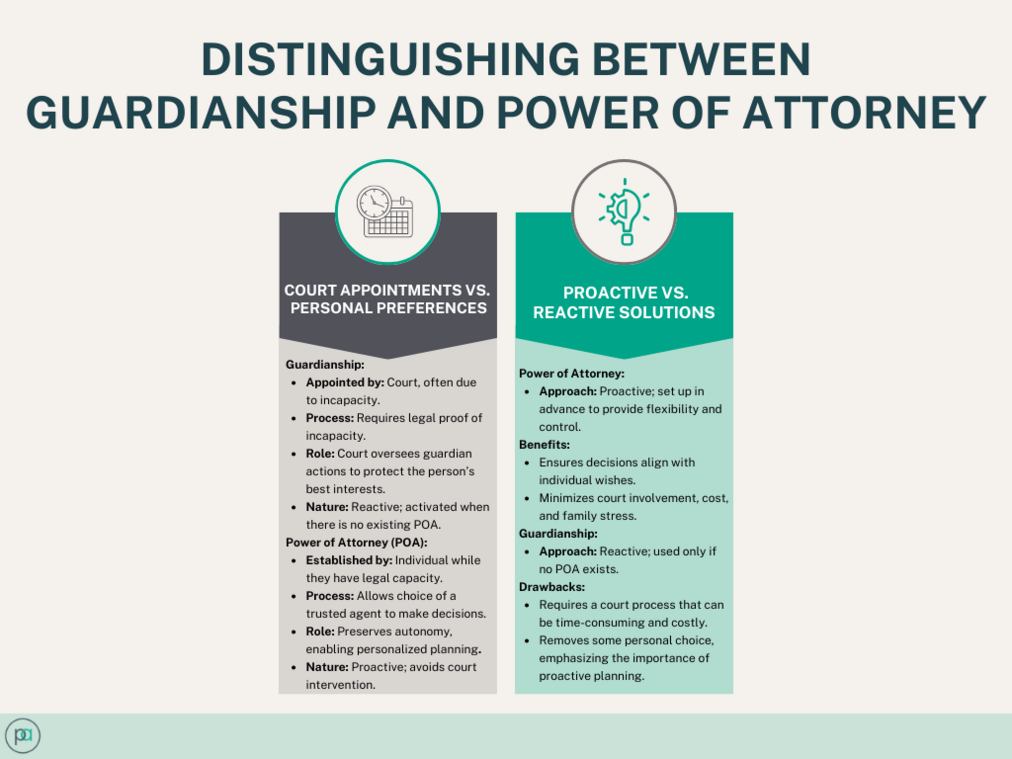
Guardianship and power of attorney differ significantly in how they are established and managed. Guardianship is appointed by a court, often requiring proof of an individual’s incapacity. This legal mechanism is reactive, coming into play only when a person is no longer able to make decisions, and there are no existing legal documents like a POA in place. The court’s role ensures that the guardian’s actions remain in the best interest of the person, providing oversight through the guardianship proceedings.
In contrast, a power of attorney is a proactive attorney document that individuals set up while they still have legal capacity. It enables them to choose who will make decisions on their behalf, preserving their autonomy. This process allows for more personalized planning and can help prevent the emotional strain and costs associated with court-appointed guardianship. By selecting a trusted agent, individuals can avoid potential conflicts among family members and ensure their financial and medical affairs are handled according to their wishes.
Proactive vs. Reactive Solutions
Power of attorney represents a proactive approach to estate planning. It allows individuals to decide who will manage their financial and medical care, offering control and flexibility. Establishing a POA in advance means that if incapacity occurs, there is already a trusted person in place to handle important decisions, avoiding the need for court intervention. This planning can foster smoother family relationships, as it minimizes the need for sudden legal decisions during difficult times.
Guardianship, however, is a reactive solution used when no other legal documents are in place or when existing arrangements fail. If someone becomes incapacitated without a valid power of attorney, family members may need to seek guardianship through a probate court, which can be a time-consuming and costly process. While guardianship provides comprehensive protection, it also removes a level of personal choice, emphasizing the importance of proactive planning to avoid such situations.
How to Determine if Guardianship or a POA is Appropriate for your Situation
Deciding between guardianship and power of attorney depends on various factors, including the individual's current legal capacity, personal preferences, and future planning goals. Guardianship offers comprehensive protection through a court-supervised legal relationship, making it a solution for situations where an individual cannot make decisions and no prior arrangements exist. However, this process can be restrictive and involves legal proceedings that may create additional stress for family members.
On the other hand, a power of attorney allows individuals to maintain control over who manages their affairs, offering flexibility and personalization. It enables people to plan ahead, designating trusted agents to handle their financial and medical matters as needed. Setting up a POA with an estate planning attorney ensures that your wishes are clear, legally valid, and aligned with your long-term needs.
Partners in Aging encourages individuals to be proactive in protecting their interests by exploring options like power of attorney. Consulting with an experienced estate planning attorney can help determine which legal tool best suits your situation. By planning ahead, you can ensure that your wishes are respected and that your loved ones are protected, minimizing the need for reactive solutions like guardianship. Connect with us today!