

Safeguarding Your Wealth: 5 Essential Asset Protection Strategies
POSTED ON
As individuals approach retirement, protecting their accumulated wealth becomes crucial for financial stability. We are going to discuss five key asset protection strategies designed to help retirees and those nearing retirement safeguard their money. Each strategy involves different legal tools and financial products, each with its own benefits and potential downsides.
By understanding these options, you can make smart choices that fit your unique situation. Get ready to tackle the complexities of asset protection and secure your financial future with our top strategies. Finding the best approach requires careful research and planning, but it will ensure your wealth is well-protected for years to come.
1. Establishing a Trust
What Is a Trust and What Are The Different Types Types?
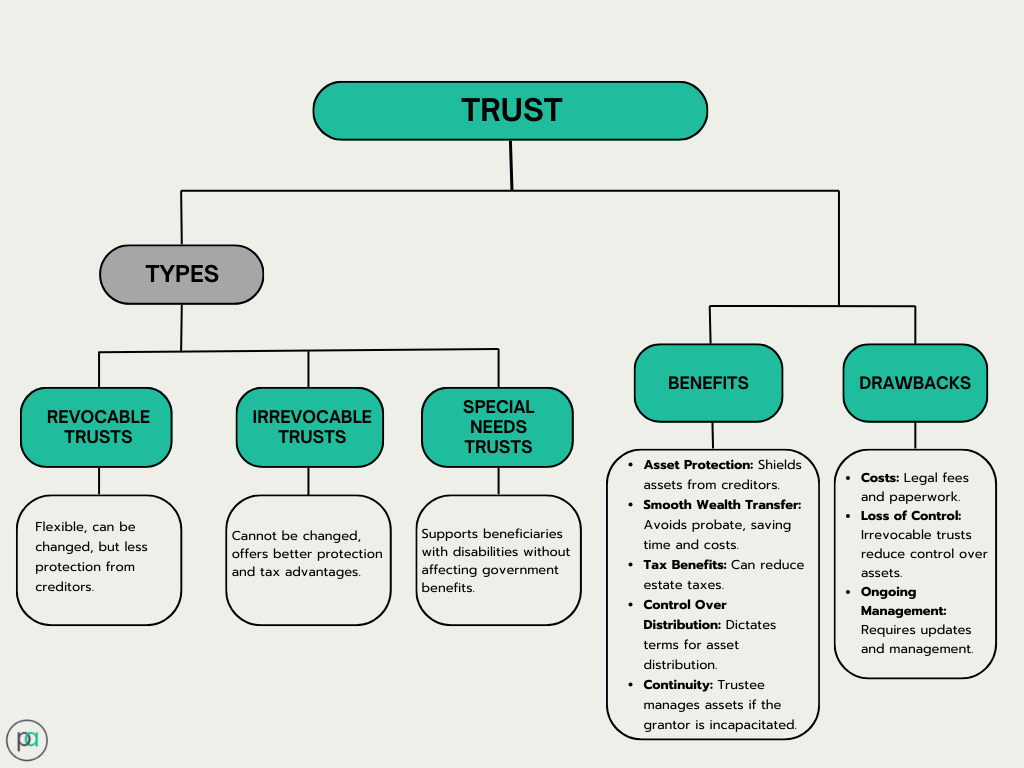
A trust is a legal agreement where a trustee holds and manages assets for beneficiaries. These assets may include cash, real estate, stocks, or other property. One key attribute that distinguishes the types of trusts is whether or not they can be amended.
Revocable trusts, as the name suggests, can be changed or even dissolved by the trust grantor during their lifetime. They offer flexibility but less protection from creditors. In contrast, irrevocable trusts, once established, generally cannot be altered. This aspect provides better protection from creditors and can offer significant tax advantages. However, it comes at the cost of control over the assets.
A special needs trust is designed to support a beneficiary with disabilities. It's carefully crafted not to disrupt the beneficiary's eligibility for government benefits. By design, trusts offer a level of privacy since they typically avoid the public probate process.
What Are the Benefits of Using a Trust?
Trusts play a vital role in asset protection strategies. When correctly structured, they provide a safe haven for assets, away from creditors' reach. This defense is particularly valuable for those in professions facing a high risk of lawsuits.
They also ensure a smooth and direct transfer of wealth to the next generation, bypassing the complex and often prolonged probate process. This benefit can result in significant savings in terms of time and probate-related costs.
Trusts have the potential to minimize estate taxes, consequently preserving more of the estate's value for future generations. Furthermore, they offer the grantor a way to dictate terms for asset distribution, aligning with their specific wishes for the intended beneficiaries.
In cases where the grantor becomes incapacitated, trusts also offer a continuation of asset management. The designated trustee assumes the role and manages the assets, bringing peace of mind to the grantor.
Drawbacks and Considerations in Using Trust
Creating a trust usually involves legal fees, paperwork, and, sometimes, regulatory scrutiny. Placing assets in an irrevocable trust may cause discomfort as you surrender control over those assets. The transferring of assets requires careful planning and can be a time-consuming process.
Most importantly, as the grantor's life situation changes, the terms of the trust might need updating. This requires ongoing management and potential additional costs. Furthermore, remember that not all asset types may be appropriate or advantageous for inclusion in a trust.
2. Homestead Exemption
What Is the Homestead Exemption
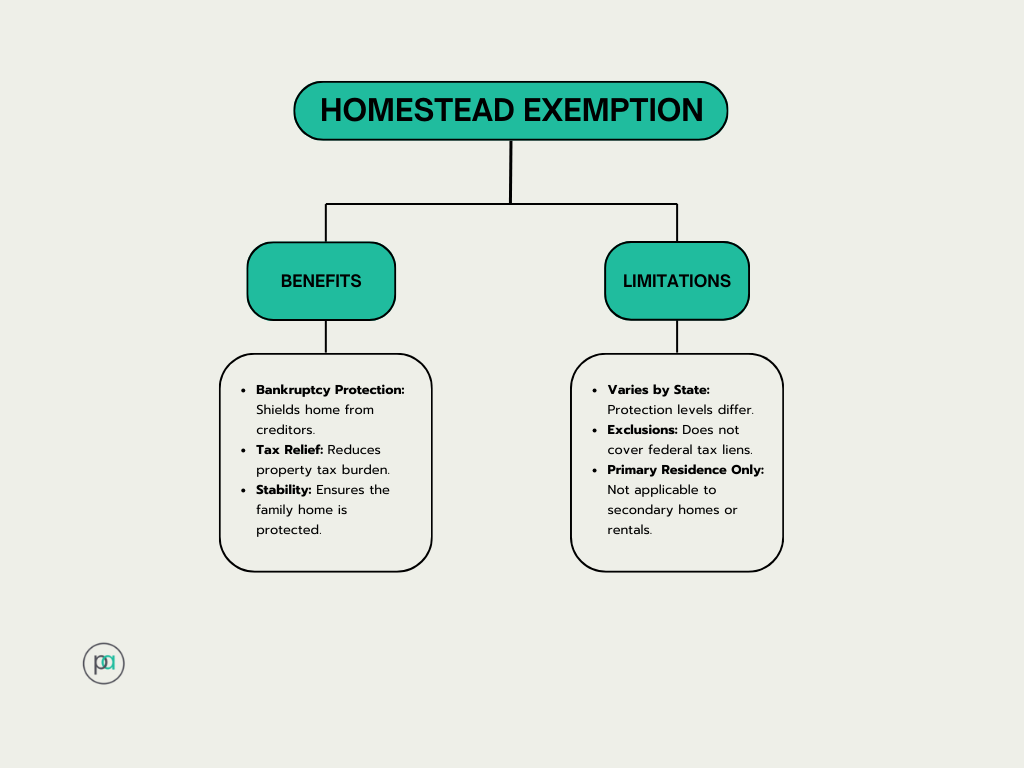
The homestead exemption is a legal provision that lends protection to the value of a person's home from property taxes and creditors, often following the loss of a homeowner's spouse. This provision designates a part of the value of one's home as "off-limits" to potential creditors, acting as a defensive shield. Beyond that, the homestead exemption also serves as a tax relief tool, lowering a property’s taxable value.
This mechanism offers a reprieve from property taxes by declaring a fixed amount or percentage of the home’s value as exempt from taxation, a figure that can significantly fluctuate from state to state. Depending on the area, this exemption is sometimes automatically applied once the homeowner's primary residence is established, while in other jurisdictions, homeowners must proactively file to receive these benefits.
Benefits of the Homestead Exemption
The homestead exemption offers several benefits. It provides a safety net against bankruptcy or fallout from creditor claims. The exemption can translate into notable long-term savings if it is able to scale down annual property tax bills. Furthermore, it wards off the possibility of coerced home sales to satisfy creditors.
This fortification ensures stability and security, which becomes especially meaningful for homeowners who are seniors or those on fixed incomes. Protection could potentially extend to surviving spouses or children, serving as a bulwark to preserve the family home.
Limitations and Potential Issues
However, the homestead exemption has limitations. The scope of exemption varies widely from state to state, with some offering more robust protection than others. Despite its broad protective cover, it generally does not shield against federal tax liens and certain other claims.
The exemption only applies to primary residences, excluding secondary or rental properties, and typically requires homeowners to file for it, often necessitating annual re-application. Furthermore, some states apply strict eligibility criteria, limiting who qualifies for the homestead exemption.
3. Liability Insurance
Types of Liability Insurance
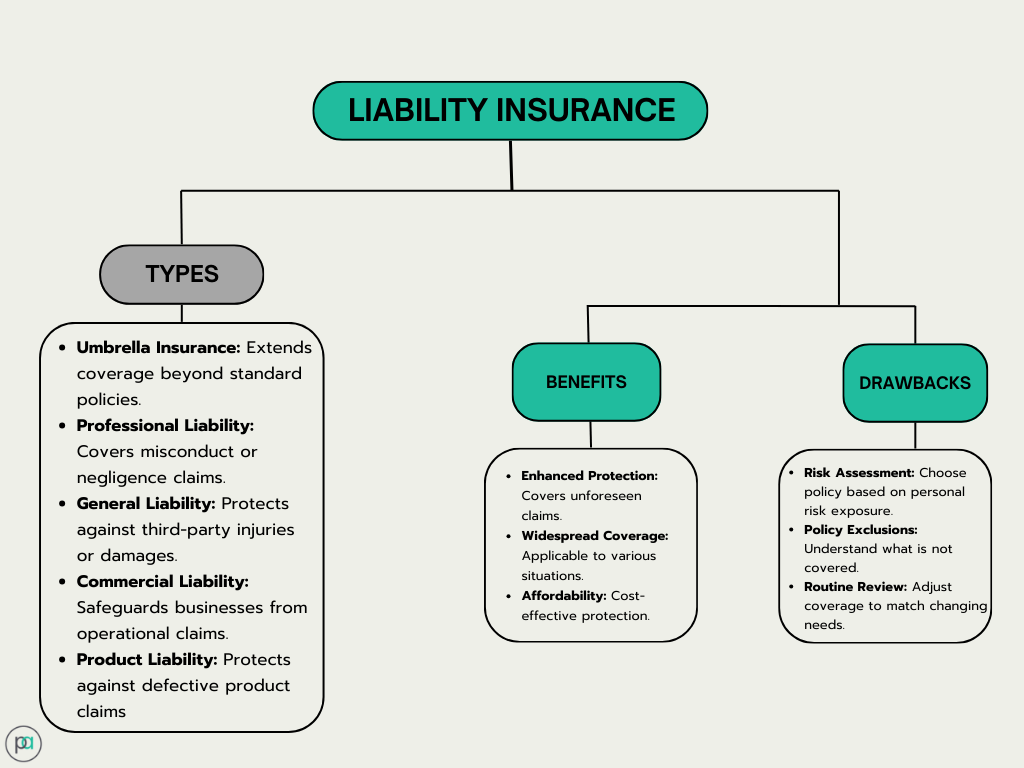
Liability insurance comes in many forms, each designed to address specific needs and risks. First, umbrella insurance extends coverage beyond the limits of standard policies, providing extra security. Professional liability insurance is crucial for professionals, offering defense against misconduct or negligence claims.
Similarly, general liability insurance shields owners from claims arising from third-party injuries or property damages. For entrepreneurs, commercial liability insurance is essential, safeguarding their ventures from claims related to their operations. Lastly, product liability insurance protects manufacturers, distributors, and retailers from claims tied to defective products they've produced or sold.
Benefits of Liability Insurance
Liability insurance offers numerous benefits, key among them being enhanced protection against hefty, unforeseen claims that could tap into your assets. The coverage is widespread, applying to different situations, from automotive accidents to incidents happening at home. In terms of asset protection, it aids by absorbing potentially large payouts, thus securing heirs and beneficiaries' inheritance.
Despite offering such broad coverage, liability insurance is relatively affordable. It offers peace of mind, knowing that hefty legal defenses are catered for, should you ever need them.
Considerations When Choosing Liability Insurance
Before committing to a liability insurance policy, several considerations are crucial. You need to identify your personal risk exposure to choose the right policy and coverage limits. Additionally, understanding policy exclusions can help avoid unforeseen uncovered claims.
In some cases, you may need additional policies to cover business or professional risks effectively. As such, it's worthwhile to compare different insurers' offerings to identify the best coverage options and rates. Always remember to review and adjust your coverage routinely to match your changing needs and circumstances.
4. Asset Repositioning
What Is Asset Repositioning?
Asset repositioning is a strategy centered on transforming assets into forms more resistant to claims or better attuned to financial objectives. This could involve transferring funds from liquid accounts to retirement accounts or investing in exempt asset classes like life insurance. Seen as a vital maneuver for fiscal objectives, asset repositioning aligns assets with goals such as planning for retirement or legacy planning.
To mitigate risk, this strategy can spread risk across a wider variety of asset classes or geographical locations, insulating the portfolio against market volatility or economic downturns. The diverse applicability of this strategy means it can be employed with various assets, including stocks, bonds, real estate, and business interests.
Benefits of Asset Repositioning
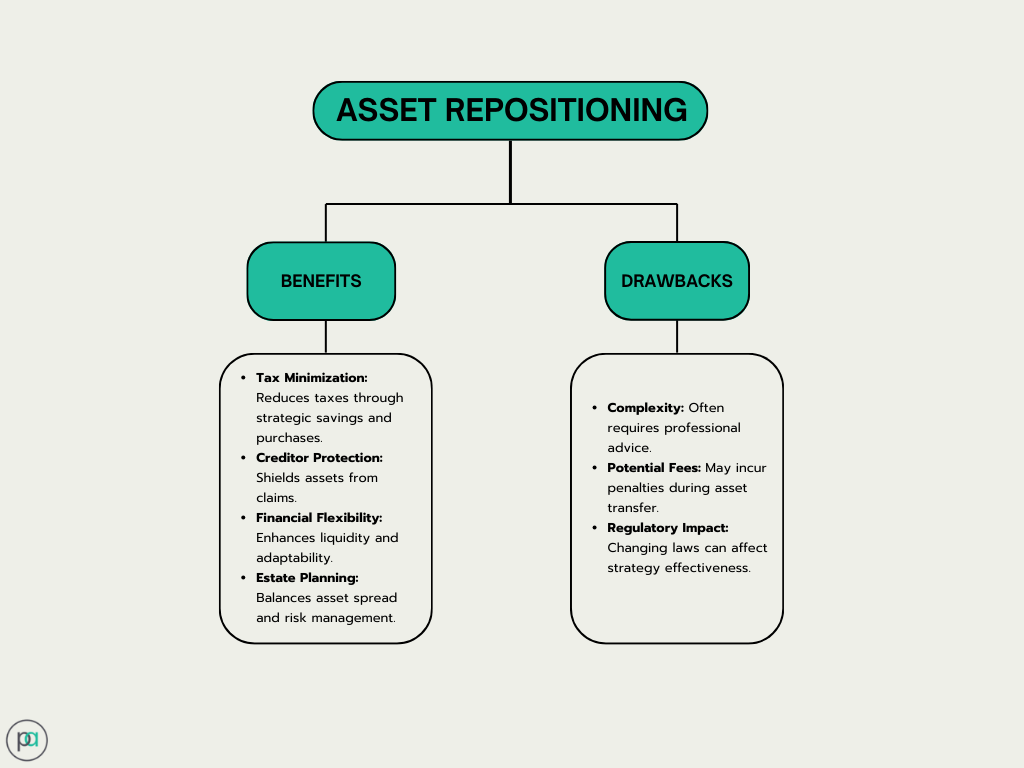
Asset repositioning offers a legal avenue for minimizing taxes through retirement savings and strategic purchases. It shields assets from creditors by transforming them into forms that are more challenging to claim. It promotes financial flexibility and liquidity, necessary for adapting to changing life circumstances. Moreover, it supports better estate planning by facilitating a balanced asset spread and management of risk. Interestingly, it can enhance eligibility for government benefits through a strategically-arranged asset portfolio.
Drawbacks of Asset Repositioning
Despite its advantages, asset repositioning can be complex and often requires professional financial advice. It may lead to fees or penalties, especially during the transfer of funds from certain accounts. Changing laws and regulations can impact its effectiveness. Some asset repositioning strategies might also hamper short-term liquidity due to long lock-in periods. If executed incorrectly, asset repositioning can result in lost value or unforeseen tax implications. Therefore, it must be approached with due diligence and expert advice.
5. Gifting Assets
Advantages of Gifting Assets
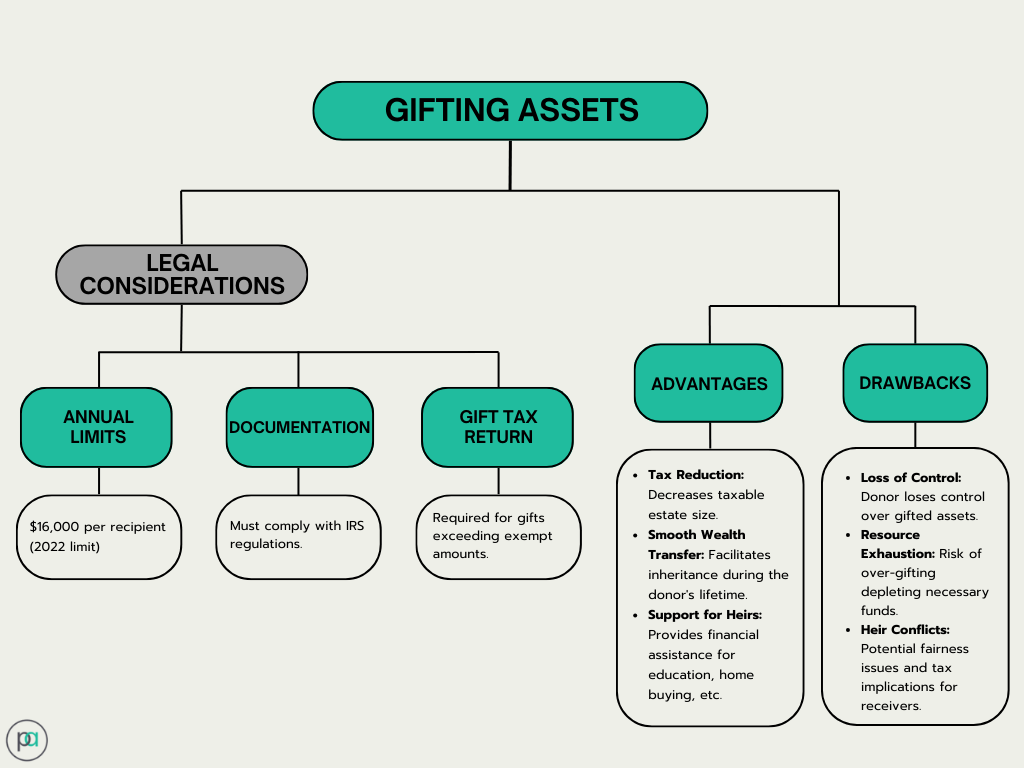
Gifting assets can be an effective strategy for managing one's estate and mitigating tax burdens. It helps reduce the size of the taxable estate, potentially reducing onward estate taxes. Used strategically, it also enables a smooth transfer of wealth to heirs, mitigating the impact of lump-sum inheritances. A planned approach to gifting gives the grantor the joy of seeing their heirs benefit from gifts during their lifetime. It can even provide financial support to family members for needs such as education or home buying.
Legal Considerations for Gifting Assets
It's crucial to factor in legal considerations when gifting assets. The law limits annual tax-free gifts to $18,000 per recipient as of 2024. Additionally, the lifetime gift tax exemption plays a significant role concerning estate taxes. To comply with IRS regulations, beneficiaries and donors must thoroughly document these transactions. Furthermore, gifts exceeding the exempt amount necessitate filing a gift tax return.
Potential Drawbacks of Gifting Assets
While gifting assets has its advantages, it does come with potential drawbacks. Once gifted, these assets are out of the donor's control, which could lead to financial instability. Over-gifting could also exhaust resources needed for the donor’s future needs. Conflicts might arise among heirs due to perceived fairness issues, and unexpected tax implications could affect the receiver's financial health.
Securing Your Financial Future
Effective asset protection strategies are essential for maintaining financial security in retirement. This article has covered five critical strategies: establishing a trust, leveraging the homestead exemption, obtaining liability insurance, asset repositioning, and gifting assets. Each of these strategies offers unique benefits and potential drawbacks, making it crucial to understand and consider them carefully to ensure your wealth is well-protected.
Establishing a trust can offer legal protection and efficient wealth transfer, while the homestead exemption shields your home from creditors and reduces property taxes. Liability insurance provides an additional layer of defense against unforeseen claims, and asset repositioning can optimize your financial portfolio for better risk management. Gifting assets strategically can also reduce tax burdens and support loved ones.
Navigating the complexities of these strategies can be challenging. If you need assistance in understanding and applying these asset protection methods, consult with financial advisors and legal professionals from companies like Partners in Aging. They can help tailor these strategies to your individual needs and circumstances, ensuring you make informed decisions that align with your financial goals.
Contact us today and let our experts be dedicated to helping you explore your options and create a comprehensive plan to secure your financial future.