

The Future of Elder Care Services: Innovations and Trends to Watch
POSTED ON
As the global population ages, the landscape of elder care services is rapidly evolving. This evolution is fueled by technological advancements and changing societal needs, which are reshaping how care is delivered. Innovations like telemedicine, smart home technologies, and AI-powered health monitoring systems are significantly transforming elder care. These advancements are making care more personalized and accessible, leading to improved health outcomes and enhanced quality of life for seniors.
The growing demand for elder care services is driving a shift toward more sustainable and efficient models of care. Governments, healthcare providers, and tech companies are collaborating to develop solutions that address the unique needs of the aging population. This collaboration is resulting in a variety of innovative approaches that not only improve care but also support the physical, emotional, and mental well-being of seniors.
Key trends include the shift toward in-home care, the integration of holistic wellness strategies, and a renewed emphasis on caregiver support. These developments are aimed at providing seniors with more independence, better health outcomes, and a higher quality of life. By embracing these innovations, elder care services are set to offer more effective, compassionate, and efficient care for the aging population.
What Are the Technological Advancements Revolutionizing Elder Care?
1. Telemedicine
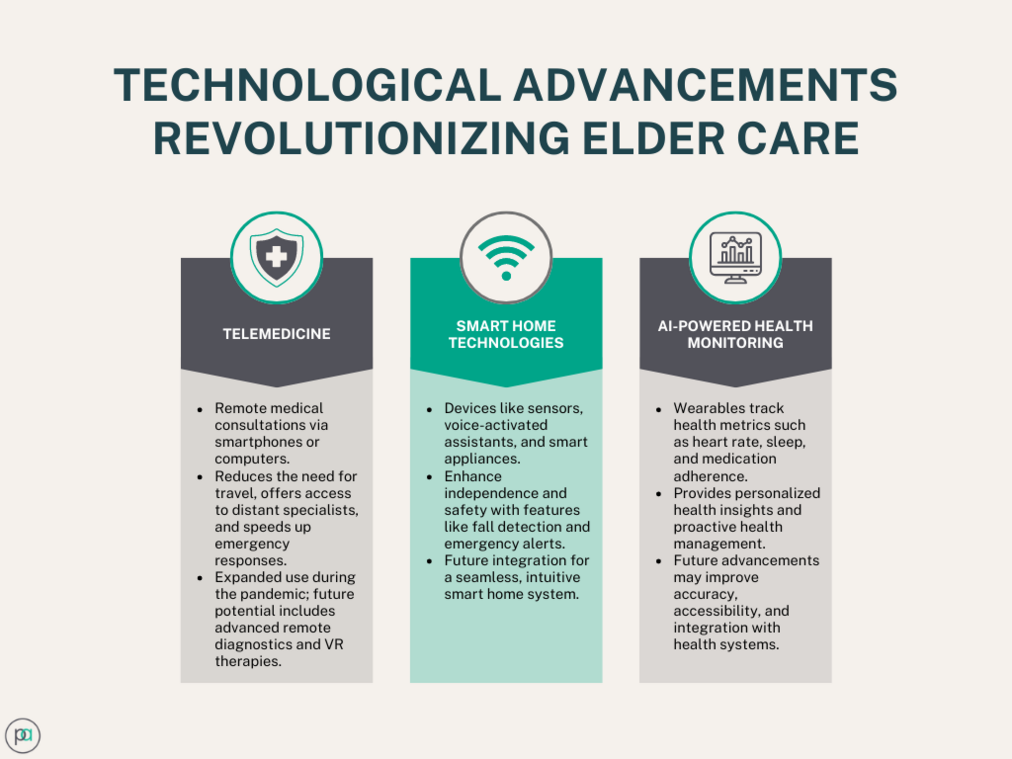
Telemedicine is becoming a cornerstone of elder care. This technology-facilitated approach to medicine offers seniors, many of whom may have mobility issues, the possibility to receive medical consultations remotely. Seniors can now connect with doctors and specialists through their smartphones or computers right from the comfort of their homes.
The advantages of telemedicine are multifaceted. Notably, it relieves the stress and inconvenience associated with traveling to medical appointments. Additionally, it allows for improved access to medical specialists who may not be in their geographical vicinity. The time between the onset of an emergency and medical response may also be reduced significantly.
Telemedicine saw a boom during the pandemic, illustrating the key role it plays in providing vital healthcare services regardless of circumstances. Looking to the future, the scope of telemedicine may expand to encompass advanced remote diagnostic tools and virtual reality-assisted therapies.
2. Smart Home Technologies
Another innovative solution reshaping the landscape of elderly care comprises smart home technologies. These include a range of devices like sensor-based systems, voice-activated assistants such as Amazon Alexa and Google Nest, and automated domiciliary mechanisms even as sophisticated as smart refrigerators.
These technologies aim to ease the lives of seniors by assisting with everyday tasks, providing them an enhanced sense of independence. Additionally, smart home technologies have the potential to provide safety features like fall detection, door sensors, and emergency alerts that can dramatically increase seniors' security at home. Future developments could potentially integrate various devices to create a seamless, intuitive smart home system.
3. AI-Powered Health Monitoring
The advancements aren't restricted to homes and computers. Embracing wearable technology, older adults can utilize AI-powered devices that monitor crucial health metrics. These can encompass a range from heart rate and sleep patterns to medication adherence—all tracking daily health activities.
Examples of these wearables include smartwatches specifically designed for continuous health monitoring. The information these devices collect over time can be used to predict potential health risks, enabling seniors to take proactive steps in managing their health by consulting a healthcare professional early on.
The power of AI comes to the fore with the ability of its algorithms to analyze these large datasets, coming up with personalized health insights beneficial for both seniors and their caregivers. This intimate informatics can lead to tailored health strategies with the nuance required for any medical steps taken, amplifying preventative health approaches.
On its own, the role of AI in revolutionizing senior care is undisputedly significant. Future advancements could even see these technologies becoming more accurate, accessible, and integrated within larger health systems. If medical providers are allowed access to this data, they may also be able to uncover potential health issues before they could traditionally get diagnosed.
What Are the Rising Trends in Elder Care Services?
As we anticipate the future of senior care, several rising trends have emerged that are expected to have a significant impact. One of the most substantial shifts we're witnessing is in regards to care location, specifically a move toward in-home care.
1. The Shift Toward In-Home Care
Increasingly, in-home care is becoming the preferred choice for many seniors. This approach allows them to safely age in their familiar surroundings, providing comfort and a sense of stability. Aided by innovations in telehealth and remote monitoring systems, professionals can effectively manage seniors' health and daily needs from a distance.
This form of care isn't limited to just health-related help. Home care services also assist with daily activities and offer companionship, adding a vital social aspect to care. Financially, choosing in-home care could be a more economical option compared to traditional care facilities.
Reflecting its advantages of personalized attention and comfort, the demand for at-home care is expected to rise. This represents a shift in mindset, where seniors' preference for aging in place is respected and accommodated.
2. The Integration of Holistic Wellness Approaches
Holistic wellness goes beyond merely addressing physical health. It also focuses on emotional and social health, promoting overall well-being amongst seniors. Programs commonly encompass physical fitness activities, mental health support, and even social activities, forging a multi-faceted approach to senior care.
Nutrition naturally forms a crucial part of this holistic model, with dietary plans tailored to each individual’s health needs. Furthermore, alternative therapies such as meditation, acupuncture, and aromatherapy are gaining acceptance within the holistic framework. By prioritizing holistic wellness, healthcare services can align themselves with the growing emphasis on preventive care, proactively addressing health concerns before they manifest into more severe issues.
3. The Emphasis on Caregiver Support and Training
While the role of caregivers has always been crucial in the lives of seniors, its importance is now being further recognized and amplified. Caregivers are fundamental in maintaining the daily lives of seniors and enhancing their overall well-being. Emphasis on caregiver support and training has become a key trend to ensure the best possible care.
Training programs for caregivers are being designed to provide essential skills in medical care, emergency response, and emotional support. These programs equip caregivers with the tools to offer comprehensive care that addresses all aspects of a senior's well-being. This approach helps caregivers feel more confident and effective in their roles.
In addition to skills development, emotional support for caregivers is crucial. Platforms are being created where caregivers can connect, share resources, and offer mutual support. These networks help reduce caregiver fatigue and maintain the quality of care, ensuring a better future for senior care.
What Is the Role of Policy and Community in Shaping Elder Care?
Government Policies and Regulations
Government policies and regulations play a significant role in shaping the quality and availability of elder care services. Programs such as Medicare, Medicaid, and the Older Americans Act are key examples of policies that directly impact senior care. As these policies change, so does the landscape of funding, service delivery, and incentives for innovations in the field. Moreover, advocacy groups tirelessly work towards influencing policies, with their prime focus being on protecting and benefiting the aging population. There is keen anticipation in this sector that future policies will increase funding for technology-based solutions and robustly support in-home care solutions.
Community Support Networks
Local communities form the backbone of support for the elderly, often through volunteer programs and local services. Community centers play a pivotal role by offering socialization opportunities and health-related programs, contributing to seniors’ overall well-being. Additionally, faith-based organizations extend vital resources, further strengthening the community support network. Collaborative efforts among these organizations vastly enhance service reach and effectiveness, ultimately creating a more supportive and caring environment for seniors.
Educational and Awareness Campaigns
Education and awareness campaigns inform the public about current and emerging options for senior care, helping to reduce the stigma associated with aging and cognitive impairments like dementia. Initiatives such as webinars, workshops, and information sessions empower individuals with the knowledge needed for informed decision-making. Partnerships with media outlets and advocacy organizations broaden the reach of these campaigns, ensuring accessibility to a wider audience. These efforts are crucial for ensuring caregivers and those planning for the future are aware of their options.
A Look Into the Future: What Are the Predictions and Expectations?
Advanced Robotics in Elder Care
Robotics is emerging as a potent tool in elder care. With abilities to assist in daily tasks like cleaning, cooking, and offering companionship, they fill a significant role. Developments in the field of robotic prosthetics and mobility aids are vital in enhancing independence among seniors. Robotic companions such as the PARO therapeutic robot are known to provide emotional support, a crucial aspect of elder care. The adoption rates of robotics in elder care are predicted to rise, driven by technological advancements. Future anticipations include the development of more sophisticated and human-like robots capable of more complex interactions.
Personalized Genomic Medicine
Personalized genomic medicine is transforming healthcare. Tailoring medical treatment based on individual genetic information maximizes the therapeutic effect while minimizing adverse effects. This approach brings benefits such as more precise medication plans and improved disease prevention strategies. With research in genomics providing new insights into aging and age-related diseases, personalized treatment plans are leading to improved health outcomes and a better quality of life for seniors. As genomic medicine evolves, it is set to become a crucial aspect of comprehensive elder care strategies.
Environmental and Sustainable Elder Care Solutions
Environmentally friendly and sustainable practices are reshaping the elder care landscape. Whether it's sustainable operations in care facilities that reduce environmental impact or the advent of eco-friendly buildings integrated with renewable energy usage, a greener future is in sight. Furthermore, introducing programs that encourage sustainable living habits among seniors, such as recycling and the use of green products, contributes positively. Balancing sustainability with quality care is seen as a pathway to more efficient and eco-friendly care services. Looking ahead, we anticipate a trend toward the widespread adoption of green technologies and sustainable practices in all aspects of elder care.
How to Prepare for the Future of Elder Care
Engaging in Advanced Planning
Engaging in advanced planning is crucial to ensure retirees are prepared for future care needs. Legal and financial planning elements such as wills, power of attorney, and trusts are essential components of this process. Companies like Partners in Aging play a vital role in helping individuals explore different care options early on, preventing crises and ensuring comfort. Understanding available resources and services can guide better decision-making, and it's important to regularly update plans to reflect changing health and personal circumstances.
Staying Informed About Innovations
Staying up-to-date with technological advancements and care models is a key way to prepare for the future. By joining forums, subscribing to relevant newsletters, and attending conferences/webinars, individuals can remain informed about the world of elder care. They can also engage with experts and advocates for firsthand insights. Evaluating new tools and services for potential integration into personal care plans is crucial. Being informed enables individuals to better adapt to and benefit from emerging trends in elder care.
Advocating for Policy and Community Support
Another proactive preparation method is participation in advocacy for improved elder care policies and community services. Engagement with local organizations and policymakers provides the opportunity to voice needs and concerns about elder care. Supporting initiatives that promote innovation and holistic care approaches can help reshape the future of this field. Active community involvement can lead to better policies and more comprehensive support networks. In the quest to prepare for the future of elder care, a collective effort can make a significant difference.
Looking Ahead: Embracing Innovations for a Better Tomorrow
As we look to the future of elder care, it’s evident that technology and innovative practices are fundamentally transforming the landscape. These advancements present new opportunities for enhancing the quality of life for seniors, offering them more tailored care and greater autonomy. With trends such as in-home care, holistic wellness, and caregiver support gaining prominence, the focus is increasingly on providing comprehensive and personalized care that meets the unique needs of each individual.
Staying informed about these developments is crucial. Whether through joining forums, subscribing to newsletters, or attending webinars, keeping up-to-date with the latest advancements ensures that both seniors and caregivers can benefit from the best possible care solutions. Advocacy and community involvement also play vital roles in shaping the future of elder care, leading to better policies and more robust support networks.
Planning ahead for future care needs is another essential step. Companies like Partners in Aging can assist individuals in exploring different care options early on, preventing crises and ensuring comfort. By understanding the available resources and services, and regularly updating plans to reflect changing health and personal circumstances, retirees can make well-informed decisions about their future care.
By embracing these innovations and trends, we are not only extending the lifespan of seniors but also enhancing their quality of life. Through proactive planning, staying informed, and leveraging technological advancements, we can create a future where elder care is more effective, compassionate, and tailored to the needs of each individual. For personalized guidance and support, connect with us at Partners in Aging to start planning today.