

The Pros and Cons of Using Home Equity for Retirement Expenses
POSTED ON
Retirees often grapple with the daunting task of ensuring their savings will last through their golden years. In this situation, equity in homes can emerge as a critical financial resource, providing much-needed stability. Leveraging home equity, such as through a reverse mortgage, a home equity loan, or a Home Equity Line of Credit (HELOC), offers various ways to access this asset. Retirees might use these funds to cover medical expenses, make home improvements, or supplement their retirement income. However, using this in retirement requires careful consideration, as it comes with potential risks that should not be overlooked.
Understanding the benefits and drawbacks of using home equity for retirement expenses is essential for making informed financial decisions. It represents the value you have built in your home, making it a valuable resource for those seeking additional funds during retirement. Whether through a lump sum from a home equity loan or flexible withdrawals from a HELOC, this financial tool can provide significant cash flow. Nevertheless, it's crucial to weigh these options against potential pitfalls, such as added debt and the possibility of losing your home if you cannot meet the loan's obligations.
Before deciding to tap into home equity, retirees should consider all aspects of their financial situation. Consulting with a certified financial planner or financial advisor can help ensure that this strategy aligns with broader retirement goals. Utilizing home equity might offer immediate financial relief, but it's vital to understand the long-term implications of your overall retirement plan and how it might affect your ability to maintain a comfortable lifestyle throughout your retirement years.
Understanding Home Equity
What Is Home Equity?
Home equity can be defined as the difference between your home's market value and the outstanding mortgage balance. As your home's value appreciates over time, your home equity grows. For instance, consistently paying down your mortgage principal or increasing your home's value through renovations can cause your equity to increase. Various types of loans, such as equity loans for homes and lines of credit, can be used to borrow against this equity, turning your home into a potent financial resource. This is how it plays a critical role in retirement planning, offering potential sources of retirement income.
How to Calculate Home Equity
Calculating home equity involves subtracting your outstanding mortgage balance from your home's current market value. Regular appraisals are critical in determining an accurate market value. Homeowners can utilize various tools or professional real estate agents, to estimate their property's value. Be careful about using some tools like Zillow, that may overestimate the value of your home. Any secondary loans or liens on your property should also be factored into the calculation, as these reduce the available equity.
Building Home Equity
Several strategies can aid in building home equity, such as making regular and extra mortgage payments toward the principal and making home improvements. Maintaining your property can preserve and potentially increase its value. Furthermore, homeowners may benefit from tax implications and deductions associated with mortgage interest payments, if applicable. Refinancing your mortgage to a shorter-term or lower interest rate can facilitate principal repayment, potentially accelerating equity growth. However, the benefits of refinancing, such as reduced overall interest payments, should be weighed against the potential cost of refinancing fees.
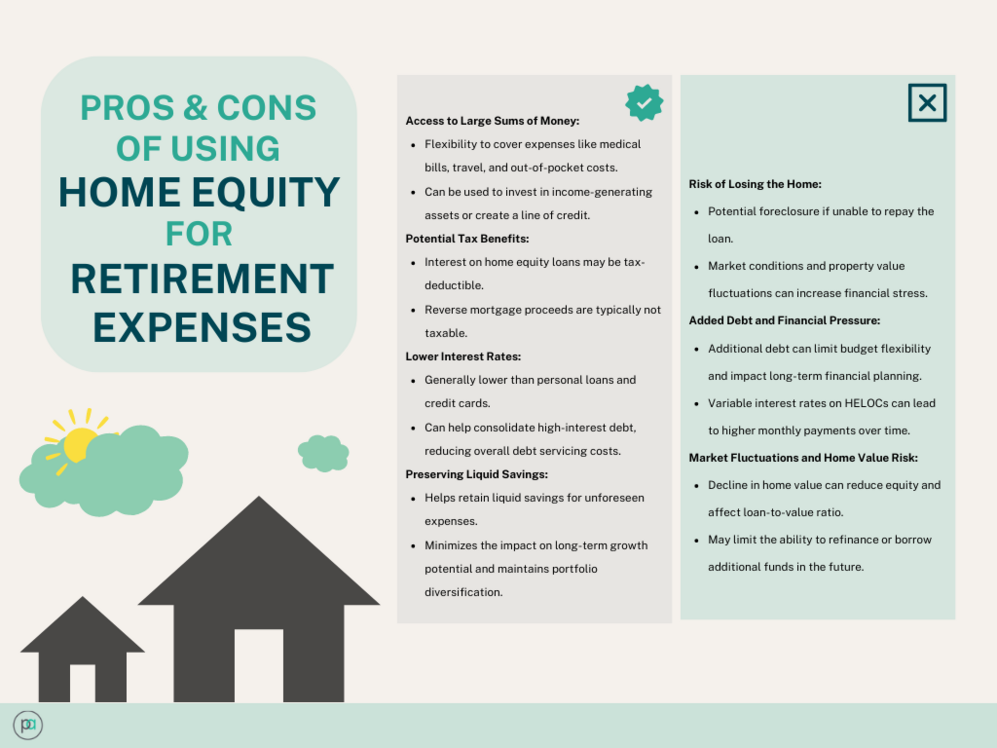
Pros of Using Home Equity for Retirement Expenses
1. Access to Large Sums of Money
One key advantage of tapping into home equity is the potential to access a substantial amount of money without liquidating other assets. These funds provide flexibility, allowing retirees to cover various expenses like medical bills, travel costs, or other significant out-of-pocket costs. Several retirees have effectively used their home equity to enhance their standard of living in retirement. Additionally, it can be used to invest in income-generating assets, such as rental properties, or to create a line of credit for future use.
Home equity can also act as a financial buffer during market shifts, helping retirees avoid liquidating their investment portfolios during downturns. For instance, retirees might use a HELOC to maintain cash flow during market downturns, giving their investment portfolios time to recover without depleting their assets. This strategic use can help preserve retirement savings and ensure long-term financial security.
2. Potential Tax Benefits
Another potential benefit of using home equity is that the interest payments on home equity loans may be tax-deductible. This creates a comparative advantage over other forms of borrowing that do not offer such tax incentives. Furthermore, if the property is sold after using the equity, it's worth evaluating the tax implications of capital gains. Unlike regular income, the proceeds from reverse mortgages are generally considered a loan and are typically not taxable. However, as tax laws can be complex, retirees should consult with a certified financial planner for personalized tax advice when contemplating their home equity utilization strategy.
3. Lower Interest Rates
Home equity loans often carry lower interest rates compared to personal loans and credit cards, making monthly payments more manageable. This advantage is compounded by the fact that these loans are secured by your property, often allowing borrowers to obtain larger sums at lower interest rates. For example, home equity loans tend to offer significantly lower rates against unsecured personal loans and credit cards, making them a cost-effective borrowing solution for retirees in need of additional funds.
Leveraging lower interest rates can also significantly change overall debt management. For instance, consolidating high-interest debt, like credit card balances, into a home equity loan can reduce overall debt servicing costs, potentially freeing up more of your monthly budget for other retirement expenses. This effective management of debt can play a crucial role in ensuring financial stability during retirement.
4. Preserving Liquid Savings
Utilizing equity in homes can also help preserve liquid savings and retirement accounts, providing a financial buffer for unforeseen expenses. By leveraging the equity in their homes, retirees can retain liquid savings for unexpected costs, which is essential for effective retirement planning. Additionally, by strategically utilizing home equity funds instead of liquidating investments, retirees can minimize the impact on their long-term growth potential and maintain a diversified portfolio. This approach ensures that even during economic uncertainty, retirees have the financial flexibility to manage their expenses without compromising their overall retirement plan.
Cons of Using Home Equity for Retirement Expenses
1. Risk of Losing the Home
One significant risk associated with using home equity for retirement expenses is the possibility of foreclosure due to an inability to repay the loan. Understanding the specific terms of your loan and ensuring affordability before borrowing are, therefore, crucial. Recent studies have highlighted an increase in foreclosure rates among retirees utilizing the equity in their homes. To qualify for the loans, HELOCs, or reverse mortgages, homeowners must meet certain eligibility and maintenance requirements.
Market conditions can also significantly impact your ability to repay the loan. A sudden drop in property value could lead to the hazardous state of owing more than the property's worth, causing significant financial stress and increasing the risk of foreclosure. This potential risk underscores the importance of careful financial planning and consultation with a financial advisor before leveraging home equity in retirement.
2. Added Debt and Financial Pressure
Home equity loans are essentially another form of debt, which can impose a burden during retirement years and limit budget flexibility. This additional debt can affect your monthly cash flow and long-term financial planning, emphasizing the importance of prudent borrowing to avoid the potential for mismanagement. Borrowing against equity in homes can reduce the wealth available for other financial goals, such as leaving an inheritance for heirs or funding future long-term care needs. A careful assessment of long-term financial needs and goals is essential to ensuring that taking on additional debt does not jeopardize financial security later in retirement.
Another considerable risk tied to HELOCs is related to variable interest rates. These rates can increase over time, leading to higher monthly payments. Understanding how rising interest rates can impact both your monthly budget and long-term financial plans is crucial, especially in a volatile economic environment.
3. Market Fluctuations and Home Value Risk
Another significant downside of tapping into equity in homes is the risk of home value decline, which can affect your equity and consequently impact your loan-to-value ratio. This may render you incapable of refinancing or borrowing additional funds. Economic developments at the local level, such as infrastructure projects or major employer relocations, can impact home values in both positive and negative ways. Staying informed about local economic trends and their potential impact on property values is necessary.
Additionally, understanding historical housing market trends can help anticipate the long-term risks associated with housing investments. Consulting with real estate professionals and financial planners to forecast future market conditions is crucial to mitigating the risks associated with borrowing against home equity.
Popular Methods to Access Home Equity
There are several ways to use your home equity, each with its own set of benefits and drawbacks. As you consider your options, it's essential to understand what each offers and requires.
1. Reverse Mortgages
Reverse mortgages offer a unique option for accessing home equity. Specifically designed for homeowners who are at least 62 years old, a reverse mortgage serves to convert part of the equity in homes into cash. This is advantageous as it provides a steady income flow with no required monthly payments. However, reverse mortgages can involve high upfront costs and complex terms and could lead to a reduced inheritance. An important element to remember is that reverse mortgages are federally insured by the Federal Housing Administration (FHA), which safeguards against issues such as lender bankruptcy or the homeowner owing more than the home's worth.
2. Home Equity Loans
An alternative approach is through home equity loans. These allow homeowners to borrow a lump sum based on the equity of their home. With their fixed interest rates and terms, they offer the comfort of predictable payments and generally lower interest rates than credit cards. However, receiving a lump sum could mean increasing your debt load, and some loans may include early payoff penalties. Before taking out a home equity loan, ensure you understand the terms and conditions thoroughly, as failing to meet loan obligations can put your home at risk. It's vital to carefully weigh the impact on your financial stability and long-term retirement plans before deciding to take on more debt.
3. Home Equity Lines of Credit
HELOCs offer a flexible borrowing model using your home equity. Working much like a credit card, HELOCs offer variable interest rates and flexible draw periods. Pros include flexibility in borrowing amounts and initial periods of interest-only payments. The flip side of the coin includes the risk of overspending and fluctuations in interest rates. Understanding the structure of a HELOC is crucial, as it typically includes a draw period (usually 5-10 years) where you can withdraw funds, followed by a repayment period (usually 10-20 years) where you must repay the principal and interest borrowed.
Betting on Your Home's Value for a Secure Retirement
With retirement comes the challenge of financial stability—a puzzle many solve by tapping into their nest egg of home equity. Homeownership can indeed pave the way to a secure retirement by providing a financial cushion. But how do you strike a balance between leveraging your biggest asset and ensuring you're not left high and dry in your golden years?
Embarking on this financial journey mandates comprehensive retirement planning. Advisors can help tailor a plan that cleverly includes or excludes home equity, depending on your individual situation. Furthermore, numerous tools and calculators are available for modeling different scenarios involving home equity, helping you make informed decisions.
Using equity in homes in retirement can offer retirees a significant financial advantage, providing access to funds that can help cover various expenses, maintain cash flow, and preserve liquid savings. However, it's essential to approach this strategy with caution, considering the risks of added debt, potential foreclosure, and market fluctuations. Retirees should work closely with certified financial planners to assess whether tapping into home equity aligns with their overall retirement goals and financial situation.
At Partners in Aging, we understand the complexities of retirement planning and the importance of making informed decisions. Our team is here to help you navigate these choices, ensuring that your retirement years are as secure and comfortable as possible. Contact us today to learn how we can support you in creating a retirement plan that works for you.