
Traditional IRA vs. Roth IRA: What’s the Difference?
POSTED ON
If you've been saving for retirement, you're likely familiar with Individual Retirement Accounts (IRAs). Individual Retirement Accounts are popular retirement savings vehicles that offer individuals the opportunity to grow their money in a tax-advantaged way.
There are two main types of IRAs: Traditional IRA and Roth IRA. Each type has its own unique features and considerations, and understanding the key differences between these two types of IRAs can help individuals make informed decisions about which one is right for them.

Key Differences Between Traditional IRA vs. Roth IRA
Here are the main differences between a Traditional IRA and a Roth IRA.
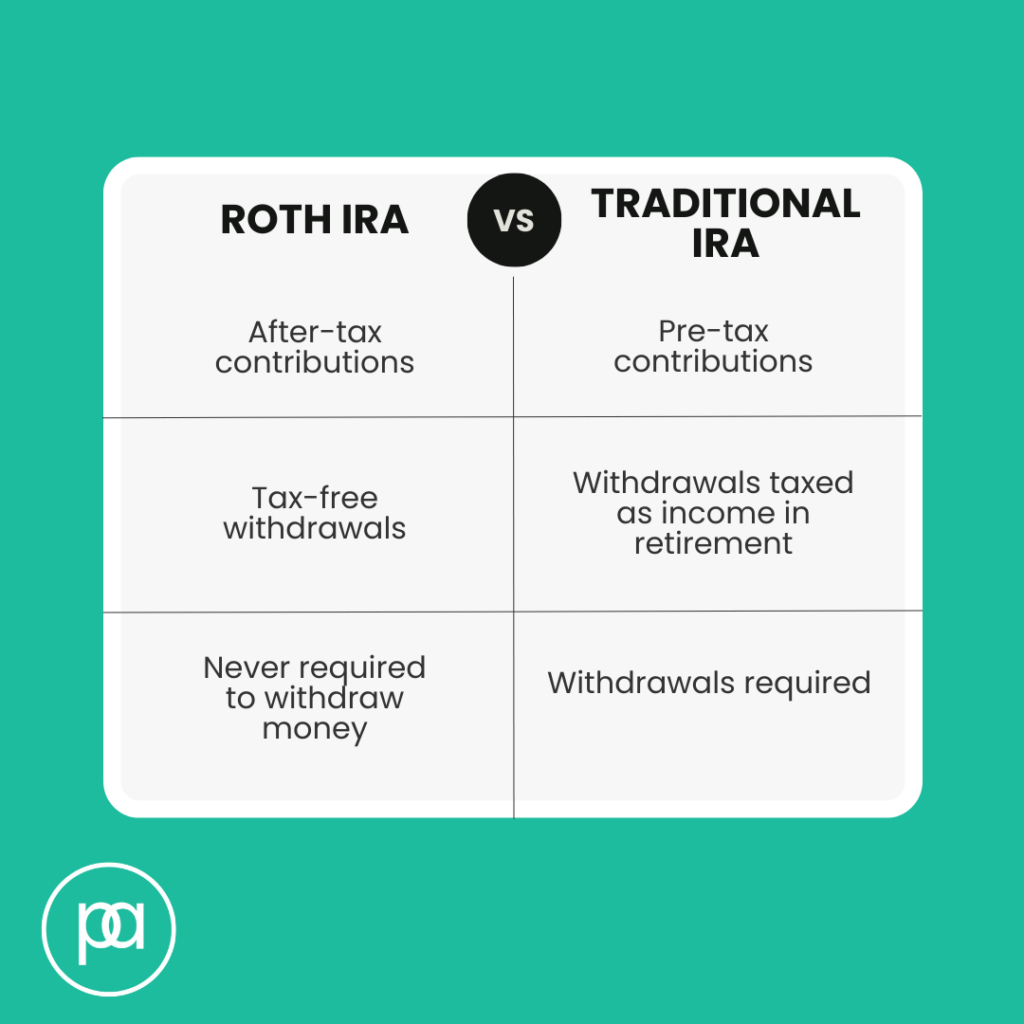
Traditional IRA: A Traditional IRA allows individuals to contribute pre-tax income, which means contributions are tax-deductible in the year they are made. The investments in the account grow on a tax-deferred basis, meaning taxes are not paid on earnings until withdrawals are made in retirement. At that time, distributions are considered taxable income.
Roth IRA: A Roth IRA does not offer any tax deductions on contributions, as they are made with after-tax income. However, the key advantage of a Roth IRA is that qualified withdrawals in retirement are tax-free. Additionally, Roth IRAs have no required minimum distributions (RMDs) during the account owner's lifetime, making them advantageous for those who want to continue growing their investments without being forced to take withdrawals.
Another important difference is the income limitations for contributions. Traditional IRAs have no income limits for contributions, but Roth IRAs have income thresholds that determine eligibility. Also, when it comes to withdrawal penalties, Traditional IRAs may subject individuals to a 10% penalty if they withdraw before age 59 1/2, while Roth IRAs allow for tax and penalty-free withdrawals of contributions at any time.
Now that we understand the main differences between Traditional IRA and Roth IRAs, let's dive a bit deeper.
Tax Considerations for Traditional IRA vs. Roth IRA
When considering retirement savings, it is essential to understand the tax implications of different types of individual retirement accounts (IRAs). In 2023, both Traditional and Roth IRAs offer unique tax advantages and considerations.
For a Traditional IRA, contributions may be tax-deductible, meaning they can reduce your taxable income for the year you made the contribution. However, when you begin taking withdrawals in retirement, those distributions will be subject to income taxes. Additionally, Traditional IRAs have required minimum distributions (RMDs), which are mandatory withdrawals. The requirement for when you need to begin taking RMDs depends on the year you were born.
On the other hand, Roth IRAs are funded with after-tax income. This means contributions are not tax-deductible, but the benefit comes in the form of tax-free withdrawals in retirement. By adhering to certain rules, the qualified distributions from a Roth IRA are entirely tax-free, including both contributions and any investment earnings. Also, Roth IRAs do not have RMDs, allowing for greater flexibility in retirement planning.
Pre-Retirement Withdrawals for Traditional IRA vs. Roth IRA
When planning for retirement, it's crucial to grasp withdrawal considerations for Traditional IRAs and Roth IRAs.
For Traditional IRAs, early withdrawals before age 59 ½ can trigger a 10% penalty in addition to regular income tax. Exceptions include qualified education expenses or first-time home purchases.
Roth IRAs, in contrast, offer more flexibility. Contributions can be withdrawn anytime tax-free, as they are made with after-tax money. Earnings on contributions may incur a 10% penalty if taken before 59 ½, unless an exception applies. Roth IRAs don't require minimum distributions during the original owner's lifetime, making them suitable for those not needing immediate retirement funds.
In summary, Traditional IRAs have penalties and required minimum distributions, while Roth IRAs allow penalty-free contribution withdrawals and greater timing flexibility.
Required Minimum Distributions for Traditional IRA vs. Roth IRA
Traditional IRAs and Roth IRAs have different rules concerning Required Minimum Distributions (RMDs).
Traditional IRAs allow individuals to make pre-tax contributions, which can potentially lower their taxable income in years of contribution. However, when it comes time to retire, withdrawals from Traditional IRAs are subject to income taxes. As of 2023, retirees must begin withdrawing RMDs annually starting with the year they reach age 72 (73 if you reach age 72 after Dec. 31, 2022).These RMDs are calculated based on life expectancy and the account balance in the IRA. Failure to take the full RMD amount can result in a hefty tax penalty.
On the other hand, Roth IRAs offer tax-free growth potential. Contributions to a Roth IRA are made with after-tax dollars, meaning that withdrawals of both contributions and earnings in retirement are tax-free, provided certain conditions are met. Unlike Traditional IRAs, Roth IRAs do not have RMD requirements during the original account holder's lifetime. This means that individuals can leave their funds in their Roth IRA for as long as they wish, allowing for greater flexibility and potential for continued growth.
Income Limits on Traditional IRA vs. Roth IRA Contributions
When it comes to contributing to IRAs, income limits play a crucial role. Both Traditional IRAs and Roth IRAs have different income restrictions that determine eligibility for contributions.
For Traditional IRAs, the income contribution limits are based on tax filing status. In 2023, if you are a single filer, head of household, or married filing separately, you can make a full contribution to a Traditional IRA if your modified adjusted gross income (MAGI) is below $76,000. The phase-out range, where the contribution limit amount gradually decreases, is between $76,000 and $86,000. Above $86,000, no contribution is allowed. If you are married and filing jointly, the income limit for a full contribution is $125,000, with a phase-out range between $125,000 and $140,000.
On the other hand, Roth IRA contributions have income limits as well. For single filers, head of household, or married filing separately, the income limit for a full contribution is $125,000, with a phase-out range between $125,000 and $140,000. If you are married and filing jointly, the limit for a full contribution is $198,000, with a phase-out range between $198,000 and $208,000.
It's important to understand these income limits as they determine whether you can contribute to a Traditional or Roth IRA and to what extent.
Should I max out my IRA?
Maxing out an IRA has many benefits and is generally recommended for individuals looking to maximize their retirement savings. Contributing the maximum amount to an IRA allows individuals to take advantage of the tax benefits and potentially save more money in the long run.
One of the main advantages of maxing out an IRA is the potential for tax savings. Contributions made to a traditional IRA are usually tax-deductible, meaning they reduce your taxable income for the year. This can result in a lower overall tax bill, especially for individuals in higher tax brackets.
Additionally, the earnings on investments within an IRA grow tax-free until retirement. This can ultimately lead to significant tax savings compared to taxable investment accounts, where earnings are subject to yearly taxes.
However, it's important to note that maxing out an IRA can also limit your financial flexibility during retirement.
By contributing the maximum amount, you are tying up a significant portion of your income, which may restrict your ability to address unforeseen expenses or take advantage of new investment opportunities.
It's important to consult with a financial advisor for strategic advice on how to utilize your IRA, especially as you approach retirement.
How to Convert a Traditional IRA to Roth IRA?
Converting a Traditional IRA to a Roth IRA can be a strategic move to take advantage of the benefits of tax-free growth and tax-free withdrawals in the future. Here are the steps to convert your account:
1. Evaluate your tax situation: Consider your current and future tax bracket. Converting a Traditional IRA to a Roth IRA requires you to pay taxes on the converted amount as it is treated as taxable income in the year of conversion.
2. Understand the tax implications: Contributions made to a Traditional IRA are usually tax-deductible, while contributions made to a Roth IRA are with after-tax income. However, Roth IRAs offer tax-free growth and withdrawals in retirement.
3. Consult a financial professional: Speak with a financial advisor or tax professional who can guide you through the conversion process and help you understand the tax implications specific to your situation.
4. Complete the conversion process: Contact your IRA custodian and request the necessary paperwork to convert your account. They will outline the process and assist you in completing the paperwork accurately.
5. Pay taxes on the converted amount: When converting from a Traditional IRA to a Roth IRA, you will need to include the converted amount as taxable income on your tax return for that year. Be prepared to pay the appropriate taxes, considering your tax bracket and other income sources.
Converting a Traditional IRA to a Roth IRA can provide long-term benefits, including tax-free growth and withdrawals. However, it is vital to consider your tax situation and consult with a financial professional to make an informed decision.
Which IRA is best for me?
When planning for retirement, consider diversifying your investments beyond employer-sponsored plans like 401(k)s by exploring individual retirement accounts (IRAs).
Roth IRAs offer tax benefits, but eligibility may be limited for higher earners due to income requirements. Contributions are made with after-tax income, and qualified withdrawals in retirement are tax-free.
Traditional IRAs provide a tax deduction for contributions from pre-tax income. However, withdrawals in retirement are taxed at your regular income tax rate, and RMDs kick in at age 72, mandating withdrawals.
To choose between Roth and traditional IRAs, weigh factors like income requirements, withdrawal options, penalties, RMDs, and potential penalty-free withdrawals. Seek guidance from a financial advisor to tailor your decision to your financial goals and risk tolerance, ensuring a secure retirement through diversified investments and expert advice.
Want to consult with a Financial Advisor?
If you're interested in optimizing your retirement savings and financial planning strategies, consulting with a financial advisor can be a wise decision. A financial advisor can provide much-needed guidance and help you navigate the complexities of retirement planning. Whether you're just starting out or nearing retirement, a professional can assist you in setting realistic goals and creating a roadmap to achieve them.
At our company, we understand the value of expert advice when it comes to financial planning and investment management. That's why we offer a service to match you with a qualified financial advisor who can address your specific needs and concerns. With their expertise, you can make informed decisions about your retirement savings, tax strategies, and investment portfolio.