

Understanding Generational Wealth Transfer: A Guide for Soon-to-Be Retirees
POSTED ON
Generational wealth transfer refers to the process of passing assets from one generation to the next, often from parents to their adult children or grandchildren. This transfer of wealth can include a wide range of assets such as real estate, financial investments, and retirement accounts. For soon-to-be retirees, understanding the dynamics of wealth transfer is crucial, as it involves planning for both personal financial security and the financial well-being of future generations.
With a significant amount of wealth expected to change hands over the next few decades, particularly as baby boomers retire, it’s essential to plan effectively. Without a well-structured strategy, the transfer of wealth can lead to unnecessary taxes, legal complications, and even family conflicts. Ensuring that the next generation can manage and sustain inherited assets requires careful preparation and transparent conversations within families.
In this guide, we'll explore different types of assets involved in wealth transfer, key strategies for effective planning, and the importance of preparing heirs. By taking a proactive approach, you can secure your family’s financial future and ensure that your legacy is preserved across generations.
What Are the Types of Assets Involved in Wealth Transfer?
1. Real Estate: More Than Just Property
Real estate, including residential and commercial properties, is a major component of generational wealth. Properties can appreciate significantly over time, making them valuable assets to pass on. For many families, real estate carries not only monetary value but also emotional ties, especially when it involves family homes. Understanding property transfer taxes and using tools like family limited partnerships can facilitate smoother transitions.
Knowing how to navigate the legal and tax frameworks surrounding real estate is key to minimizing costs during the transfer process. Proper planning ensures that properties are passed on without burdening heirs with excessive tax liabilities. Utilizing legal instruments like qualified personal residence trusts (QPRTs) can help preserve family homes for future generations, making real estate a cornerstone of long-term wealth preservation.
2. Financial Investments: Stocks, Bonds, and More
Investments in stocks, bonds, mutual funds, and ETFs represent a substantial part of many families' wealth. Effective management of these assets requires balancing risk and income, especially when transferring to younger generations. Strategic financial planning can help maintain the value of these portfolios, ensuring they serve the long-term goals of the heirs.
Working with a financial professional can be beneficial in navigating tax implications and choosing the right investment vehicles. Tax-efficient investments, such as ETFs, allow for better management within taxable accounts, making the transfer process smoother. A clear investment strategy aligned with the family’s long-term financial goals is essential for sustaining wealth across multiple generations.
3. Retirement Accounts: Planning for the Future
Retirement accounts, such as 401(k)s and IRAs, play a key role in wealth transfer. However, these accounts come with specific rules and tax implications. Understanding how to pass on these assets without triggering excessive taxes is essential for preserving their value. Early planning can make all the difference in safeguarding these funds for future generations.
By naming beneficiaries directly on these accounts, retirees can ensure a more straightforward transition. It is important to review and update these designations regularly to avoid unintended consequences. Partnering with financial advisors who understand retirement accounts' specific tax treatments can help maximize the funds passed on, ensuring the financial security of future generations.
4. Business Interests: Preserving the Family Legacy
Family-owned businesses often form the core of generational wealth. Whether through a structured succession plan or a family buyout, passing on a business requires careful consideration. Legal frameworks, tax strategies, and the establishment of clear management succession plans are crucial for ensuring the business’s continuity after the retirement of key leaders.
Proper planning involves determining the best method for transferring ownership, such as gradual handovers or buy-sell agreements. Addressing tax implications early on and consulting with professionals can help families avoid significant financial pitfalls. A well-thought-out succession plan ensures that businesses continue to thrive, preserving the family's legacy for generations.
5. Personal Property and Collectibles: More Than Monetary Value
Personal assets, including valuable collectibles, art, and family heirlooms, also form part of the wealth transfer process. These items may not always have a high market value, but they carry sentimental importance. Proper documentation and valuation of these assets help prevent disputes and ensure they are passed on as intended.
Careful planning is required to avoid misunderstandings that could arise from transferring personal property. Setting up a trust or detailed will can specify who receives what, preserving both family harmony and the sentimental value attached to such items. This approach ensures that personal treasures continue to be cherished by future generations.
What Are the Key Strategies for an Effective Wealth Transfer?
1. Estate Planning Basics: Wills, Trusts, and Power of Attorney
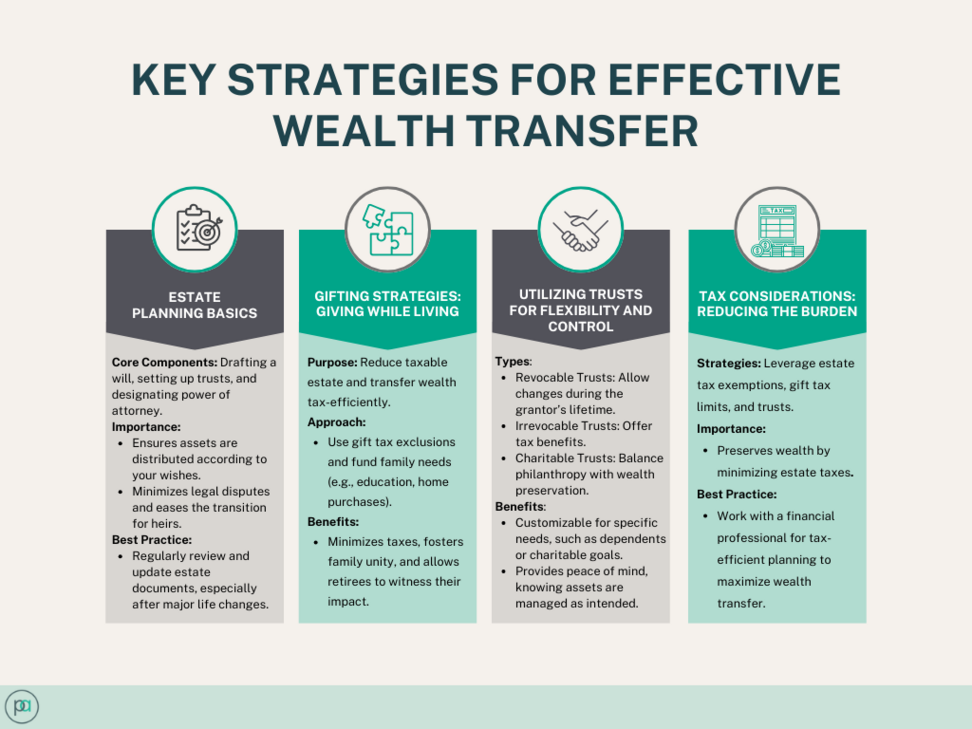
At the core of wealth transfer lies estate planning. Creating a comprehensive estate plan involves drafting a will, setting up trusts, and designating power of attorney. These documents ensure your assets are distributed according to your wishes, minimizing legal disputes and ensuring a smooth transition for your heirs.
Regularly reviewing and updating these legal arrangements is vital, especially after significant life changes like marriage, birth, or death. Consulting estate planning attorneys can ensure your plans remain compliant with current laws and address any unique family circumstances. Effective estate planning is key to securing your family’s financial future.
2. Gifting Strategies: Giving While Living
One way to reduce the taxable estate and maximize the value passed on to heirs is through lifetime giving. By using gift tax exclusions and other strategic gifting methods, retirees can pass on wealth gradually, ensuring that their family members receive assets in a tax-efficient manner.
Strategic gifting not only minimizes taxes but can also foster a sense of unity within the family. Funding educational pursuits, helping with home purchases, or contributing to retirement savings can be meaningful ways to support younger generations. Lifetime giving allows retirees to see the impact of their generosity, building stronger family ties.
3. Utilizing Trusts: Flexibility and Control
Trusts offer a flexible and controlled way to manage asset distribution. Revocable trusts allow for changes during the grantor’s lifetime, while irrevocable trusts provide tax benefits. Charitable trusts can be a powerful tool for those looking to balance philanthropy with wealth preservation, enabling tax deductions while supporting causes important to your family.
Choosing the right type of trust depends on the family's unique circumstances and goals. Legal professionals can help design trusts that address specific needs, whether protecting assets for a dependent with special needs or ensuring a charitable legacy. Well-structured trusts provide peace of mind, knowing assets will be managed as intended.
4. Tax Considerations: Reducing the Burden
Tax planning is a critical part of wealth transfer. Understanding estate tax exemptions, gift tax limits, and how trusts can minimize tax liabilities can save families from losing a significant portion of their wealth. Working with a financial professional who specializes in estate taxes is essential for crafting an effective strategy.
Implementing tax-efficient strategies can prevent estate taxes from significantly depleting your assets. By taking advantage of available exemptions and planning for lifetime gifts, families can reduce tax liabilities. Strategic tax planning ensures that more wealth is preserved and passed onto future generations.
What Are the Challenges in Generational Wealth Transfer?
Estate Taxes
Estate taxes can significantly diminish the wealth intended for the next generation. When an estate surpasses federal or state exemption limits, the tax liability can cut deeply into its value, impacting the wealth ultimately received by heirs. Planning to reduce estate taxes involves using tools like gifting, trusts, and exemption maximization to legally shelter assets from heavy taxation, thus preserving wealth.
Working closely with financial and legal experts is essential to stay informed on tax laws, which change frequently. This collaboration can help retirees make informed decisions about their assets, minimizing the estate’s tax burden. By integrating tax-efficient strategies early, families can substantially reduce estate taxes, ensuring that more wealth remains intact for future generations.
Family Dynamics and Potential Conflicts
Family disputes over inheritance often stem from unmet expectations or ambiguity in estate plans. Such misunderstandings can strain family relationships and lead to costly legal battles that drain both resources and emotional energy. Open communication and transparency about inheritance plans can help prevent conflicts by ensuring that family members understand the intentions behind wealth distribution.
Creating a legally documented, clear plan reflects a retiree’s wishes and can reinforce family harmony. Regular family meetings or discussions involving estate planning can reduce tensions, as heirs have the chance to ask questions and gain clarity. This proactive approach helps prevent disputes, strengthening family bonds and preserving unity during the wealth transfer process.
Preserving Wealth Across Multiple Generations
Maintaining generational wealth requires more than just passing down assets; it demands a sustainable wealth management strategy. Without careful planning, wealth can dissipate over generations due to factors like poor financial decisions or high expenses. To combat this, many families create trusts or set up family offices to manage assets effectively and ensure their longevity.
A generational wealth plan should also account for evolving family structures and potential future expenses. Regular assessments and updates to wealth management strategies can ensure that assets are preserved and even grown, safeguarding financial security across multiple generations.
Preparing Heirs for Inheritance
Financial Education for Younger Generations
Educating younger family members on financial responsibility is critical for sustaining inherited wealth. By teaching financial basics—such as budgeting, saving, and investing—at an early age, retirees can instill valuable skills that will help heirs manage their inheritance wisely. Engaging heirs in family financial discussions also builds their literacy and familiarity with the family’s financial framework.
Programs like financial literacy courses, mentorship opportunities, or involving heirs in family business decisions can enhance these skills further. Financial education empowers heirs to manage wealth responsibly, avoiding common pitfalls like debt mismanagement and impulsive spending, thus contributing to the preservation of generational wealth.
Communicating Values and Intentions
The transfer of wealth becomes more impactful when heirs understand the family’s legacy goals. Sharing personal stories, values, and visions for the future can give heirs a sense of purpose, encouraging them to steward their inheritance with intention. Retirees can use family meetings to discuss their legacy, fostering a shared understanding that extends beyond financial assets.
Establishing a collective vision can foster unity, guiding heirs to work together in managing the family’s wealth responsibly. By aligning the family around shared values, retirees help ensure that wealth is not only preserved but is also used to continue the family’s legacy for future generations.
Gradual Involvement in Family Wealth Management
Introducing heirs to wealth management gradually can help them transition smoothly into their future roles. Instead of overwhelming them with financial responsibilities all at once, retirees can assign manageable tasks, such as overseeing a small investment or attending family business meetings. This gradual approach gives heirs the chance to learn and make mistakes in a low-stakes environment.
Through supervised involvement, heirs gain hands-on experience and develop confidence in managing family assets. This approach also allows older family members to mentor younger ones, providing guidance on complex financial decisions, thus fostering continuity and confidence in managing family wealth.
Legal and Financial Considerations
Working With Estate Planning Attorneys
An experienced estate planning attorney is essential for crafting a comprehensive estate plan tailored to family needs. Attorneys assist with creating legal documents like wills and trusts, ensuring that the retiree’s wishes are documented in a way that’s both clear and legally binding. They also help clients navigate changes in estate laws, keeping plans current and effective.
By working with an attorney, families can anticipate and avoid potential legal issues during wealth transfer. This professional guidance provides peace of mind, reducing the likelihood of costly disputes and ensuring that the estate plan reflects the retiree’s goals.
Collaborating With Financial Advisors
Financial advisors play a vital role in developing wealth management strategies that align with family objectives. Advisors can offer insights on managing assets, tax-efficient investing, and portfolio diversification, all crucial for long-term wealth preservation. This professional expertise helps retirees and their heirs make informed financial choices, from investments to asset protection.
Tailoring advice to each family’s risk tolerance and income needs, advisors create strategies that can sustain wealth across generations. Collaborating with these experts allows families to safeguard and grow their assets, increasing the financial security of future generations.
Regular Review and Updates of Estate Plans
Estate plans should be reviewed periodically to account for changes in laws, family dynamics, or financial situations. Major life events, such as births, deaths, marriages, or business transitions, often warrant updates to estate plans to reflect the family’s current goals and circumstances. By regularly revisiting estate documents, retirees can avoid complications or unintended asset distributions.
Frequent reviews, typically with an attorney and financial advisor, keep the estate plan aligned with family needs. This proactive approach ensures that the retiree’s wishes remain clear and actionable, minimizing confusion and preserving wealth according to their intentions.

Impact of Wealth Transfer on Retirement Planning
Balancing Personal Needs With Legacy Goals
While planning for wealth transfer, retirees need to balance their personal financial needs with their desire to leave a legacy. Allocating funds for a comfortable retirement should remain a priority, as depleting resources to support wealth transfer may compromise financial stability. Structuring a wealth transfer plan that respects both needs is key.
Working with financial planners, retirees can determine how much they can allocate for legacy goals while still securing their retirement. This balanced approach allows them to enjoy their retirement years with confidence, knowing that they have also prepared to pass on a meaningful legacy.
Strategies for Maintaining Financial Security While Transferring Wealth
Transferring wealth without jeopardizing personal financial security requires strategic planning. Retirees can explore methods like phased giving, where assets are transferred gradually over time, reducing tax burdens while retaining necessary funds for retirement. Establishing trusts or other financial vehicles can help manage wealth transfer efficiently.
By combining wealth transfer with personal financial security strategies, retirees maintain control over their assets and financial future. This approach provides flexibility, allowing them to adapt as their needs evolve while ensuring a stable, secure foundation for themselves and future generations.
Securing Your Family’s Financial Future
Generational wealth transfer is a complex yet rewarding process that requires thoughtful planning and open communication. By preparing in advance, soon-to-be retirees can safeguard their legacy, ensuring that their assets not only serve their immediate needs but also provide for future generations. Effective wealth transfer planning goes beyond just the numbers; it’s about creating a lasting impact, instilling values, and preserving the family’s hard-earned success for years to come.
Throughout this guide, we've highlighted key aspects of wealth transfer, from identifying the assets involved to implementing strategies like estate planning, tax minimization, and trust utilization. By focusing on these areas, retirees can protect their family’s wealth from common challenges, such as estate taxes and family conflicts, and prepare heirs to manage their inheritance responsibly. The peace of mind that comes from knowing your assets will be managed as intended is invaluable, both for you and for those who will carry on your legacy.
For soon-to-be retirees, now is the time to take action. Partners in Aging offers specialized services to help you navigate the generational wealth transfer process with confidence and clarity. By partnering with experienced estate planners and financial advisors, you can craft a personalized strategy that aligns with your unique goals and family dynamics. Reach out to Partners in Aging today and take the first step toward building a lasting legacy.