

Understanding Medicare Part 1
POSTED ON
Navigating the complexities of Medicare can feel overwhelming, especially if you're unsure about when to apply for Medicare. Knowing how Medicare works and understanding its various enrollment periods is crucial to ensuring that you avoid costly penalties and maintain proper coverage. The timing of your application directly affects your eligibility and the benefits you receive, so it’s essential to plan ahead.
Medicare offers a variety of health insurance options, from Part A hospital insurance to Part B medical insurance, each with its own monthly premium and eligibility requirements. It’s important to understand the initial enrollment period and the general enrollment period, which are the key windows when you must sign up for Medicare to avoid a late enrollment penalty. For those who qualify, special considerations like disability benefits, end-stage renal disease, or social security benefits may lead to earlier enrollment opportunities.
In this article, we’ll walk you through the most important aspects of the Medicare enrollment process. You’ll learn about the special enrollment periods available if you miss your first window and the consequences of delaying your sign-up. By the end, you'll have a clear understanding of the steps needed to ensure timely and penalty-free Medicare enrollment.
The Basics of Medicare
What Is Medicare?
Medicare is a federal health insurance program primarily designed for individuals aged 65 and older. It offers essential medical insurance through various parts: Medicare Part A covers hospital care, Medicare Part B covers outpatient services, and Part D covers prescription drugs. In addition, Medicare Advantage Plans (Part C), which are provided by private insurers, offer additional benefits such as dental, vision, and wellness programs.
People with certain disabilities, end-stage renal disease, or Amyotrophic Lateral Sclerosis (ALS) also qualify for Medicare before turning 65. Understanding how each part works can help you avoid gaps in coverage and unnecessary monthly premiums.
Eligibility Criteria
Most individuals become eligible for Medicare when they turn 65. However, if you’re under 65 and receive social security adminidisability benefits or have conditions like end-stage renal disease or Lou Gehrig's disease (ALS), you can be automatically enrolled in Medicare early. You must also be a U.S. citizen or legal resident for at least five consecutive years to qualify for Medicare benefits.
What Are the Important Enrollment Periods in Medicare?
Initial Enrollment Period (IEP)
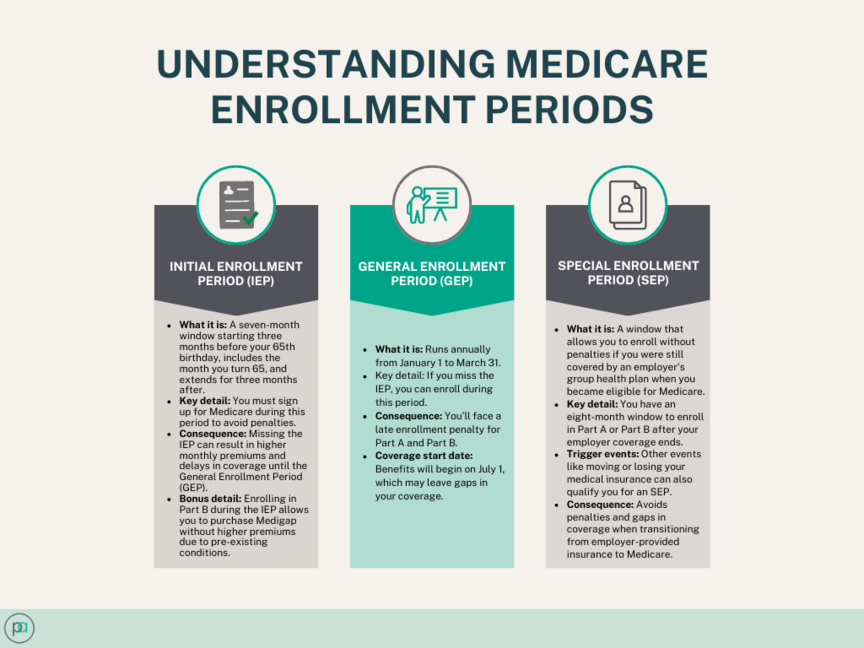
The initial enrollment period (IEP) is a seven-month window that starts three months before your 65th birthday, includes the month you turn 65, and extends for three months after. During this time, you must sign up for Medicare to avoid a late enrollment penalty. If you miss your IEP, you may face penalties that increase your monthly premiums, and you could be without coverage until the next general enrollment period.
Your IEP also affects your eligibility for supplemental coverage like Medigap. Enrolling in Part B during this period ensures you can purchase Medigap without higher premiums due to pre-existing conditions.
General Enrollment Period (GEP)
If you miss your IEP, you can enroll during the general enrollment period, which runs from January 1 to March 31 each year. However, you’ll face a late enrollment penalty for both Part A and Part B if you miss your initial window. The general enrollment period may also lead to gaps in coverage, as your Medicare benefits will only begin on July 1.
Special Enrollment Period (SEP)
A special enrollment period (SEP) allows you to enroll without penalties if you're still covered by an employer’s group health plan when you become eligible for Medicare. You have an eight-month window to enroll in Medicare Part A or Part B once your employer coverage ends. Other events, such as moving out of your current plan’s service area or losing your current medical insurance through no fault of your own, can also trigger an SEP.
What Are the Potential Penalties for Late Enrollment?
Part A Late Enrollment Penalties
If you fail to enroll in Part A hospital insurance when first eligible and don’t qualify for premium-free Part A, you could face a monthly late enrollment penalty. This penalty increases your premium for Part A by 10% for twice the number of years you delayed signing up. For example, if you delay enrollment for two years, you will pay the penalty for four years.
Part B Late Enrollment Penalties
Missing the initial enrollment period for Part B results in a penalty as well. For each 12-month period you delayed enrollment, your Part B premium will increase by 10%. Unlike Part A, this penalty lasts for as long as you have Part B coverage.
Strategies to Avoid Penalties
To avoid these penalties, it’s crucial to sign up for Medicare during your IEP. If you qualify for an SEP due to employer group health plan coverage, make sure to enroll within the allowed time frame to avoid paying higher premiums.
Planning Ahead for Medicare
Importance of Early Planning
Planning ahead ensures you understand when to sign up for Medicare and how it interacts with your existing health plan. If you continue working past 65, it’s essential to coordinate your group health plan with Medicare to avoid gaps in coverage or unnecessary penalties. Early planning also lets you assess your healthcare needs and select the right Medicare Part and plan, whether it's Original Medicare or Medicare Advantage.
Financial and Legal Advice
Consulting with financial advisors or organizations like Partners in Aging can help ensure you're making the best decisions for your healthcare and financial future. They can provide insights into Medicare benefits, help you compare plans, and assist with navigating social security administration and disability benefits.
Ensuring Timely Medicare Enrollment: Avoiding Penalties and Securing Coverage
Understanding when to apply for Medicare is crucial to avoid unnecessary penalties and ensure continuous coverage. Missing key enrollment periods like the initial enrollment period or the special enrollment period can result in higher monthly premiums and potential gaps in your healthcare. By planning ahead and knowing your options, especially if you qualify for disability benefits or have conditions like end-stage renal disease, you can make informed decisions about your Medicare benefits.
Early planning also allows you to assess your future healthcare needs and avoid penalties associated with delayed enrollment. Coordinating your group health plan coverage with Medicare Part A or Part B is essential if you're still working beyond the age of 65. By consulting with experts, you can navigate the complex rules around Medicare enrollment and avoid costly errors.
Partners in Aging can provide the personalized guidance you need to understand your options and make the best choices for your situation. Whether you're preparing for retirement or dealing with an unexpected healthcare situation, they offer expert advice to help you maintain your health coverage and ensure peace of mind. Contact us today to get the support you need for seamless Medicare enrollment and ongoing healthcare management.