

Understanding Medicare Part 2
POSTED ON
When planning for healthcare in retirement, understanding the full scope of coverage options is crucial. While Original Medicare provides a strong foundation with Parts A and B, it leaves many gaps that can result in high out-of-pocket costs for retirees. This is where Medicap, also known as Medigap, becomes an essential tool. Medigap offers additional coverage that can fill in the financial gaps, covering expenses that Medicare alone doesn't pay for, such as copayments, coinsurance, and deductibles.
Medigap policies are sold by private insurance companies but are standardized and regulated by the federal government. This ensures that the basic benefits remain the same across different providers, although premiums and availability may vary. Understanding the ins and outs of Medigap can help you make an informed decision about whether it's the right choice for your healthcare needs. In this article, we will explore how Medigap works, its advantages and disadvantages, and practical advice for navigating your options.
What Is a Medigap Plan?
It’s commonly referred to as Medigap, is designed to cover the gaps left by Original Medicare. It helps cover out-of-pocket expenses like copayments and deductibles, which can add up quickly, especially for individuals requiring ongoing medical care. Medigap policies are standardized, meaning that each policy, regardless of the insurance provider, must offer the same benefits for a specific plan letter. These policies are available through private insurance companies and offer beneficiaries greater financial protection.
How Does a Medigap Plan Work?
To qualify for Medicare supplement insurance, you must first be enrolled in Original Medicare Parts A and B. While Original Medicare covers basic healthcare services, it leaves significant gaps, such as copayments, coinsurance, and deductibles, which can lead to high out-of-pocket costs. Medigap coverage helps fill these gaps, providing beneficiaries with financial protection for services not fully covered by Medicare.
Beyond Parts A and B, Medigap also covers services like extended hospital stays, skilled nursing facility care, and emergency medical care during foreign travel. These additional benefits ensure that Medicare patients who need specialized or ongoing care won’t face overwhelming costs. Certain standardized plans even cover blood transfusions, which are only partially addressed by Medicare, offering more complete coverage for patients with serious health needs.
Moreover, Medigap policies are offered by private insurance companies but are regulated to provide uniform benefits across different insurers. This standardization allows beneficiaries to compare policy forms easily and select the best plan for their needs. Importantly, Medigap ensures continuous access to healthcare, even if a patient is at risk of being denied coverage elsewhere, and coverage cannot be canceled as long as premiums are paid.
How Much Does a Medigap Plan Typically Cost?
One of the most critical considerations when selecting a Medicare supplement insurance plan is the cost. Premiums for Medigap plans can vary based on several factors, including your age, the state you live in, and the specific plan you choose. For example, the monthly premium for a Medicare supplement insurance plan can range from $50 to over $400, depending on your needs and the plan's comprehensiveness. Additionally, if you're seeking more complete coverage, such as a plan that includes lower out-of-pocket costs, you should expect to pay a higher premium.
Health care costs are a significant concern for retirees, especially those managing chronic conditions that require ongoing treatment. A common cost retirees face is the Medicare Part B premium, which must be paid in addition to the Medigap premium. For 2024, the Medicare Part B premium is $164.90 per month for most people, though it could be higher based on income.
Medigap plans do not cover prescription drug costs, so you’ll need to purchase a separate prescription drug plan, such as Medicare Part D, if you require coverage for medications. If you are currently enrolled in a UnitedHealthcare insurance company plan or another provider’s Medicare supplement insurance plan, you should also consider whether you need additional coverage for prescription drugs.
Finally, other factors, such as inflation and rising Medicare costs, can affect the premium of your chosen Medicare supplement insurance plan. It’s essential to review your policy annually to ensure it still fits your budget and health care needs.
What Are the Advantages of Medigap Plan?
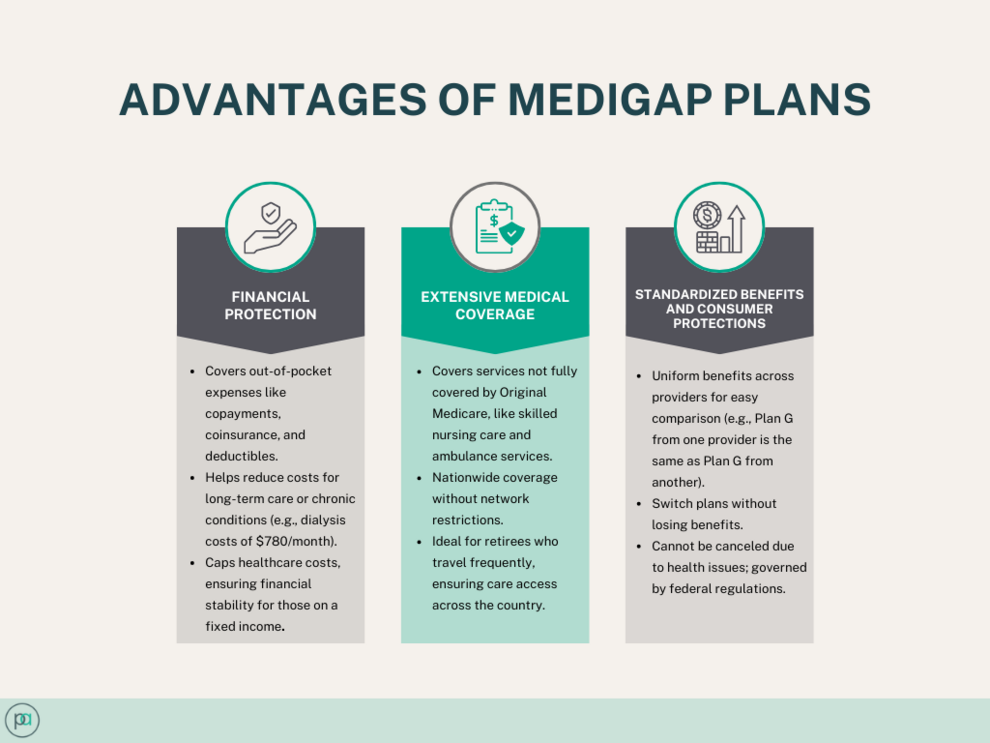
Financial Protection
One of the biggest advantages of Medicare supplement insurance is the financial protection it offers. Health expenses can quickly spiral out of control, particularly if you require long-term care or have a chronic condition. For example, a patient undergoing dialysis might face monthly out-of-pocket costs of around $780. With Medigap coverage, these costs can be significantly reduced, providing peace of mind and financial stability. Without a Medicare supplement plan, a prolonged hospital stay could result in thousands of dollars in medical bills, which can be devastating for those on a fixed income.
Additionally, Medigap caps many of these costs, ensuring that you're not burdened with unpredictable expenses. For example, if you're hospitalized for an extended period, your Medicare supplement insurance will kick in after Medicare pays its share, covering much of the remaining costs.
Extensive Medical Coverage
Another significant benefit of Medicare supplement insurance is the extensive medical coverage it provides. Not only does it cover expenses like copayments and deductibles, but it also offers protection for services not fully covered by Original Medicare, such as skilled nursing care and ambulance services. This is particularly useful for individuals who require specialized care or emergency transportation. Medicare supplement plans allow beneficiaries to access care nationwide, providing freedom of choice when it comes to selecting hospitals or specialists.
For retirees who enjoy traveling, this nationwide guaranteed coverage is invaluable, as Medigap plans do not have network restrictions. This makes it easier to get the care you need, no matter where you are in the country.
Standardized Benefits and Consumer Protections
One of the most beneficial aspects of Medigap policies is their standardization. This means that the core benefits offered by a Medigap plan with one provider are the same as those offered by another provider for the same plan type, such as Plan G or Plan N. This standardization allows beneficiaries to compare costs and benefits easily across private insurance companies. Furthermore, beneficiaries can switch plans if they find a better premium, without losing their benefits.
These plans are also governed by federal regulations, meaning they cannot be canceled due to health reasons. This offers an additional layer of protection for those dealing with chronic health conditions.
With a Medigap plan, you can rest assured that many of the unpredictable expenses associated with healthcare are covered. This peace of mind is especially important for retirees on a fixed income, who may be concerned about depleting their savings due to sudden medical emergencies. By helping to cap out-of-pocket costs, Medigap makes healthcare costs more predictable, allowing beneficiaries to focus on their recovery and enjoy retirement without constant worry about medical bills.
What Are the Disadvantages of a Medigap Plan?
Higher Premiums
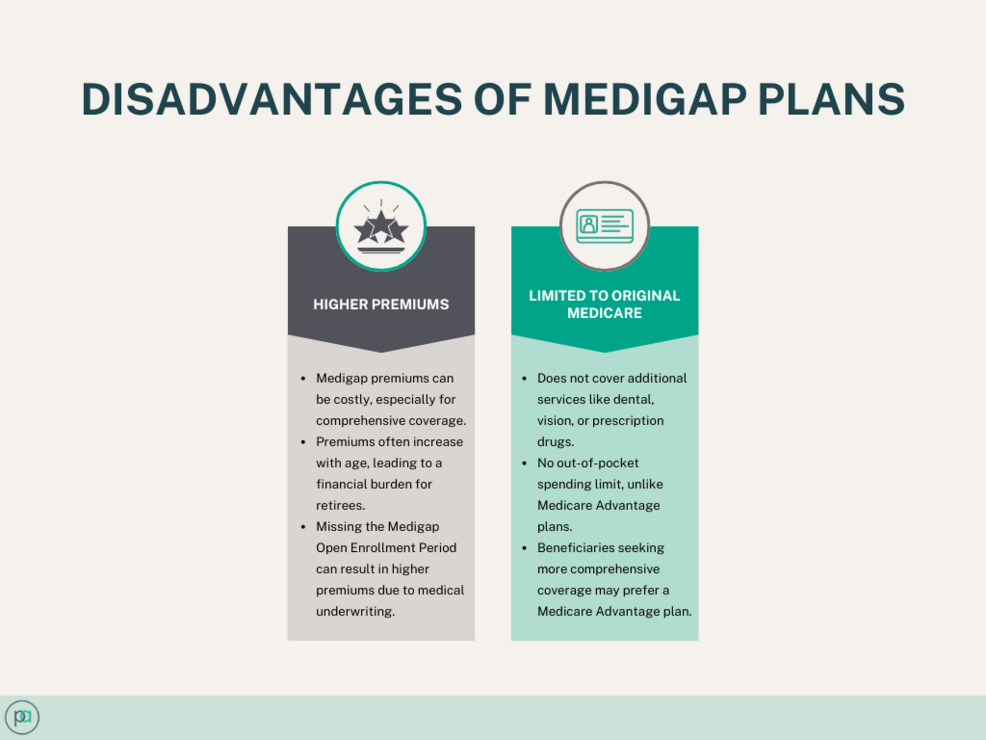
One of the primary disadvantages of Medicare supplement insurance is the cost. Monthly premiums for Medigap plans can be expensive, especially for those offering more comprehensive coverage. In addition, premiums often increase with age, creating a financial burden for individuals on a fixed income. Furthermore, if you miss the initial Medigap Open Enrollment Period, you may be subject to medical underwriting, which can lead to higher premiums based on your health status.
Limited to Original Medicare
Another limitation of Medigap is that it only works with Original Medicare. It does not provide additional benefits like prescription drug plan coverage, dental, or vision services, which are often included in Medicare Advantage plans. Beneficiaries looking for a more comprehensive plan that covers these services might prefer a Medicare Advantage plan. Additionally, unlike Medicare Advantage, Medigap does not have an out-of-pocket spending limit, so certain expenses may still arise.
How Do You Navigate Medigap?
Medigap offers significant financial protection and flexibility, but it's important to consider the associated costs. Standardized benefits make it easier to compare plans, but premiums can be a barrier for some retirees. Researching state-specific options and timing your enrollment are essential to securing the best complete coverage.
Before committing to a Medicare plan, it's a good idea to consult with a licensed insurance agent. They can help you navigate the different plan options, ensuring you choose a plan that fits both your budget and healthcare needs. Additionally, consider taking advantage of free resources such as the State Health Insurance Assistance Program (SHIP) to get guidance on your available options.
Making the Right Choice: The Importance of Medicare Supplement Insurance
Choosing the right Medigap policy can provide you with peace of mind and financial security in the face of high medical costs. It's important to consider the cost of premiums, your specific healthcare needs, and the gaps in Original Medicare. Consulting with a licensed insurance agent or taking advantage of free Medicare resources can help you make an informed decision that fits your budget and lifestyle.
Medicare supplement insurance is an essential tool for those looking to fill the gaps left by Original Medicare. With a wide range of Medicare supplement plans available, beneficiaries can choose the plan that best suits their needs, whether it's covering copayments, deductibles, or other medical costs. This type of health insurance provides much-needed financial protection, particularly for individuals facing chronic conditions or ongoing medical treatments.
At Partners in Aging, we understand that navigating the world of Medicare can be overwhelming. Let our team of experts guide you through the process to ensure you're choosing the right Medicare supplement insurance for your unique needs. Contact us today to learn how we can help you make the best choices for your health and financial future.