

Understanding the Benefits of IRAs
POSTED ON
In addition to tax deductions, IRAs offer the advantage of tax-deferred growth. Investment gains within an IRA, whether they’re stocks, bonds, mutual funds, or other eligible assets, grow without being taxed until withdrawals are made during retirement. This tax-deferred approach significantly increases the amount of retirement assets available, making IRAs a cornerstone of effective retirement planning.
What Is the Best Way to Utilize Your IRA to Pay the Lowest Amount of Taxes During Your Lifetime?
The best way to utilize your IRA to pay the lowest amount of taxes during your lifetime involves strategic asset preservation strategies. One effective approach is to consider converting your traditional IRA to a Roth IRA, as Roth IRAs offer tax-free withdrawals in retirement. Additionally, managing your contributions and distributions to stay within lower tax brackets can help minimize taxes on your retirement savings over time. It's also essential to leverage tax-advantaged investment accounts and explore options like catch-up contributions if you're nearing retirement age.
Furthermore, seeking advice from a tax advisor or wealth management professional can provide valuable insights into optimizing your IRA for tax efficiency. They can help you understand contribution limits, eligibility criteria, and the tax benefits associated with different types of IRAs. By carefully planning and implementing these strategies, you can save money on taxes while maximizing the growth potential of your retirement savings.
Which Is Better: Traditional or Roth IRA?
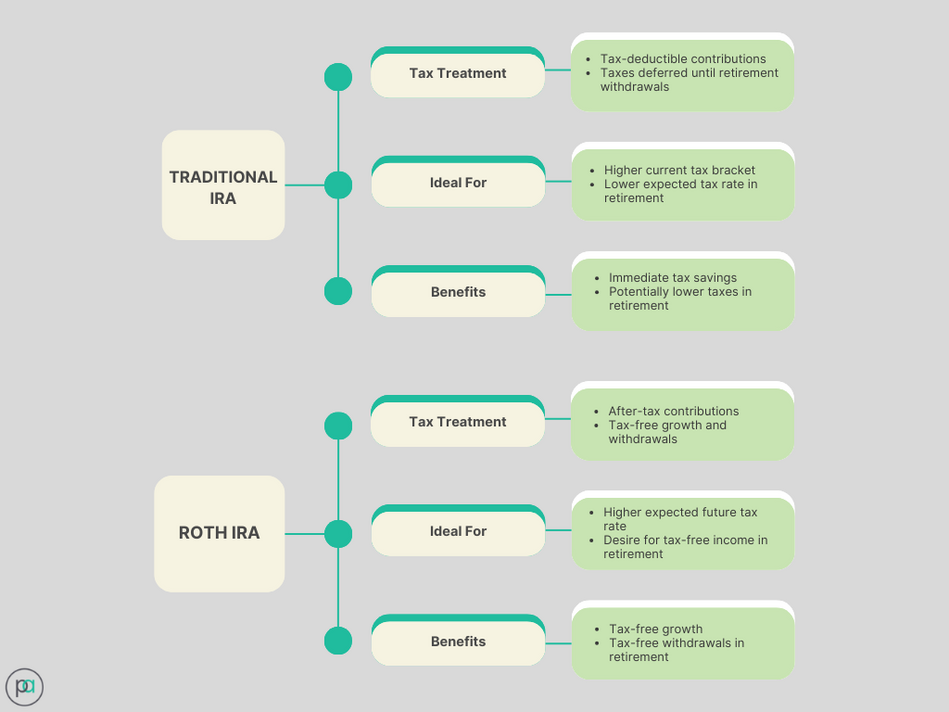
Deciding whether a traditional IRA or a Roth IRA is better for your financial situation depends on several factors, including your current and expected future tax rates. If you find yourself in a higher tax bracket now with the expectation of a lower rate during retirement, a traditional IRA may offer more tax relief by deferring taxes until you potentially have a lower income. This can make traditional IRAs a strategic choice for current tax savings and future tax management.
On the other hand, Roth IRAs are ideal for individuals who expect their tax rate to increase over time. Since Roth IRA contributions are taxed in the year they’re made, they provide tax-free growth and withdrawals, which is beneficial if you're likely to be in a higher tax bracket in the future. Understanding these differences is crucial for selecting the right type of IRA to maximize your retirement savings and tax benefits.
What Is the Role of IRAs in Wealth Preservation?
IRAs serve as effective tools for retirement savings and play an important role in wealth preservation. They provide significant protection against creditors, particularly in the event of bankruptcy, with many states offering laws that shield IRA assets from creditors' claims. This protection can be vital for maintaining financial stability and ensuring that retirement funds are secure.
Moreover, the protective features of IRAs extend to estate planning. IRAs can be used strategically to pass wealth to beneficiaries while potentially minimizing exposure to estate taxes. By carefully designating IRA beneficiaries, you can guarantee a smoother and more tax-efficient transfer of assets, aligning with your overall estate planning goals.
Are There Income Limits to Each Type of IRA?
IRA Contribution Limits
The Internal Revenue Service (IRS) sets annual contribution limits for Individual Retirement Accounts (IRAs), adjusting them for inflation. For the tax year 2024, the maximum contribution is $7,000 for individuals below age 50 and $8,000 for those aged 50 or older. In comparison, the limits were $6,500 and $7,500 for 2023, respectively.
Qualifying for IRA Contributions
To contribute to an IRA, individuals must have earned income. This includes income from working for others or owning a business or farm. The IRS defines earned income and specifies what's included or excluded, such as alimony, separation settlements, and certain partnership income.
Spousal IRAs
Spousal IRAs offer a solution for individuals without earned income but whose spouses do. These accounts enable spouses with earned income to contribute on behalf of their non-working spouses. The contribution limits follow the same guidelines as individual IRAs.
Roth IRA Income Limits
While traditional IRA contributions have no income limits, Roth IRAs have income thresholds. However, strategies like contributing to a nondeductible IRA and converting it to a Roth IRA can bypass these limits. It's crucial to consult with a qualified tax professional for effective tax planning and optimization of retirement savings strategies.
Traditional IRA Deduction Limits
Unlike Roth IRAs, traditional IRAs don't have income limits. If you and your spouse don't have a 401(k) or another retirement plan at work, you can deduct your traditional IRA contributions fully. If either of you has a work plan, the deduction might be lower or even eliminated.
Modified Adjusted Gross Income (MAGI)
The IRS uses your MAGI to determine IRA limits, which is similar to your adjusted gross income (AGI). MAGI involves adding back certain deductions to your AGI, such as half of self-employment taxes, IRA contributions, Social Security, losses from partnerships, passive income, tuition expenses, and more. You can find your AGI on line 11 of Form 1040 and then use IRS Publication 590-A, Appendix B, Worksheet 1 to calculate your MAGI for IRA purposes.
Excess IRA Contributions
Contributing more than the allowed limit to your IRA can result in a penalty. The IRS considers this an excess or ineligible contribution. If you over-contribute or contribute to a Roth IRA with a high income, you may owe a 6% penalty on the excess amount annually until you rectify the error. Fixing this includes withdrawing the excess amount and earnings before the tax deadline, amending your tax return if already filed, or applying the excess to the next year's contribution.
Saver's Credit
Many individuals with lower to moderate incomes are unaware of the saver's credit, which reduces taxes owed dollar-for-dollar. Eligible contributors can earn a credit of 10%, 20%, or 50% of their contributions, up to $2,000 ($4,000 for married filing jointly), based on income thresholds. This credit applies to contributions made to IRAs, 401(k)s, or other qualified retirement accounts, provided certain criteria are met, such as age, student status, and dependency status.
When Is it Better to Use Something Different Than an IRA?
It might be better to consider alternatives to an IRA under certain circumstances. Here are a few scenarios where using something different might be more advantageous:
High Income and Roth IRA Ineligibility
Suppose your income exceeds the limits for contributing to a Roth IRA, and you’re ineligible for traditional IRA deductions due to high income. In that case, you might consider other tax-advantaged retirement accounts like a 401(k) or a SEP IRA (Simplified Employee Pension IRA) if you're self-employed.
Employer Match
If your employer offers a 401(k) plan with a matching contribution, it's often beneficial to prioritize contributions to the 401(k) up to the employer match before contributing to an IRA. The employer match is essentially free money added to your retirement savings.
Self-Employment and Solo 401(k)
If you're self-employed or have freelance income, a Solo 401(k) can allow for higher contribution limits than traditional IRAs. This type of plan enables both employee and employer contributions, potentially allowing you to save more for retirement.
Health Savings Account (HSA)
If you have a high-deductible health plan (HDHP), contributing to an HSA can offer triple tax benefits: tax-deductible contributions, tax-free growth, and tax-free withdrawals for qualified medical expenses. If used strategically, HSAs can serve as a retirement savings vehicle.
Taxable Investment Accounts
For individuals who have maximized contributions to tax-advantaged retirement accounts and still have funds to invest for retirement, taxable investment accounts offer flexibility in terms of contributions, withdrawals, and investment options. While they don't provide the same tax advantages as retirement accounts, they can complement your overall retirement strategy.
What Are the Risks and Strategic Solutions to Early Withdrawals From IRAs?
Early withdrawals from an IRA, whether a traditional IRA or a Roth IRA, can present financial challenges, particularly if they incur penalties and taxes. Typically, withdrawing funds from an IRA before age 59.5 results in a 10% penalty, in addition to the income tax due on withdrawals from traditional IRAs. These penalties can significantly decrease the amount available for immediate use and reduce the long-term growth potential of your retirement savings.
However, it's important to recognize that certain life events may necessitate accessing these funds earlier than planned. The IRS allows for tax-free withdrawals under specific circumstances, such as medical expenses exceeding a certain percentage of your adjusted gross income, education costs, or purchasing a first home.
Remember, these provisions offer flexibility in the face of unforeseen financial needs, which allows you to make informed decisions without severely impacting your retirement goals.
Wrapping It Up: Making the Most of Your IRA for Wealth Protection
IRAs stand out as foundational tools for asset preservation and retirement planning. They offer tax advantages such as tax-deductible contributions and tax-deferred growth, making them crucial for long-term financial stability. Understanding the benefits of IRAs, whether traditional or Roth, requires careful consideration of current and future tax implications. While traditional IRAs may offer immediate tax savings, Roth IRAs provide tax-free withdrawals in retirement, ideal for those anticipating higher future tax rates.
Navigating the complexities of IRAs—including income limits, contribution rules, and strategic asset preservation—can be challenging. That's why consulting with financial advisors is paramount. Expert advisors can help optimize IRA usage, explore alternative retirement accounts like 401(k)s, HSAs, or taxable investment accounts, and tailor strategies to individual financial goals.
If you’re looking to develop or refine your retirement strategy, consider consulting with Partners in Aging. Our expert advisors are equipped to guide you through your retirement planning process, helping you make informed decisions that secure your long-term financial health. Reach out today to ensure your retirement strategy is robust, well-rounded, and aligned with your financial aspirations for the future.