

Why Is it Important to Hire a Third-Party Executor for Your Estate?
POSTED ON
Estate management encompasses more than just handling an estate's assets; it's a critical estate planning process that requires understanding both legal document requirements and estate taxes. This complexity often necessitates professional intervention, particularly when navigating federal estate tax laws and other financial nuances that can be overwhelming for most people.
An effective estate plan is crucial, not just for retirees but for anyone looking to secure their financial future. Planning ahead helps manage potential estate and inheritance taxes and ensures that your life insurance policies and primary beneficiary designations are up-to-date. It's also essential in crisis situations, such as sudden illness or accidents, where having a revocable living trust can streamline the legalities of asset transfer.
What Is the Role of a Third-Party Executor?
Responsibilities and Duties
When it comes to estate planning, having a third-party executor who can oversee the estate's assets and make sure estate taxes are paid is vital. The will is a legal document that authorizes their role. This document outlines their responsibilities, which they must perform while maintaining impartiality.
Their impartial decision-making is important in preventing and resolving conflicts among family members. By managing the estate objectively, the executor helps preserve the value of the estate and the relationships between beneficiaries. This role requires a keen understanding of legal and financial aspects to execute duties effectively.
Additionally, the complexity of estate management demands that executors are well-versed in various laws, including those governing estate and inheritance taxes. Their expertise assures that all processes are handled correctly, reducing the risk of legal challenges or familial disputes.
Executor's Decisions and Estate Value
The decisions made by a third-party executor significantly impact the estate’s value. Strategic management of bank accounts and investments and knowledgeable tax planning are critical. The executor must also effectively navigate estate tax and gift tax laws to preserve the estate’s financial health.
Effective handling of life insurance policies and correct application of beneficiary designations also fall under an executor's purview. These elements are integral to maintaining financial stability and the intended transfer of property within an estate. The decedent's wishes are honored in the estate management process thanks to their proficiency in these domains.
Furthermore, executors play a key role in the probate process, ensuring all estate planning documents are carried out as intended. Their decisions directly influence the estate’s liquidity and overall financial scenario, affecting how quickly and efficiently they transfer assets to beneficiaries.
What Should You Look for in Choosing a Third-Party Executor?
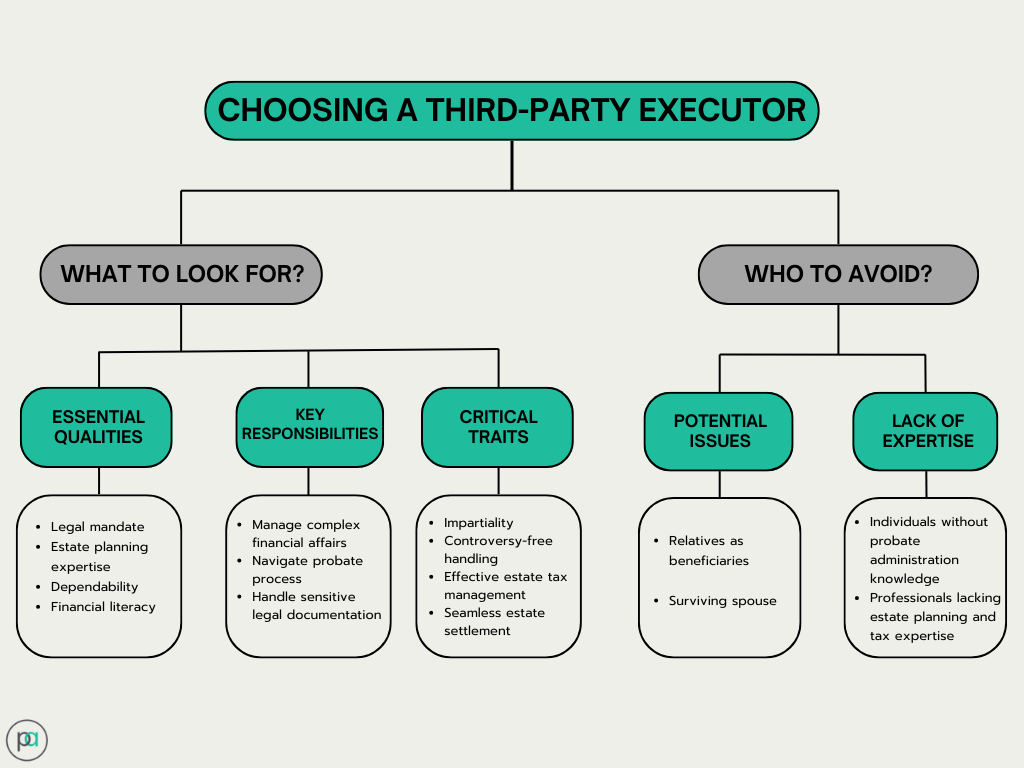
Selecting a third-party executor involves understanding their legal mandate and ensuring they possess the necessary expertise in estate planning. They must manage complex financial affairs within the legal boundaries set by the probate court. Dependability and financial literacy are essential qualities for this role.
The chosen executor must also effectively navigate the probate process while handling sensitive legal documentation such as a living will and common estate planning documents. This guarantees that all actions taken are within the scope of the law, which prevents potential legal issues that could arise from mismanagement.
Choosing someone who can act impartially and handle the responsibilities without controversy is critical. The seamless settlement of the estate ultimately impacts the distribution to beneficiaries and the executor's continued financial management. This is partly due to the executor's ability to handle estate taxes and other financial responsibilities.
Who Should You Avoid Using?
When considering why to hire a third-party executor of an estate, it's important to understand who to avoid for this role. While relatives may seem like an obvious choice, especially if they’re the primary beneficiaries, conflicts of interest can arise. Family dynamics and emotions may cloud judgment, leading to disputes and delays in estate administration.
Similarly, relying on a surviving spouse as the executor may not always be ideal, especially in cases where there are complex financial situations or assets that require specialized handling. Surviving spouses may face challenges in managing all aspects of the estate effectively, particularly if they lack financial or estate administration experience.
It's also important to avoid using individuals or professionals who lack the necessary expertise in probate administration, estate planning, and tax matters. Without a thorough understanding of these areas, the executor may overlook critical aspects of the estate, leading to potential legal issues, tax liabilities, or delays in distributing assets to beneficiaries.
Hiring a third-party executor with experience in estate administration can help ensure a smooth and efficient process, minimizing the risk of complications and maximizing the benefits of a complete estate plan.
What Are the Pros and Cons of Hiring a Third-Party Executor?
The Pros
1. Expert Management of the Estate's Financial Affairs
A third-party executor excels at handling complex financial affairs, guaranteeing all aspects of the estate planning process, from navigating federal estate tax to managing estate taxes, are dealt with expertly. Their proficiency in executing estate planning documents, such as living wills and revocable living trusts, can prevent common estate planning mistakes. This is particularly advantageous for estates with extensive assets—including life insurance policies and a significant bank account—safeguarding the estate’s financial health.
2. Impartiality Ensures Fair Asset Distribution
The independence of a third-party executor is crucial for impartial decision-making, particularly in managing sensitive issues like primary beneficiary designations and the distribution of life insurance benefits. Their detachment helps maintain fairness and transparency, which are necessary for estates that involve family businesses or substantial inheritance taxes. This objectivity makes sure that the decedent's final wishes are respected and followed, minimizing familial disputes and promoting peace within the family.
The Cons
1. Potential Costs
While third-party executors bring valuable expertise, they also charge fees based on the estate’s size and complexity. These costs, necessary for managing the estate and inheritance taxes efficiently, can impact the overall inheritance. Prospective clients should discuss these fees upfront to fully understand the financial implications and ensure they align with the estate’s financial circumstances.
2. Risk of Familial Tension
Although a third-party executor’s impartiality is beneficial, it can sometimes lead to feelings of exclusion among relatives, potentially stirring emotional disputes during the ongoing process. Effective communication is essential to mitigating these issues. Ensuring all family members are informed and involved in the estate planning discussions can help maintain harmony and transparency throughout the execution of the estate plan.
Can Hiring a Third-Party Executor Save You Time and Money?
Utilizing a third-party executor for estate administration can save you time and money. A professional executor with expertise in probate administration and tax matters can navigate the complexities of the estate efficiently, reducing the time it takes to settle affairs. This can lead to lower costs associated with prolonged legal processes or disputes.
Moreover, a third-party executor can help maximize the benefits of a complete estate plan by ensuring that all aspects, from financial accounts to tangible assets and beneficiary designations, are handled according to your wishes and in compliance with legal requirements. This proactive approach can prevent costly mistakes and potential tax liabilities, ultimately saving you money in the long run.
By entrusting estate administration to a qualified third-party executor, you can streamline the process, minimize administrative burdens on family members, and achieve a faster and more cost-effective resolution of the estate. This strategic decision can provide peace of mind and financial savings while ensuring your estate plan is executed efficiently and accurately.
Should You Partner With a Comprehensive Service Provider?
Working with an organization like Partners in Aging can be beneficial for comprehensive estate management. Companies like PIA offer access to a network of professionals skilled in various aspects of estate planning, from estate law attorneys to tax advisors. This all-inclusive approach is helpful for thorough and effective estate management.
Partners in Aging can provide services beyond basic estate planning, including end-of-life and legacy planning. Their personalized service guarantees that each estate is managed with care, from drafting estate planning documents to resolving potential family disputes.
Aside from that, they also offer a comprehensive range of services that contribute to the preservation of the estate's value by guaranteeing the appropriate handling of life insurance benefits, estate taxes, and financial matters. Their approach gives peace of mind to the estate owners, knowing that their estate will be managed professionally and following their wishes.
The Last Word: Making the Right Choice for Your Estate
Choosing the right third-party executor is a significant decision that requires careful consideration. It involves balancing the need for expertise in handling complex estate taxes and estate planning documents with an understanding of personal and familial dynamics. The most important thing is to ensure your estate plan is handled as you wish.
It’s best to look for a comprehensive solution provider, providing access to a network of seasoned professionals who can navigate the intricacies of estate management. A team that ensures each aspect of your estate is handled with care and professionalism, from tax planning to resolving family disputes, is key to achieving a seamless and effective estate management process.
Don't let the complexity of estate planning deter you. Reach out to Partners in Aging today to secure a future that respects your legacy and provides peace of mind. Our team of professionals is prepared to assist you at every stage of the estate planning procedure, guaranteeing the successful handling of your estate.