

Working in Retirement: Trends, Motivations, and Financial Implications of Continuing to Work Past Traditional Retirement Age
POSTED ON
Retirement once marked the end of work and the beginning of relaxation, but that narrative is changing fast. Today, many retirees are choosing to remain active in the workforce, redefining what their golden years look like. This shift is driven by both practical needs and a desire for purpose, signaling a new era in retirement planning.
Rather than embracing complete leisure, retirees are blending work, hobbies, and learning to create a fulfilling phase of life. Advances in technology for retirement have made it easier to stay professionally engaged while enjoying greater flexibility. Those who adapt to this evolving landscape are finding fresh opportunities for growth, connection, and financial security.
Why More Retirees Are Choosing to Work Beyond Traditional Retirement
1. Financial Necessity
For many retirees, retirement savings alone are insufficient to sustain their desired lifestyle. Rising healthcare costs and inflation make it essential to have additional sources of retirement benefits and income tax management. Part-time work, consulting, or delaying Social Security payments can help bridge financial gaps and reduce stress about meeting day-to-day expenses. With a longer life expectancy, retirees are seeking ways to ensure that their combined income is sufficient to cover their needs throughout their golden years.
Moreover, staying in the workforce enables retirees to keep funds in their retirement accounts growing for longer. This approach ensures a more substantial cushion for unexpected expenses and future needs. Financial stability is often a key motivator, allowing retirees to feel secure even as they navigate longer life expectancies. By balancing earned income with retirement savings, retirees can feel more confident about their financial future.
2. Personal Fulfillment
Work isn’t just about earning a paycheck; for retirees, it can be a pathway to achieving personal satisfaction. Many individuals find joy in roles that allow them to use their skills, explore new interests, or pursue long-held passions. This sense of accomplishment contributes to their overall happiness and keeps them engaged in meaningful activities. For some, Social Security benefits alone aren’t enough to fund their desired lifestyle, so taking on fulfilling work ensures that they continue living purposefully.
Retirement can also be a time to transition into roles that feel less like work and more like a calling. For instance, some retirees turn hobbies into careers or take on volunteer work that aligns with their values. This combination of purpose and enjoyment makes working in retirement feel less like an obligation and more like an opportunity. For many, the benefits of military retirement or supplemental Social Security benefits help support these personal pursuits, creating an ideal balance between passion and financial security.
3. Staying Mentally and Socially Engaged
Maintaining social connections is crucial for retirees, and work provides an excellent avenue for staying engaged. Many retirees enjoy the camaraderie and collaboration that come with professional roles, which helps combat loneliness and isolation. Being part of a team or network also creates a sense of belonging and relevance, providing the social interactions that are critical for mental health.
In addition to the social benefits, working during retirement keeps the mind sharp. Learning new skills, solving problems, and staying active in projects can reduce the risk of cognitive decline. These benefits extend beyond the workplace, enhancing retirees' overall quality of life and ensuring they remain vibrant and engaged. With Social Security payments and retirement benefits on the horizon, staying connected through work offers an exciting opportunity for personal and professional growth.
What Are the Popular Options to Balance Income Generation With Flexibility and Reduce Stress in 2025?
1. Part-Time Work
Part-time work offers retirees the flexibility to earn income without overcommitting to demanding schedules. These positions are particularly appealing for those who want to balance work with leisure or family time. They provide a way to supplement income while enjoying the freedom to pursue personal interests. Many retirees find part-time jobs to be a perfect solution for reducing stress while still contributing to the workforce.
Employers are increasingly valuing older workers for their reliability and experience. This trend has opened up opportunities in industries like retail, education, and customer service, which often offer part-time positions tailored to retirees. By choosing roles that align with their skills and interests, retirees can remain active while avoiding burnout. For example, retirees can work flexible shifts or enjoy roles with less pressure, improving their overall retirement lifestyle.
2. Consulting Roles
Consulting allows retirees to leverage their years of experience while maintaining flexible schedules. With the rise of online platforms, it’s now easier than ever to offer professional advice remotely or on a project basis. This option is especially appealing to retirees who want to stay professionally relevant without the pressure of full-time work. The added flexibility allows retirees to enjoy vacation pay or adjust their hours as needed.
These roles also create opportunities for mentorship, enabling retirees to share their expertise with younger professionals. By contributing their knowledge, retirees find fulfillment in shaping industries they care about. Consulting is not only financially rewarding but also personally enriching, offering a unique balance of purpose and profit. Whether through digital consulting or local advisory roles, retirees can maintain Social Security eligibility while still earning supplemental income.
3. Entrepreneurship
Starting a business in retirement might seem challenging, but it’s a path many retirees are embracing. Advances in technology for retirement have simplified the process, making it easier to manage ventures while maintaining flexibility. From selling crafts online to offering specialized services, retirees are creating income streams that align with their passions. This trend is often supported by government incentives and Social Security adjustments, which make entrepreneurship more feasible.
Entrepreneurship offers freedom and creativity, allowing retirees to set their schedules and priorities. Tools like artificial intelligence and blockchain technology make tasks such as marketing, inventory management, and administrative tasks more manageable. With the right support, retirees can turn their business ideas into thriving ventures that provide both income and satisfaction. As a result, they can enjoy pension payments or Social Security while exploring new opportunities and creating a lasting impact.
What Are the Financial Implications of Working in Retirement?
1. Social Security Benefits and Earnings Limits
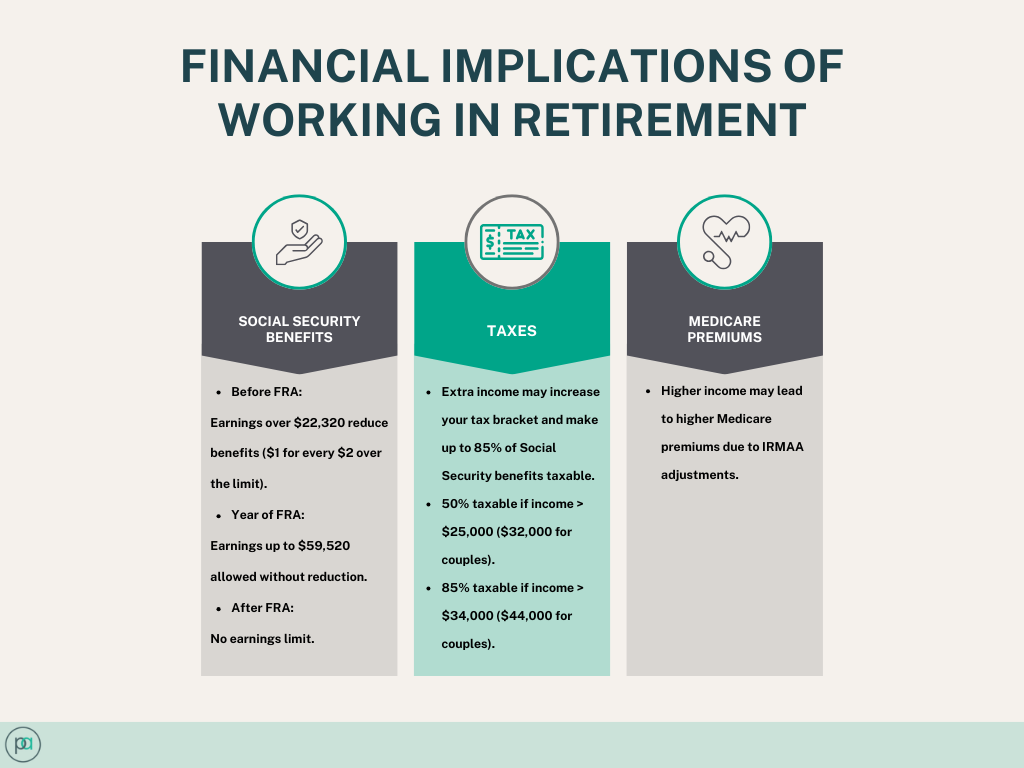
Understanding the impact of employment on Social Security benefits is crucial for those who continue to work in their later years. The Full Retirement Age (FRA) varies based on birth year, typically ranging from 66 to 67 for most current retirees. For individuals claiming benefits before reaching their FRA, an annual earnings limit applies.
In 2024, the yearly earnings limit before FRA is set at $22,320. If you exceed this threshold, $1 is withheld for every $2 earned above the limit. However, in the year you reach your FRA, a higher limit of $59,520 applies. Once you reach your FRA, there are no earnings limits, allowing you to work without affecting your Social Security payments or pension payments. It's essential to understand how excess earnings can affect your benefits.
2. Tax Considerations
Continuing to work past the traditional retirement age can have significant tax implications. Additional income sources may push you into a higher tax bracket, potentially increasing your overall tax burden. Moreover, up to 85% of your Social Security benefit may become taxable, depending on your combined income. Understanding the income tax implications is vital for retirees who are looking to maximize their post-retirement earnings.
The thresholds for taxation are tiered. If your individual income exceeds $25,000 ($32,000 for couples), up to 50% of your benefits may be taxable. This increases to 85% taxable if your income surpasses $34,000 ($44,000 for couples). It’s also crucial to consider state-level taxation, as some states tax Social Security benefits in addition to federal taxation. Understanding the tax landscape in your state is key to ensuring you maximize your Social Security payments.
3. Medicare Premium Adjustments
Higher earners may face increased premiums for Medicare Part B and Part D. The Income-Related Monthly Adjustment Amount (IRMAA) is based on your modified adjusted gross income from two years prior. This adjustment applies to both Part B and Part D premiums, potentially resulting in significantly higher costs for healthcare coverage.
For higher-income beneficiaries, Medicare expenses can increase substantially, with premiums potentially rising by hundreds of dollars per month. It’s crucial to factor these potential increases into your financial planning when considering continued employment in your later years. Investment income or additional earned income can influence your IRMAA, so it's essential to stay informed about these adjustments.
What Are the Health and Social Considerations of Working in Retirement?
Working beyond the traditional retirement age can offer significant health benefits. A June 2023 study published in Behavioral Sciences found that retirees who stay employed report lower rates of depression. Those engaged in part-time work also experience a reduced risk of chronic health issues such as hypertension, diabetes, and heart disease. Moreover, staying professionally active provides opportunities for physical activity, which is beneficial for overall health and well-being.
It's important, however, to choose employment that aligns with one's health needs. While part-time work can help reduce the risk of serious health conditions like cancer, stroke, and psychiatric disorders, it's essential to avoid roles that may exacerbate existing health issues. Research suggests that the right balance of work and rest can positively impact long-term health, but excessive stress or physically demanding jobs may have the opposite effect. Retirees should consider roles that provide mental and physical stimulation without overwhelming their health.
Navigating Employment Opportunities in Later Life
Emerging Trends in Post-Retirement Work
The landscape of employment for retirees is evolving rapidly, offering new and exciting opportunities for those seeking to remain professionally active. The rise of the "gig economy" has opened doors to flexible, short-term work arrangements that cater to the preferences of many older workers. This shift is complemented by a growing acceptance of experienced professionals across various industries, recognizing the value of their expertise and wisdom.
The post-pandemic era has accelerated the growth of remote work options, allowing retirees to contribute from the comfort of their homes or while traveling. This trend aligns well with the increasing emphasis on knowledge-based roles that leverage the extensive experience of older workers. Many companies now actively seek out seasoned professionals for consulting or advisory positions, valuing their insights and industry knowledge.
Maximizing Engagement and Connection
Remaining socially connected is a vital aspect of overall well-being in retirement. Working part-time, volunteering, or participating in community events helps retirees maintain strong personal and professional relationships. These interactions combat feelings of isolation and contribute to mental health. Tools like online platforms help retirees maintain these connections, facilitating the sharing of ideas and experiences.
Whether in-person or through digital channels, staying engaged with others can create a sense of belonging that enriches retirees' lives. Professional networks offer opportunities for continued learning, expanding horizons, and sharing knowledge with the next generation. At the same time, retirees can benefit from the support of peers who are navigating similar challenges. These connections often lead to valuable collaborations and friendships that extend far beyond professional goals.
Embracing the Future of Retirement: Opportunities and Considerations
Retirement is no longer a passive stage of life; it’s an opportunity to stay active, engaged, and purposeful. Whether through part-time work, consulting, or entrepreneurship, retirees are discovering ways to blend leisure with meaningful contributions. By embracing these new opportunities, they’re redefining what it means to thrive in their golden years.
This shift requires careful planning. From managing retirement accounts to understanding the implications of blockchain technology, retirees need to remain informed to maximize their opportunities. Thoughtful financial planning and strategic engagement are essential to creating a fulfilling and secure retirement.
Partners in Aging (PiA) is here to help retirees navigate this evolving landscape. Our expert guidance ensures that every aspect of your retirement planning journey is tailored to your unique needs. Let us help you design the golden years you deserve—contact us today.